








‘The Castle’: The politics of the image against sexual exploitation

By Carmen V. Albert
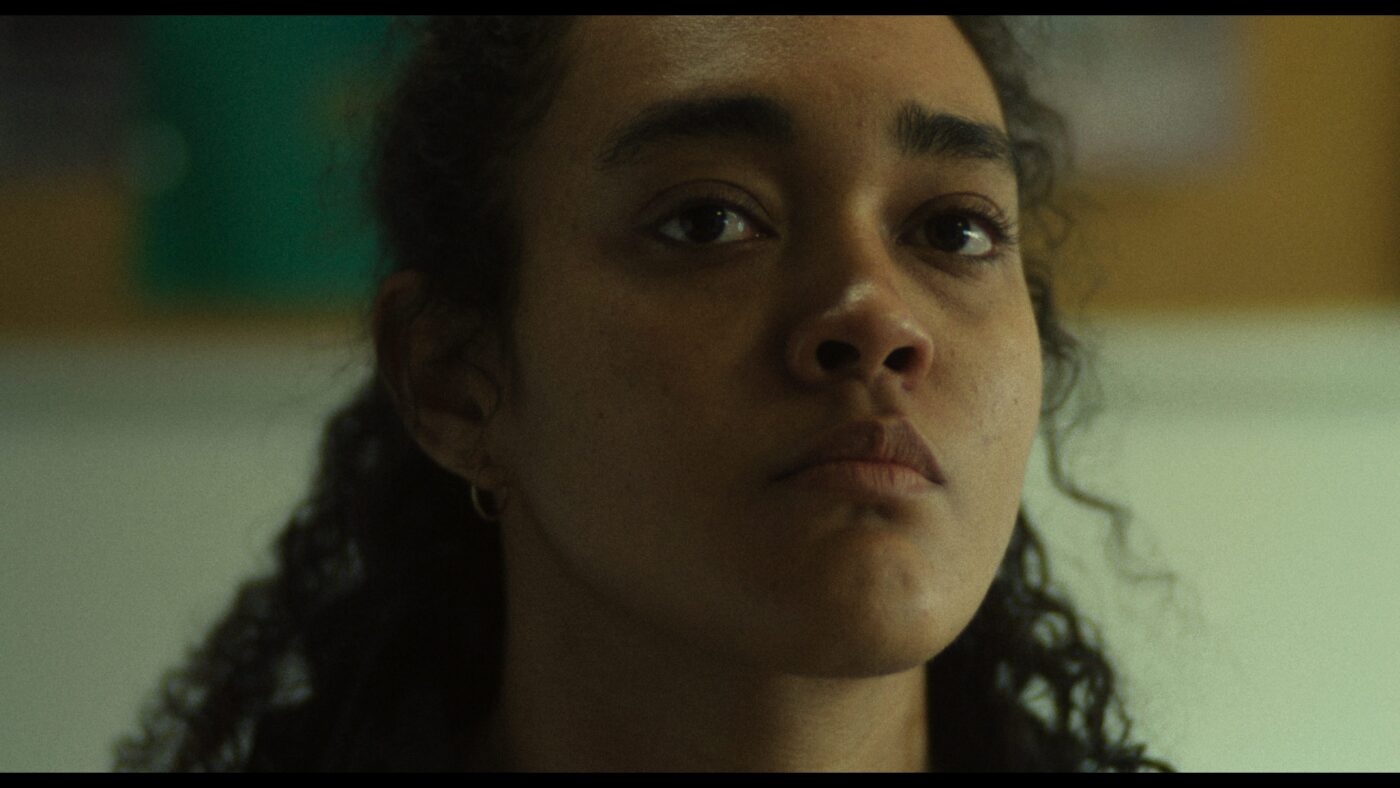
In El castillo (The castle), now available on Movistar Plus+, screenwriters Isabel Peña and Eduardo Villanueva expose the reality of brothels and the trafficking of women in Spain in the late 1990s and early 2000s. “The most important decision in terms of staging and cinematography was probably to keep walking a fine line between realism and cinematic stylisation,” says director Elena Martín Gimeno, who directed four of the six episodes. Inspired by El Proxeneta, Mabel Lozano’s book based on real events, the series adopts a distinctive visual policy: its images refuse to eroticise or fragment women’s bodies, focusing instead on the harsh reality experienced by women subjected to exploitation.
At the 74th San Sebastián International Film Festival, where El castillo screened Out of Competition in the Official Selection, we interviewed cinematographer Alana Mejía González, who designed the series’ visual approach. She explains how she used elements such as the distance between camera and subject to depict the power relations between the women, the pimps and the police. We also spoke with Diego Cabezas AEC, cinematographer on two of the series’ six episodes, about the decisions he made on set with second director Sandra Romero.
Gerardo Liesa, a young police inspector who has just joined UCRIF, and his colleague Carmen Osés suspect that something is changing in brothels across Spain. El Suizo and his associates run several roadside clubs where they sexually exploit women who have arrived from around the world. One of them is Claudia, aged 18, who has a young son in Colombia and has just arrived in Spain in search of a better future.
Interview with Alana Mejía González, cinematographer
You designed the cinematography for the series and shot episodes 1, 2, 5 and 6 with Elena Martín Gimeno directing.
Yes. Working with showrunners such as Isabel Peña and Eduardo Villanueva has been a privilege. Elena is a director who constantly wants the visual storytelling to be as powerful as her extraordinary work with actors. Her projects are guided by exacting standards and a deeply political perspective.
What was it like adapting Mabel Lozano’s book El Proxeneta, which is based on true events?
Reading it was devastating and fascinating because it describes how, in the late 1990s, men with small businesses suddenly expanded them into multinational operations. The book reveals that very 1990s, capitalist, neoliberal appetite for growth, but within the prostitution industry.
Would you describe the series as a police procedural?
In our initial conversations, we defined it as a very Castilian period thriller, set in the late 1990s and early 2000s. It is also a drama because of its subject matter, and although it is based on real events, we wanted it to have a strong cinematic quality. We didn’t want to eroticise prostitution or depict it in the way it has so often been shown, through a harsh social-realist approach. We wanted to find a new perspective that would allow audiences to enter this story and understand these structures of subjugation linking pimps, women, police officers and clients.
The result is a series with a raw aesthetic that is very much rooted in the 1990s and early 2000s. How did you develop its look?
We faced the challenge of shooting a period series, but one set in a time too recent for us to take certain liberties. That era is still in our recent memory: it feels both tangible and distant.
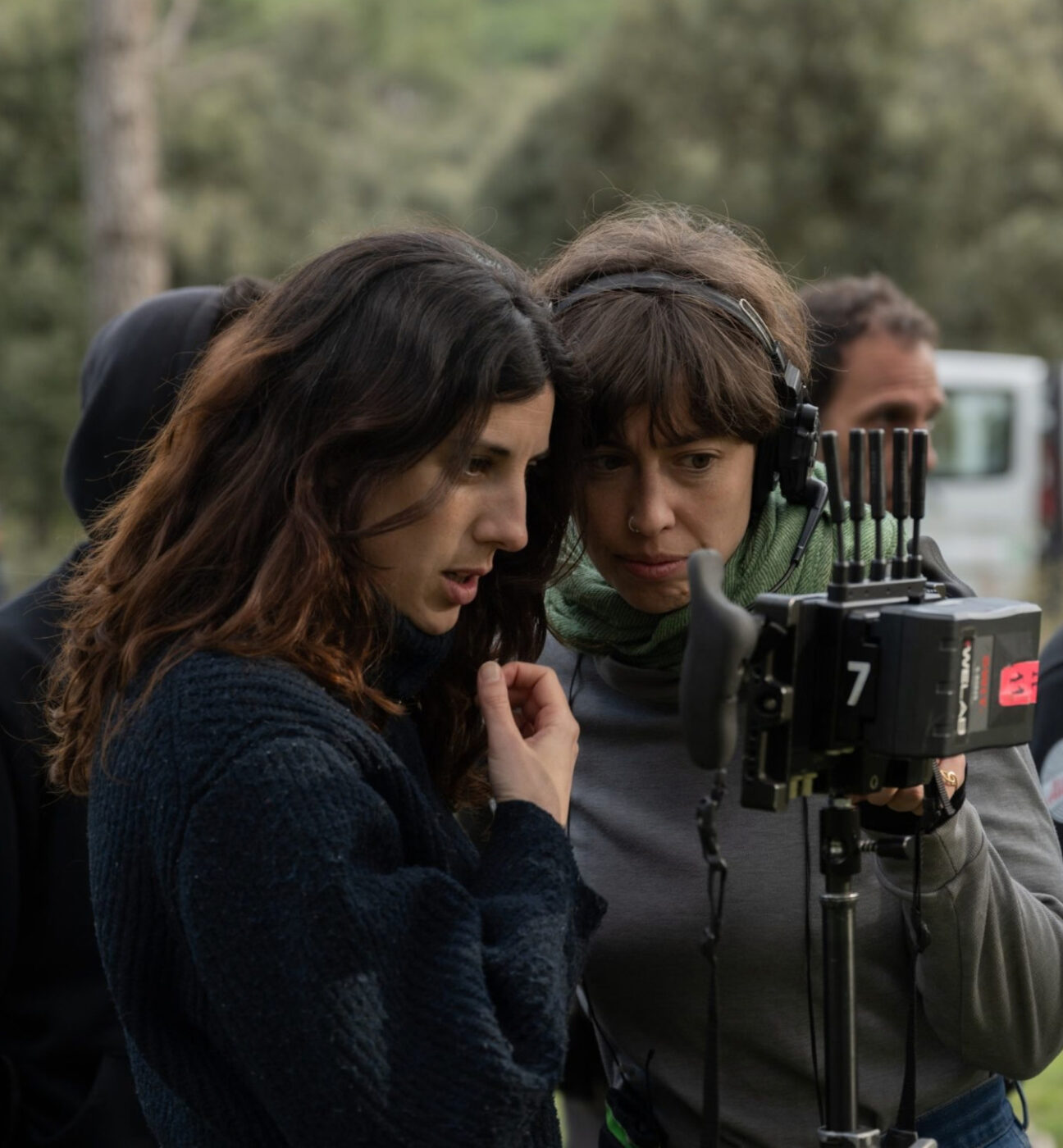
The interiors of the clubs were complex to deal with from the preparation stage onwards, including our conversations with the art department. Elena sent me a ShotDeck folder of references to strip clubs to identify what she did not want for the series. She didn’t want to objectify, sexualise or fragment women’s bodies, and we didn’t want to romanticise the clubs either.
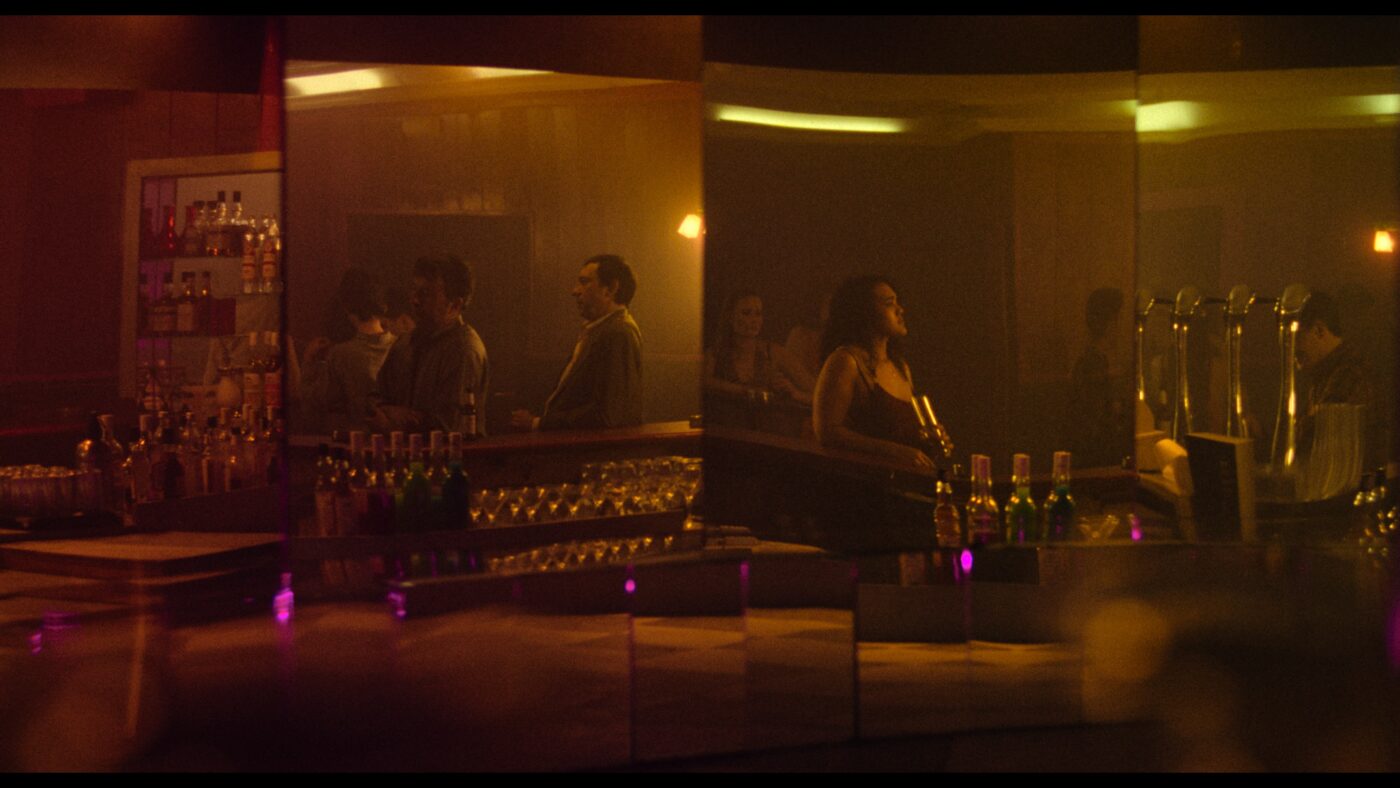
When we started scouting real clubs, we realised that many of the ways they had been represented in films bore no relation to the reality of Spain at that time. These were not places with sex appeal, but rather quite sordid spaces with a recurring motif of red light, often no more than a light bulb that someone had painted red.
What were you looking for in these spaces?
The showrunners wanted us to shoot in real locations, but not in operating clubs or in clubs belonging to people who had exploited women. That severely limited the search. Visiting some of these places made us realise that our preconceptions did not reflect reality and that we needed to take a different direction. One of the things that struck me most in the first club was that the rooms contained up to four single mattresses stacked on top of one another, because many women sleep in the same rooms where they receive clients. We wanted to portray these layers of life in the rooms, which are also the only spaces where the women can have any privacy.
Were you able to find real locations to shoot in?
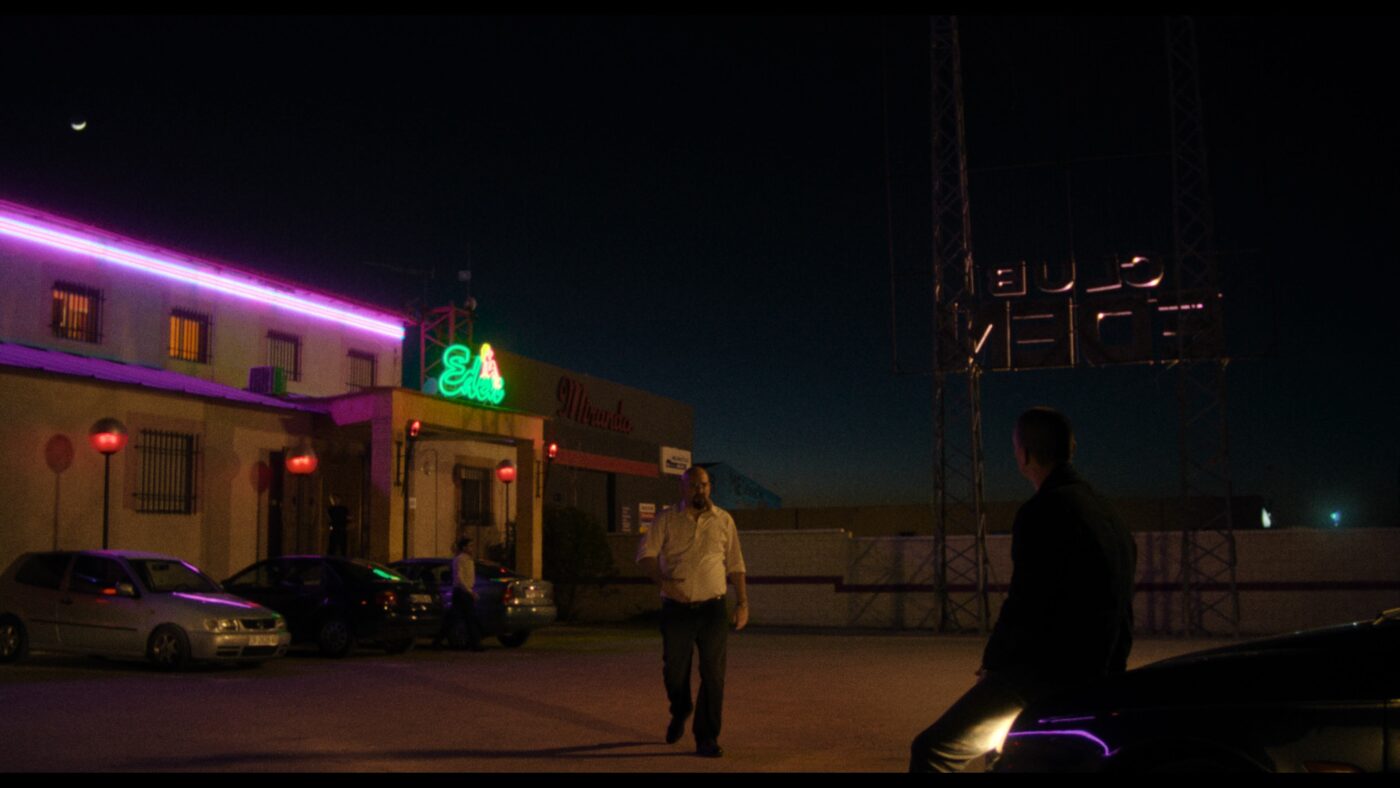
Yes, every location had previously been a real club. Edén, the main location, for example, required a great deal of production design work to reconstruct it. We wanted to play with mirrors and reflections because Mabel’s book talks extensively about the control pimps exert over women and the relationships between women and clients mediated through those elements.
How involved was Mabel Lozano in the shoot?
Mabel is an activist. She has visited brothels and has access to trafficking survivors, associations and psychologists. That knowledge was fundamental to preparing the series. Although she visited the set, she left the fictional storytelling and creative decisions to the showrunners and directors.
There are also several narrative layers within the police world. What was the process of entering those spaces like?
Our starting point, particularly with the pimps and the police, was that many of these crimes were not the product of some elaborate scheme or extraordinary minds. The pimps are men who get together to eat tripe, only instead of talking about nuts and bolts, they talk about buying and selling women. Something similar applies to the police: they are civil servants leading ordinary lives, doing their jobs with varying degrees of commitment.
In the police storyline, things happen almost by chance: two pieces of information come together and suddenly they can make progress with the investigation. Gerardo’s boredom in UCRIF [the Central Unit for Illegal Immigration Networks and Document Fraud] leads him to consider doing something more. When I heard Elena, Edu and Isa describe the story, I was struck by the fact that the women were arrested while the pimps were subjected to only the most superficial checks.
I think the delicacy and rigour of our showrunners and directors is evident in the series, because we undertook fascinating research. We attended trials and visited clubs and the police unit that handles these cases, and spoke with officers, forensic psychologists and trafficking survivors. We also had advisers on set who had worked in those environments.
For the period setting, did you use period lighting fixtures or practicals?
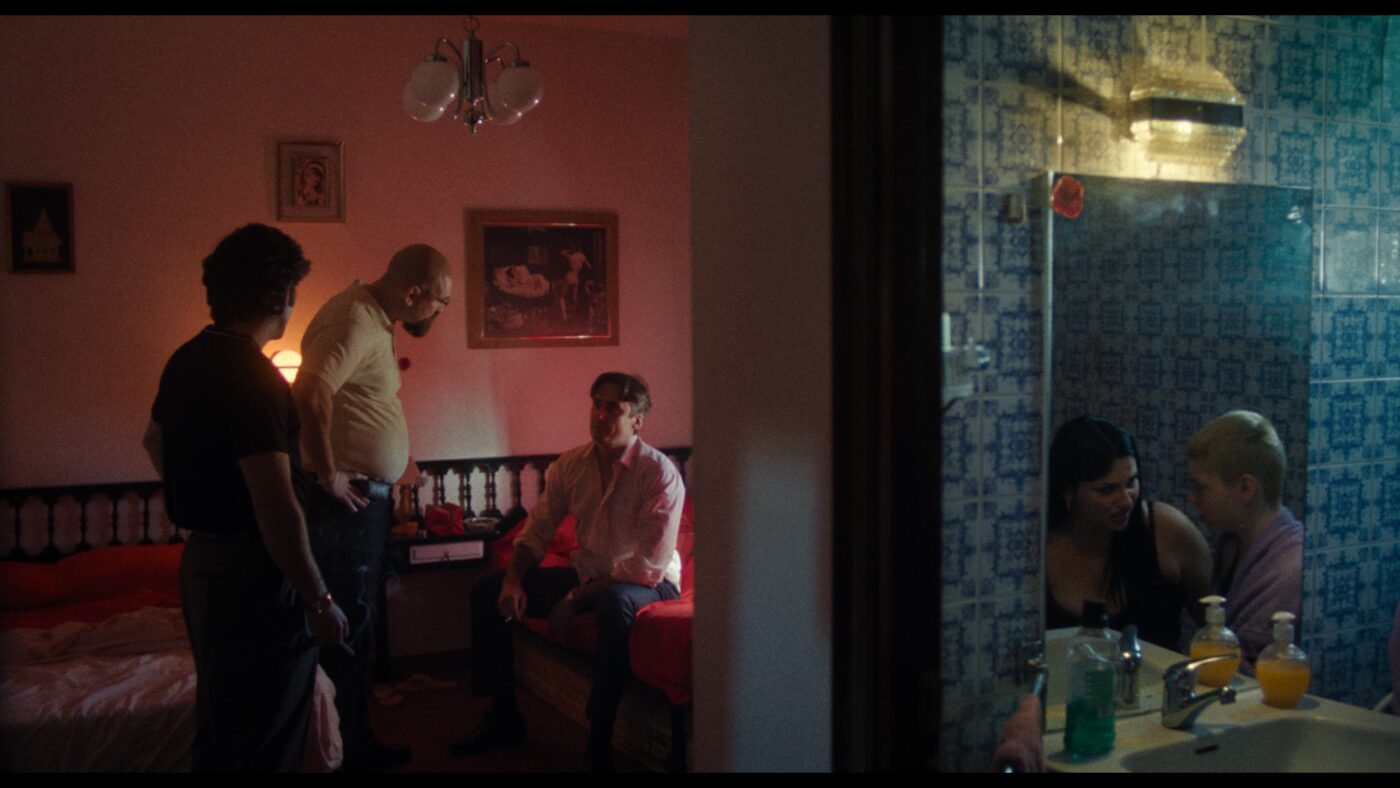
It was a combination. The UCRIF office already had fluorescent fixtures and overhead lighting. We changed the tubes to get a colour temperature I preferred, placed HMIs outside the windows and worked on balancing interior and exterior light, keeping a relatively diegetic basis.
As for the visual language, we talked a great deal about camera height, when to position the camera above or below the characters, and whether to show ceilings or floors. We played with all of this to establish where we were in the story.
The clubs were the hardest locations to light because we needed dim lighting that followed a diegetic logic, as we had seen in many of the real clubs, with some colour and movement but without making them look like discos. Coloured lighting equipment in the 1990s had a very different size, bulk and level of noise from today’s fixtures.
We also faced constraints because some locations remained available for months. Edén, for instance, appears both at the beginning and end of the story, so we had to convey how the club changed and expanded considerably over a relatively short period. We wondered how to show that subtle difference: we did it through props and alterations to the space, suggesting that it had been refurbished and money was being laundered there.
What camera and lens tests did you carry out during preparation?
Because many of the locations were far from our base in Madrid, technical scouts became long journeys, which reduced the time available for tests.
Even so, thanks to Welab I was able to try out many lenses. Before the shoot I went to the rental house and tested Sony, RED and ARRI cameras. I wanted my decision to be based on something I had tested myself, rather than on a preconceived idea.
The series was primarily shot on the ARRI ALEXA 35 with Tribe7 Blackwing7 lenses. I was keen to work with these lenses, and Elena liked them too because they have a very soft texture that comes through in the women’s skin tones.
One of our visual rules was not to get too close to the pimps, to avoid romanticising them. They are distinctive characters, and Elena did an incredible job with them, especially Raúl Arévalo’s character, El Suizo. We had to remain very conscious of this and try to stay with wide or medium shots, using architectural elements to avoid being seduced by his “charm”.
We moved slightly closer to the police, although we never used tight close-ups, because those were reserved for the women. When filming them I used the 57 mm and 137 mm lenses, with a different coating and more bronze-coloured flares, for Claudia’s close-ups [Valentina Vidal].
How did you pass this visual rulebook on to Sandra Romero and Diego Cabezas?
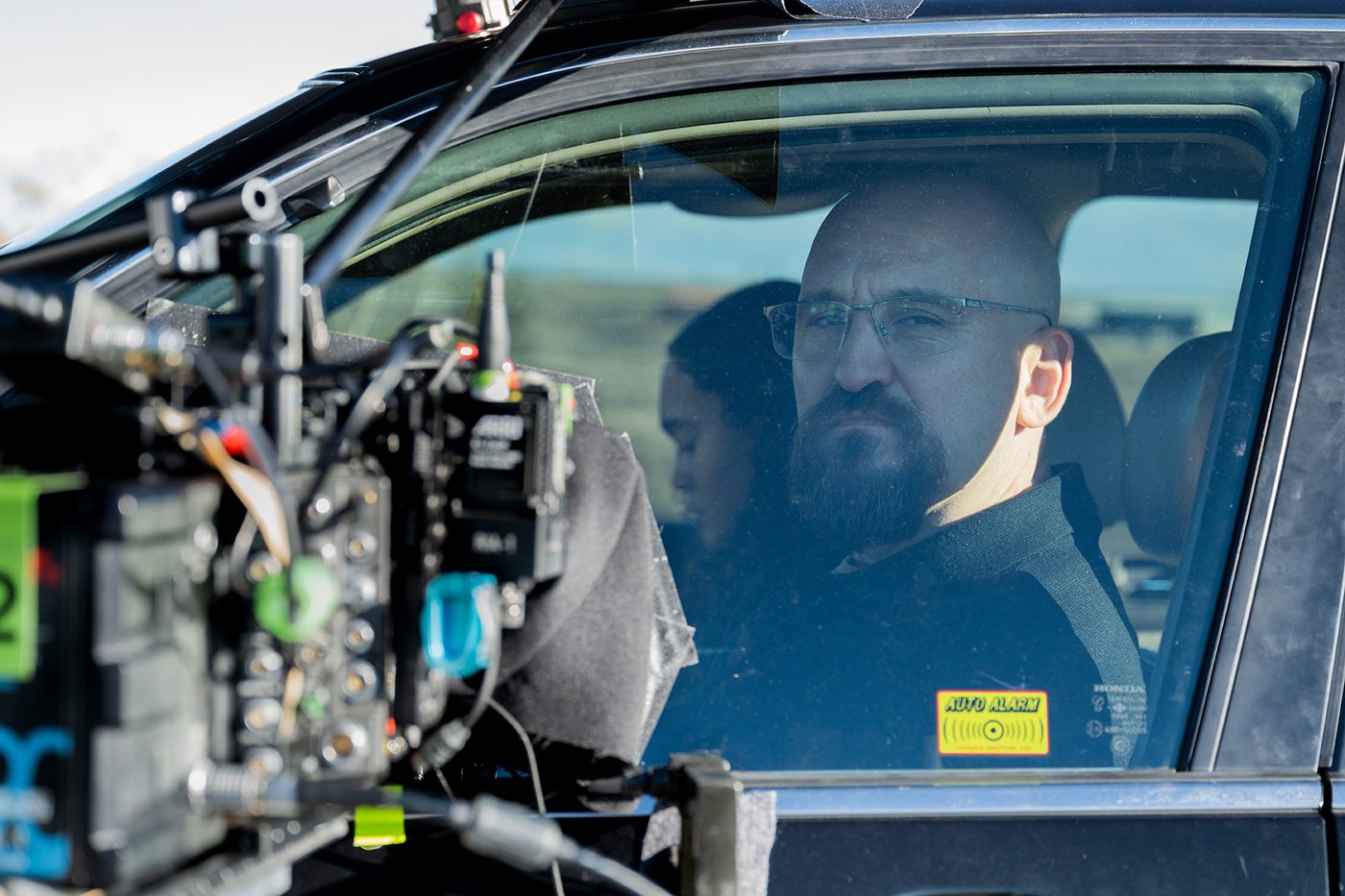
The soft prep Elena and I did allowed us to define the directions we did not want to take, as well as what interested us. When we filmed episodes 1 and 2, Sandra and Diego joined the preparation. We also had a fairly clear dossier outlining the series’ direction, so it was easy to convey that to them. Sandra attended many rehearsals and meetings to understand the scale of the project.
Diego is a wonderful cinematographer and Sandra is an incredible director. They understood the tone immediately and made some very interesting suggestions of their own. Many locations had already been chosen or established, and they had to carry on working with them. The transition was quite straightforward.
Did you work with LUTs to ensure consistency?
Sandra Otero, from Elamedia, was the series’ main colourist. I was very happy with the lenses, camera and lighting crews’ work, but looking back at the images, I think Sandra did a fascinating job with the colour.
She created a couple of LUTs before filming, which we refined over the first few days and then used throughout the series, adjusting for interiors and exteriors because of the colours in many clubs, where the walls were painted in almost outrageous levels of saturation. I learned a great deal from Teresa Montanuy, who designed the production alongside Francisco Bassi, about the types of paint used in the 1990s. That saturation, shine and those finishes are not the same as today’s, and a lot of work went into reproducing them.
Where did you shoot the scenes set in Colombia and Paraguay?
I happen to be half Colombian. When I was offered the project, we talked about what Colombia was like in the 1990s, where Claudia came from and her social background, and what her world looked like. There were elements in my own family that were quite similar to Claudia’s life.
In the end we shot in Cali, where Valentina Vidal is from, and there was a small change to the original script because of her accent. In Colombia we worked with a brilliant local service crew. We had very few shooting days, and it was the last material we filmed.
We were looking to create a contrast with the beginning of the series, when these men go to collect the women from airports that are very far from the clubs. The women land in Valencia and are then taken to Cuenca, Soria or Tarragona, places that have nothing in common. I thought about someone arriving from Colombia in the 1990s, without internet or social media, and finding themselves in that ochre Castilian landscape, with bulls, windmills and ruined castles.
These men spend their days in cars, almost like a road movie, travelling across the peninsula as though different regions were neighbourhoods in one city. We wanted viewers not to be entirely sure where they were, and for the characters to cross from one autonomous community to another in the space of two hours.
How did you shoot the scenes involving sexual acts?
The solution we found grew out of our own discomfort when thinking about how to shoot them. We didn’t want to film yet another rape scene and contribute to that culture. From that visceral feeling came a brilliant idea: when the sexual part begins, the woman’s body is no longer physically present in the space, because to the clients these women are not really there as people either. The aim is not to construct desire.
Besides, the script only had three sex scenes, and both Isa and Edu were very clear that they did not want this to become an essential part of the series, however much it might be expected as a stereotype.
One of these scenes portrays Claudia’s first night, when we begin to understand how the mechanisms of control take hold and the psychological change she is about to undergo. We also wanted to use shifts out of focus to show how she progressively dissociates from herself as she has to deal with eight or nine strangers every night.
For that first night, we devised a long take in which Claudia could move behind the camera when the sexual encounter began, so that neither the actress nor the character had to be exposed. We also sought an unusual camera movement, without taking a puritanical approach of suggesting what happens without showing it, and ultimately revealing that the actress is not in the bed.
Sorogoyen advocates shooting chronologically to strengthen performances, but I imagine that was impossible here.
Although first assistant director María Ferrer did a great deal of work to preserve chronology as much as possible, production often determines whether you can keep a location or an actor for more days, and that affects how you shoot. On this series, we sometimes had to film scenes that take place much later in the story before earlier ones.
For us, choosing the best location did not necessarily mean choosing the one that was most practical in terms of travel, because everything had to fit together. Elena has a great deal of common sense and works with a breakdown that lets her decide where she can compromise and where she cannot. When there is flexibility and understanding between departments, incredible things can happen.
For example, we shot the trial at the end with three cameras and zoom lenses, because there were many pages of dialogue and the characters moved very little. That allowed us to change shot sizes without repeating takes and helped prevent the actors from becoming emotionally exhausted. It also established a tonal difference from the rest of the series. The decision in the script was to tell the trial from the judge’s point of view, but many small looks and reactions also convey how the case will be judged.
Were you able to work with your usual crew?
For lighting I worked with Álex Sánchez, my gaffer in Spain and Madrid. He has the talent to understand what I want even when I don’t know how to articulate it. He comes up with very good suggestions and has a wonderful crew.
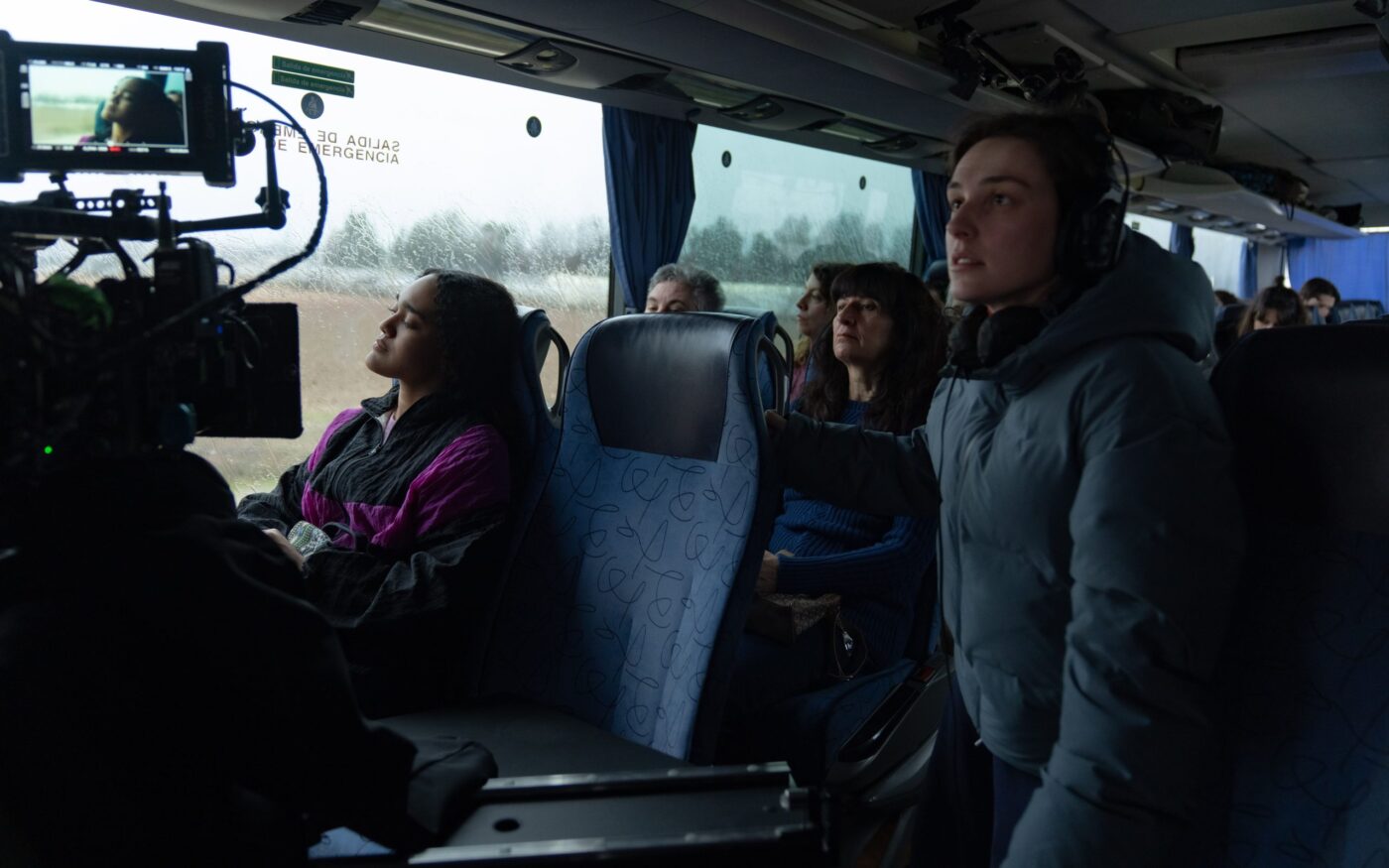
In the camera department I worked with Josu Ubiría, with whom I have done several projects. He is brilliant and knows how to support you when things get hectic. Oomen Jacob operated the camera throughout the series. I trust him a great deal because he also did much of Creatura. He knows Elena very well, and his sensitivity was especially important for the handheld sequences, where we breathe more closely with the actors.
My key grip was “Paquito”, accompanied by an excellent, very attentive team. Juan Luis Núñez was our DIT, the man in the shadows who always saw everything.
Which shot stands out for you from this shoot?
I remember the first time they show Claudia how the club works. It was a very difficult shot to execute with very little time. The Steadicam moved from the lounge into some very dark corridors, then into another corridor with a lime-green colour that was hard to handle on skin tones. The camera then entered a dining room filled with sunlight and finally a storeroom where a single shaft of sunlight came through a window. You don’t notice it in the way the sequence is edited, but it was a real headache.
I also really like the shot of the first time Claudia works in the lounge, because it is more expressionistic: we begin out of focus and suddenly the focus finds her. Discovering the lounge through that confusion worked very well, with all those different out-of-focus points of light creating an extremely abstract image.
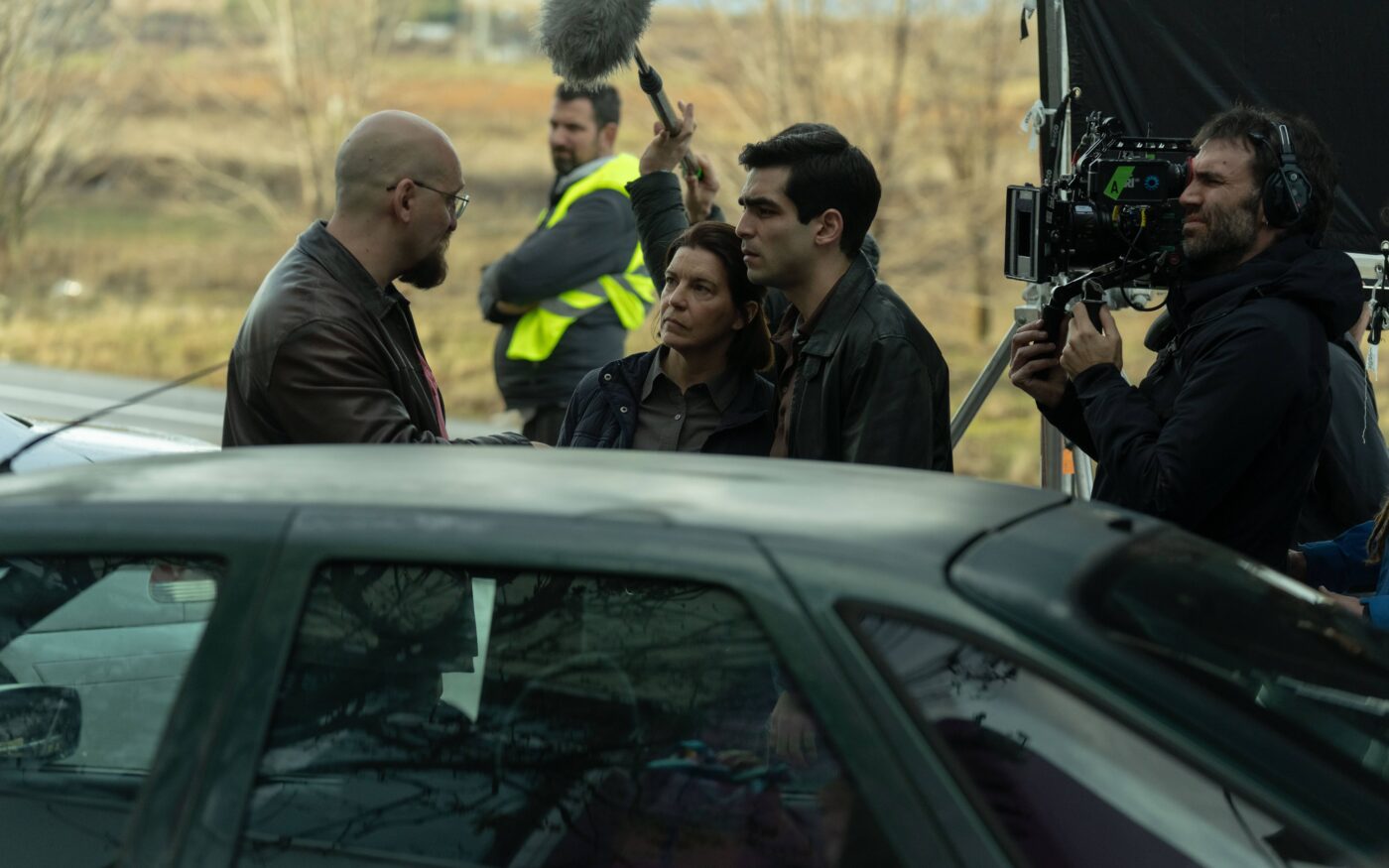
INTERVIEW WITH DIEGO CABEZAS AEC, CINEMATOGRAPHER
How much freedom did Sandra Romero and you have to bring your own vision to episodes 3 and 4?
We came on board in a very organic way. We had three or four days of script meetings with Isabel Peña and Eduardo Villanueva, attended by Elena, Alana, Sandra and me. Being able to go through the script point by point with its creators and discuss what was possible in each sequence helped enormously.
I also spent several days on the set while the first two episodes were being shot. We shared some locations, and while they were preparing their block, we came in to shoot our sequences in those same spaces with the same crew.
We had a common foundation, but we could adapt the approach. If I saw something I wanted to change from what Alana had done, I did so without any problem. It also happened the other way round: I started a sequence in one of the clubs with my lighting design, and later Alana changed it for her block. I think that adds richness.
With so many locations and such a broad time span, the story lent itself to those different perspectives. We started from an agreed framework, but Sandra and I were able to contribute our own point of view to the sequences and the part of the story we were telling.
In your block, the police storyline is reminiscent of David Simon’s series. Was he a reference?
We hadn’t discussed that specifically, although I think there are echoes of The Wire, particularly in the Marconi industrial estate storyline. Isabel Peña talked to us a lot about The French Connection [William Friedkin, 1971]. Sandra and I watched it again and drew some ideas from it for those surveillance sequences and long-distance tailing shots.
In episode 3, during the first encounter between the police officers and El Suizo, the light draws a clear distinction between them. How did you approach that sequence?
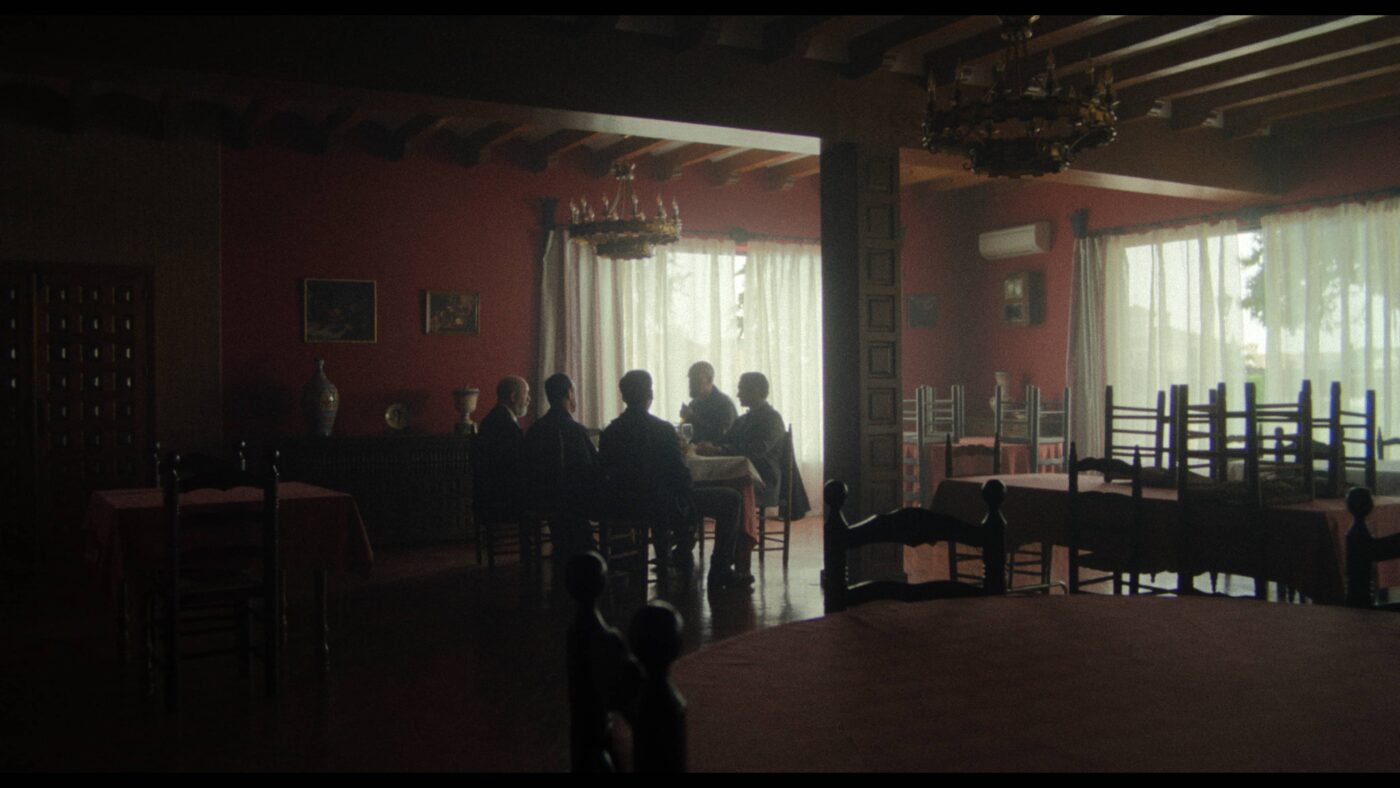
We shot it in a roadside restaurant, and from the outset we knew that the light should come from outside. It was daytime, and we wanted to leave El Suizo in deeper shadow, with the police facing the window, as though they were slightly dazzled by him. We thought that suited the story.
Here we partially broke the rule against using tighter shots of the police and pimps. We wanted to put them on an equal footing and create tension between Liesa [Omar Ayuso] and El Suizo. This marks the beginning of a relationship that develops later, in which the two sides come into contact. Framing them in the same shot sizes was an interesting way to convey that idea.
What sources did you use to create that light?
There were two very large windows, and we positioned two M90s outside, one for each window, bounced into overhead diffusion frames. We also used 2,400 W Nanlux units through diffusion to reinforce the direction of the light into the room.
Approximately 95% of the light came from the windows, but I added a little fill inside with a SkyPanel to prevent the contrast from becoming too harsh, because they were in a fairly dark area of the restaurant. We moved that fill as we moved around with the characters. We shot the whole sequence with two cameras.
The first meeting of the nightlife business owners’ association also takes place in this episode, with a similar lighting concept.
It was shot in a hotel in Madrid, again with very large windows. We made the most of the time of day, which worked in our favour. We used two M40s and an M90 aimed towards the windows through diffusion. For the speakers, we used the existing ceiling fixtures and added a little haze.
We had photographs of the real presentation of that association at the Meliá Castilla, and even of the meal that followed. The aim was not to reproduce those images exactly, but to evoke their atmosphere: a room full of pimps from different clubs and a fairly thick haze of smoke, since people smoked indoors at the time.
At the meal that follows, the conversation is filmed from a distance, returning to the rule of not getting too close to the pimps.
We had planned more shots for the meal, but realised we could cover it with two crossing zoom shots. We could depict the overall atmosphere and then concentrate on the conversation between El Suizo and his business partner from Madrid. We wanted to see them as a group rather than individualise them too much.
We filmed it in a hotel dining room. I played a lot with the existing ceiling lights: I left the central row switched on and turned off or covered the others to avoid too much fill. That concentrated the light in the area where the conversation took place.
Zoom lenses feature prominently in these episodes. What did they bring to the work?
They were one of the main tools in our block, particularly for developing the police storyline and because of the French Connection references. We used an Angénieux Optimo Style 25–250 as well as the Blackwing7 primes.
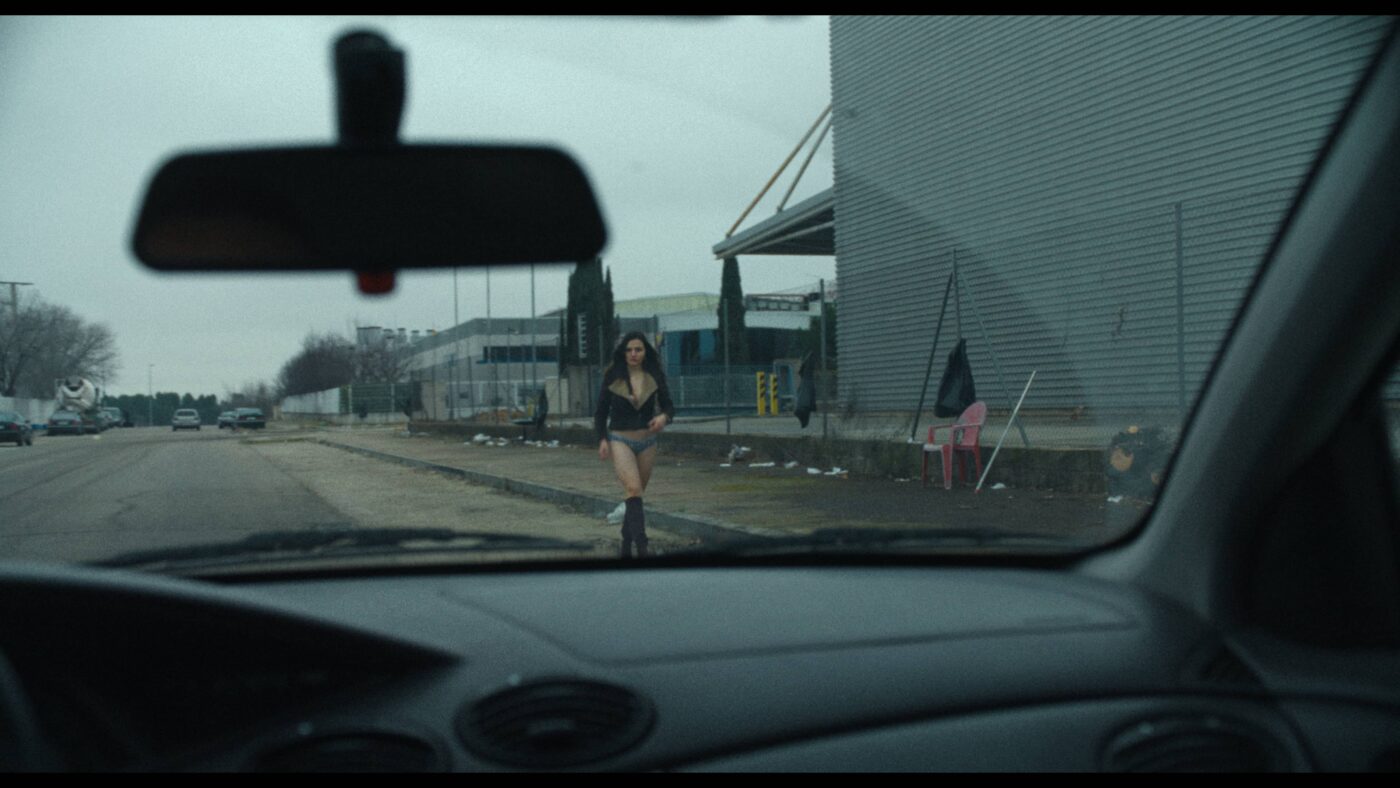
The zoom allowed us to depict a group and then pick out a specific situation within it, as in the meal scene. We also used it extensively in the surveillance sequences at the Marconi industrial estate.
How did you construct the point of view in the surveillance sequences at the industrial estate?
We always stayed with the police. We never left their point of view because the audience had to discover things alongside them, even though the information El Suizo provided had been orchestrated by him, as he manipulates the police for his own benefit.
We didn’t want the audience to get ahead of what the officers were discovering. That’s why we stayed inside the cars and worked with several zoom lenses. We also had a shorter zoom for the interiors, where we couldn’t be so close to the characters.
In the trial scene in your block, the point of view changes during the sequence. How did you handle that?
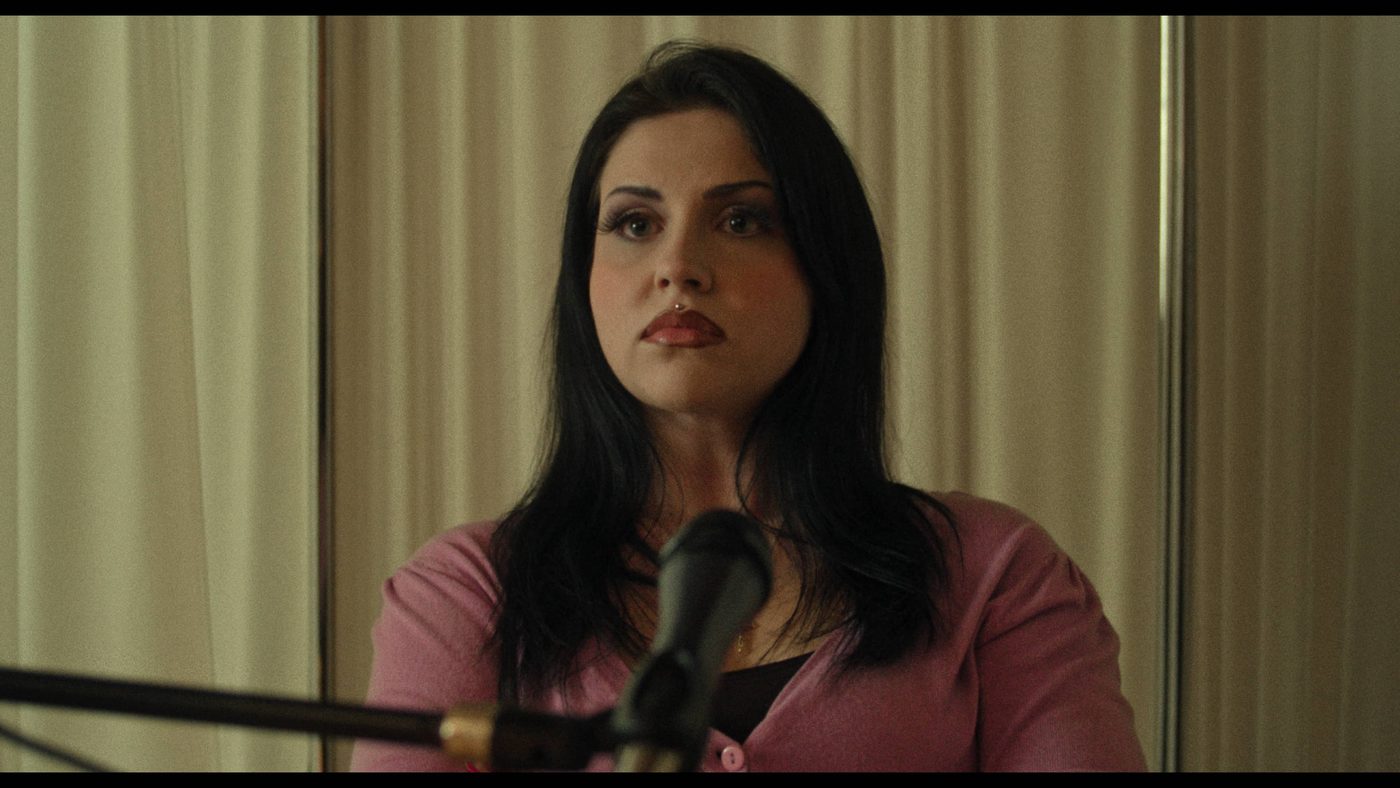
We mixed zooms and prime lenses. At first the scene is told from the perspective of Liesa and Osés [Laia Marull], who are in the public gallery. Then we gradually move closer to the woman giving evidence as a protected witness. We used a zoom for that move, while other moments in the trial were shot with primes.
We wanted to shift the point of view progressively towards her, moving away from Liesa and Osés so we could observe their reaction from a distance when they realise that the whole process has been rigged.
What changes did you make to the lighting in the UCRIF offices compared with the original approach?
During the first episodes’ shoot in the police station, I went over a couple of days to see how Alana was approaching it. I wanted to introduce a little more light through the windows while keeping the fluorescents, because they gave the space a very realistic, raw character.
In the main room, very little light reached us through the windows. I started switching off some of the ceiling lights and increasing the presence of daylight whenever the characters were near the windows.
If I remember correctly, we placed an ARRI ARRIMAX 18 kW HMI and two 16-light Maxi Brutos on a cherry picker. That allowed us to bring light in from outside while continuing to control the ceiling fixtures, covering or uncovering them as required.
Your episodes move forward in time to 2002. How did you adapt the lighting for the university party?
We treated it like a nightclub; in fact, we shot it in one. We designed the lighting with a lighting-console technician. We brought in some fixtures, including moving heads, but we couldn’t carry out an extensive search for period equipment, so I adapted the available LED and moving fixtures to the effects used at that time. I tried to avoid colours associated with LED lighting and effects that looked too modern. I limited the options to simpler movements and colours, and used them to design the overhead lighting rig.
The night-time shot of the pimps in the car after the meal introduces a more stylised image, with those flares in the background.
We were looking for a realistic, raw image, but without lapsing into ugliness for its own sake. We needed to maintain a balance. It helps to have a set of visual rules to return to, while also being able to adapt them when a sequence needs something different to direct the viewer’s attention.
We shot that sequence in a very dark industrial estate, with city lights in the background. The camera was on a long focal length, so the out-of-focus highlights were very prominent. The car was also moving over a lot of bumps, which added movement to the image. Within that approach, it is indeed a somewhat more stylised sequence.
How did you recreate the television programme that El Suizo watches?
We based it on a real programme, of which we had a copy for reference. I think some of the lines in the script even reproduced what was said in the original.
We filmed it in a studio in Valencia because we were working there. We adapted the space, which had a great deal of LED lighting, and removed the modern elements. We used three HD television cameras and then converted the signal to PAL.
When we filmed El Suizo watching television, we played the programme directly on the TV set. We didn’t use chroma key to replace the screen afterwards: we wanted the image to be integrated into the shot from the outset, which I think looks better.
In the sex scene with Julián, the character who gives the episode its title, how did you put into practice the decision not to show Claudia?
We thought about it a great deal. We knew Claudia would not physically be there. In his room, the beds had mirrored headboards, and we wanted to reach a point where the audience would almost realise that there was no female character present. At precisely that moment, the shot cuts.
We filmed it with a dolly-out. We began on the television, which would normally be showing pornographic films, moved past Julián’s head and continued pulling back towards the bedroom door.
We rehearsed extensively to decide how much of him we wanted to show. He was a large man and, even if Claudia had been there, she would barely have been visible. But we wanted to suggest that there was nobody with him, to the point where viewers might wonder whether he was alone.
I think that fits very well with what the series is trying to say: we see a character who is sexually exploiting a trafficking victim, yet he is completely alone.
MAIN CREW
Production companies: Movistar Plus+, Caballo Films, Mafalda Entertainment
Directors: Elena Martín Gimeno, Sandra Romero
Writers: Isabel Peña, Eduardo Villanueva
Cinematographers: Alana Mejía González, Diego Cabezas
Production designers: Teresa Montanuy and Francisco Bassi
Colourist: Sandra Otero
TECHNICAL DETAILS
Camera: ARRI ALEXA 35
Lenses: Blackwing7, Angénieux Optimo 25–250
Aspect ratio: 1.85:1