






Between Technique and Narrative: Cinematography in Video Games and Animation

Just as with Cinema Live, another subject we explore in this issue, the incorporation of new technologies such as mixed reality and the tools offered by artificial intelligence in audiovisual production is opening up new areas of experimentation and creativity for cinematographers.
Today, video game players far outnumber cinema audiences —the global gaming community exceeds three billion people— and many video games immerse players in worlds inspired by cinematic aesthetics. Yet cinematography has not fully established itself within this field, while part of the film industry, perhaps through lack of familiarity, still remains wary of these new visual languages and forms of storytelling.
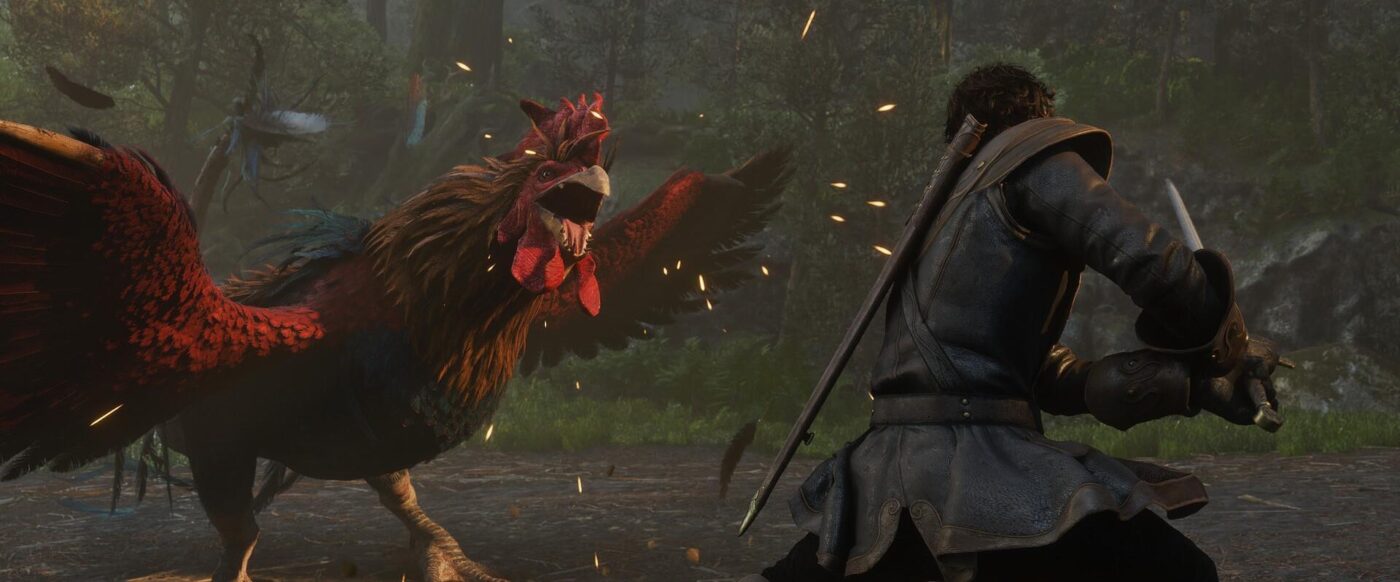
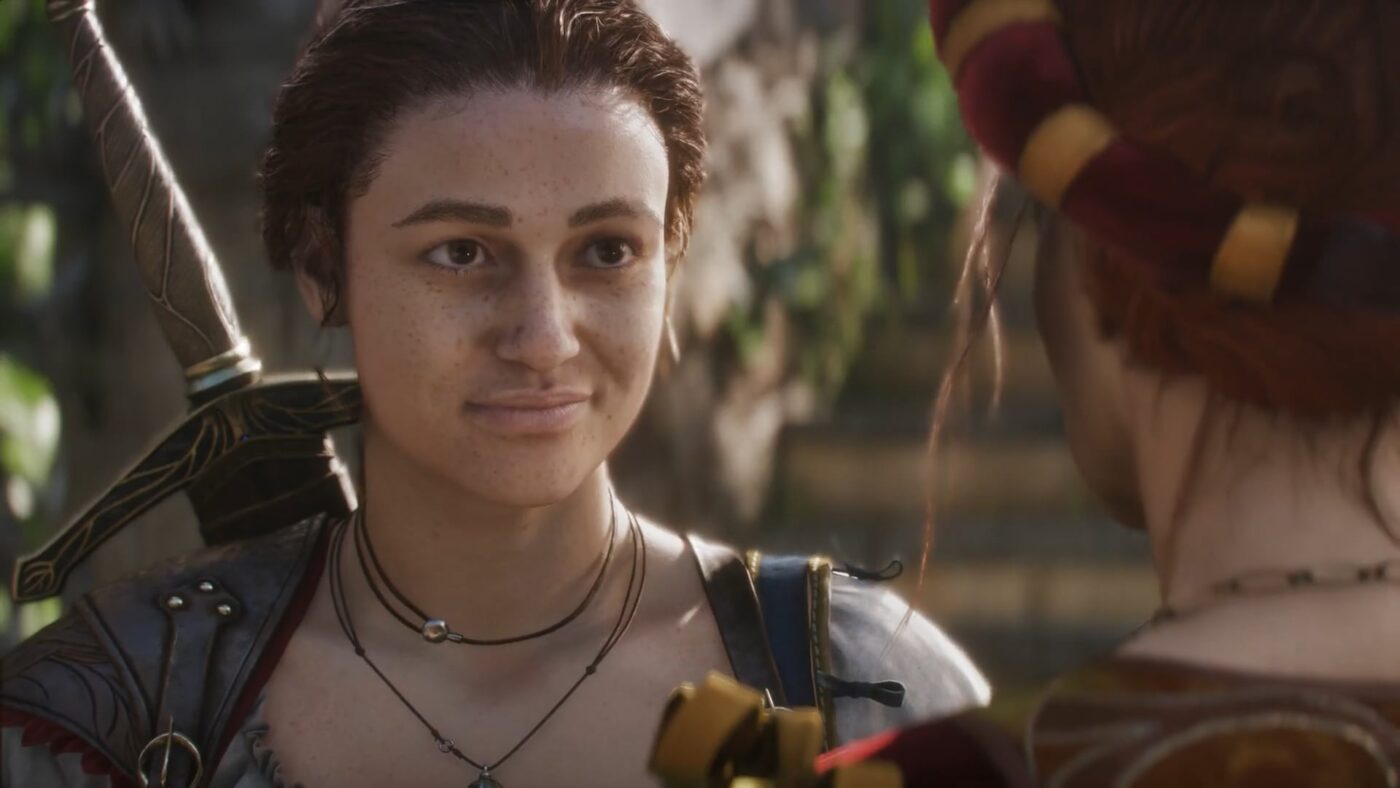
We spoke about cinematography in animation and video games with cinematographer Miguel Ángel Viñas, whose career has taken him across the UK, Ireland and Spain. In this conversation, he discusses his work on more than 150 cinematic sequences for the video game ‘Fable’, directed by Ralph Fulton and due for release in 2027.
His experience on the game may offer a valuable reference for professionals looking to enter the worlds of gaming or animation, particularly at a time when Spain is enjoying an exceptional creative moment, as demonstrated by its historic double win at Annecy.
By Juan Esparza Cevallos
INTERVIEW WITH MIGUEL ÁNGEL VIÑAS, CINEMATOGRAPHER
How did your interest in video games and animation begin?
I was born in 1980, and when I was growing up the Nintendo DS was something new that opened the door to other worlds. By the late 2000s, we had also begun to realise that video games, beyond entertaining us, allowed us to interact with a story, connect with its characters and understand the creators’ intentions, although in Spain there were not many references within the industry.
About ten years ago, I began thinking that video games had certain advantages over films: they last longer, reach more people and offer an almost infinite number of stories and spaces in which you can interact with the character.
I don’t think cinematographers should limit themselves to live action. A cinematographer is someone with artistic sensitivity who understands how light changes the emotion of a scene and how to tell a story through tools such as the camera, lenses, lighting and movement. So I asked myself: “Why shouldn’t a live-action DP be able to bring that knowledge into animation or video games?”
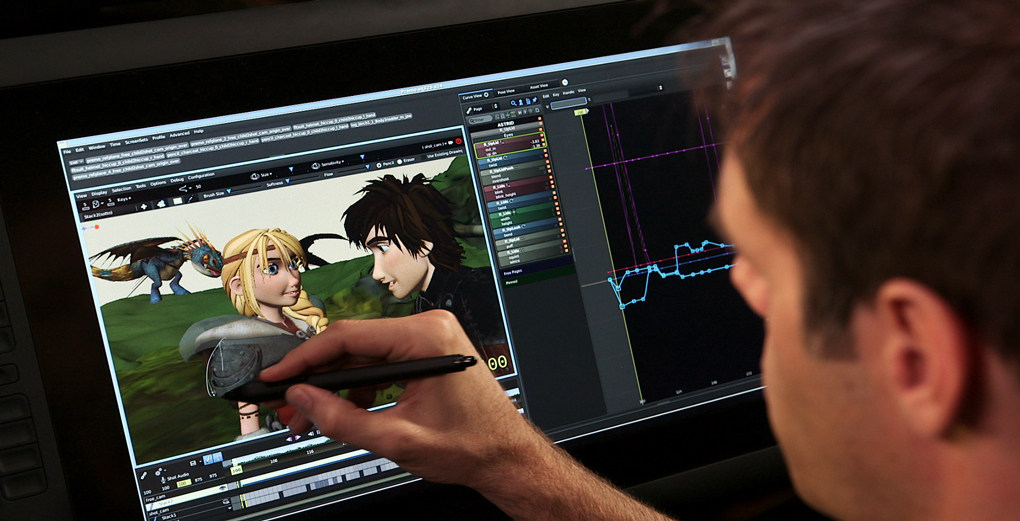
Roger Deakins showed that it was possible on films such as How to Train Your Dragon and WALL-E, where he worked as a visual consultant.
Was there a previous project of yours that caught the attention of the creators of ‘Fable’?
After moving to the UK and shooting a couple of television series in Ireland and Spain, I came across a job posting for a cinematographer on a video game. I had always wanted to work in animation as a DP, so I sent in my CV.
After speaking with cinematics director Mark Tan and showing them a BAFTA-nominated documentary, ‘The Road Bad & The Place Dark’, they liked my proposal and decided to hire me.
What differences do you find, as a cinematographer, between animation and live action?
I think the main difference is time, because animation takes much longer.
In live action, you have a specific amount of time to shoot a sequence and you have to make decisions that are final. If you shoot a close-up of a character rather than a wide shot, that is the material the editor has to work with.
In animation, by contrast, you have the “superpower” of going back in time and creating another shot because the previous one doesn’t work. You can introduce another camera, change the way the characters move, alter the lighting, modify the environment… the possibilities are endless.
But that is also a disadvantage. Because you can always go back, there is never a point at which you are completely satisfied with what you have.
For example, in the Fable cinematics I tried to preserve the kinds of “mistakes” that happen on a live-action set, when you put the camera somewhere you hadn’t originally planned and capture the scene in a different way. Those imperfections in the lighting and camerawork give a story character and personality.
“I don’t think cinematographers should limit themselves to live action.”
What skills should a cinematographer develop if they want to work in this sector?
I think you need to have a strong personality when approaching a project and know when to say no. You also have to be able to defend your decisions within a more corporate environment, because there are a lot of people giving their opinion.
Creating a video game is a bit like making a commercial, except that it lasts two and a half years. You have to work with the agency, the client, the production company and many other people who are also involved in creative decisions.
Your job is to show them the value of your proposal and explain why you are making one decision rather than another.
That said, I think cinematographers sometimes fall in love with an image, and when somebody questions it, it feels as though they are taking the heart out of the story. Developing the emotional maturity to accept when you are wrong is wonderful, and it benefits you enormously when designing sequences.
There is also camera operating. Operating a camera in a video game may look easy, but there is usually a delay of around two seconds between what you see and what is actually being captured.
That was something I found very difficult to understand at first. Mark Tan, who is also a fantastic camera operator and works on video game cinematics, had warned me that what I saw would be different.
I learned to anticipate when the characters were about to move. One thing that helped was realising that an actor’s eyes tend to shift before they move in one direction or another.
“I don’t think cinematographers should limit themselves to live action.”
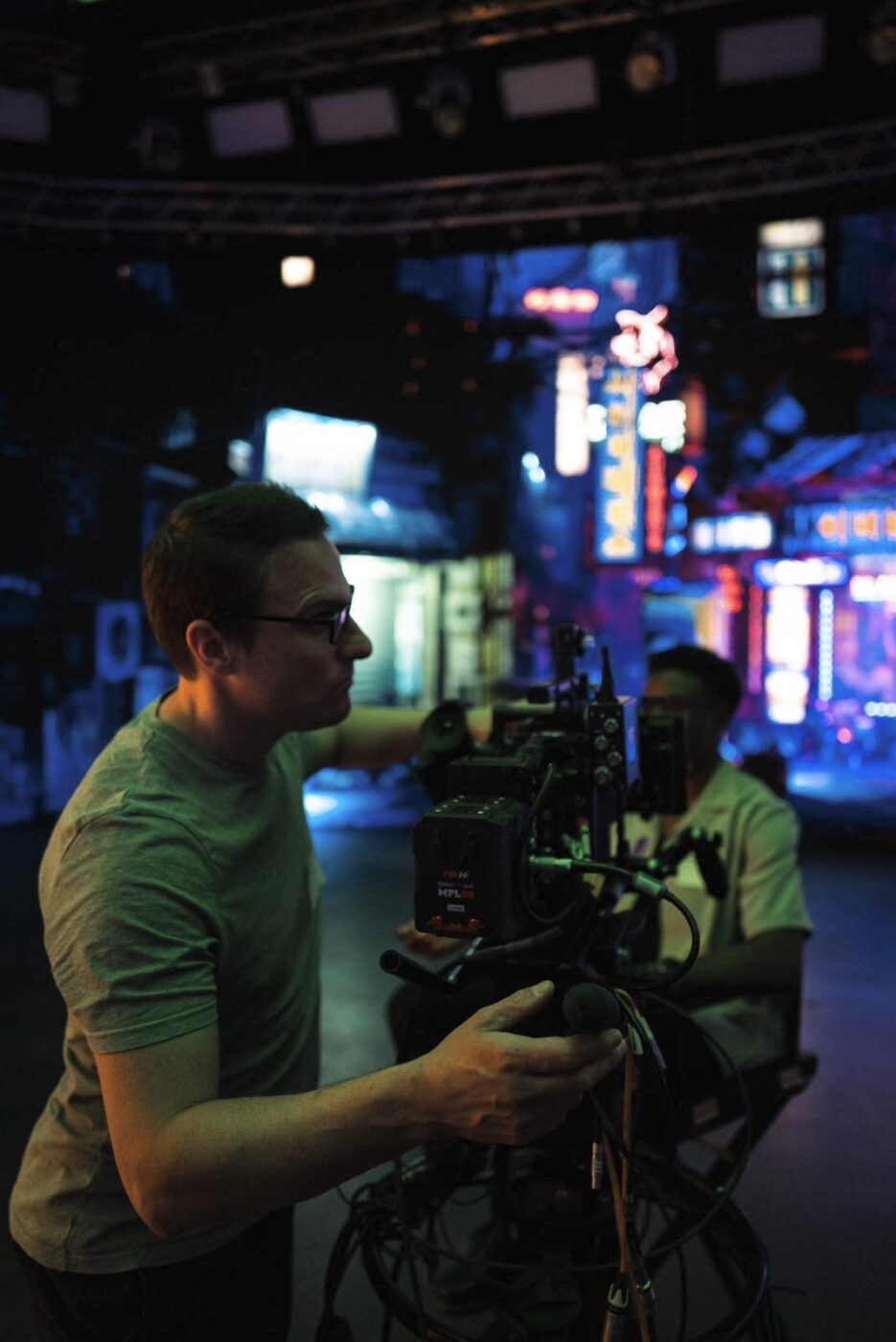
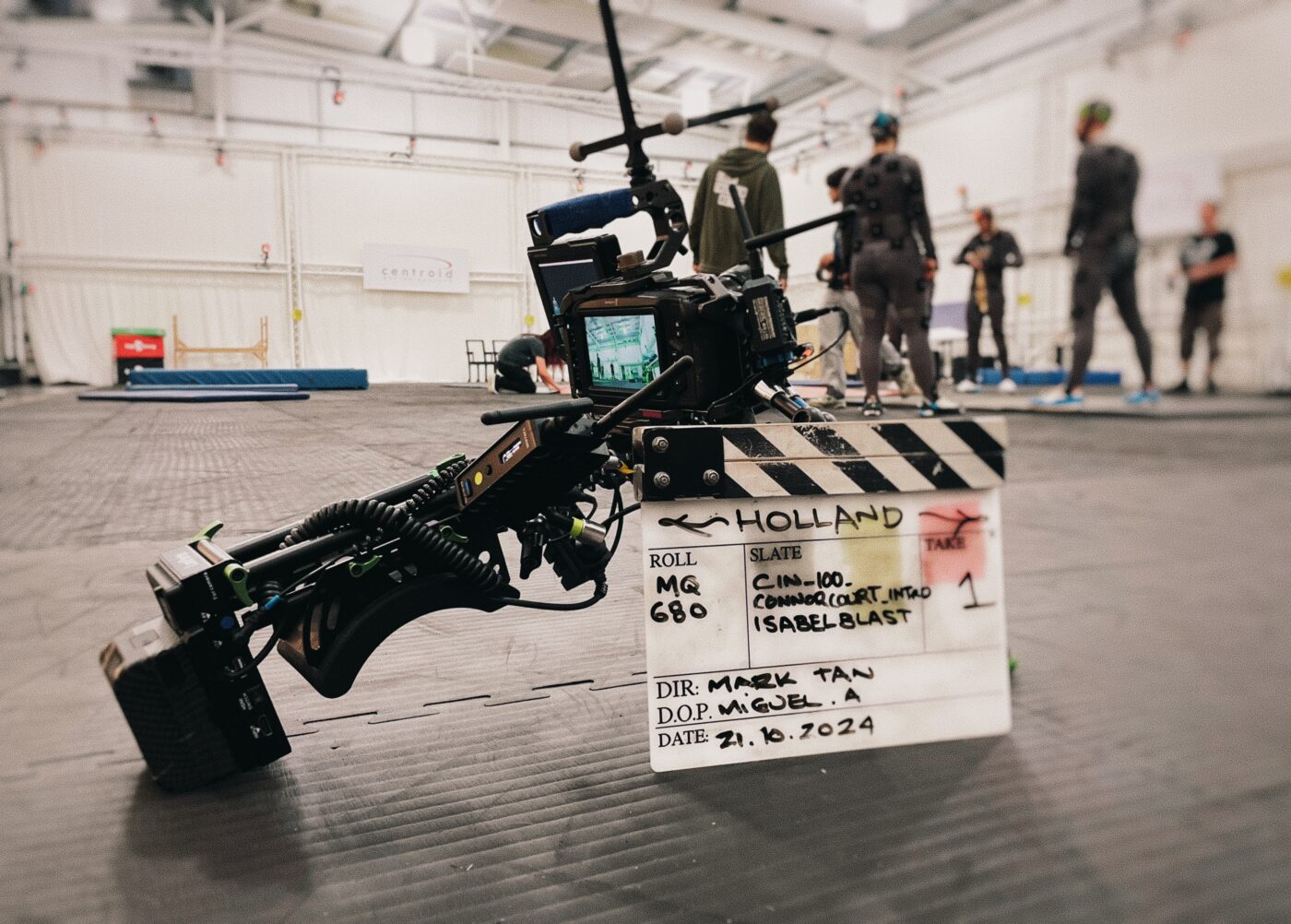
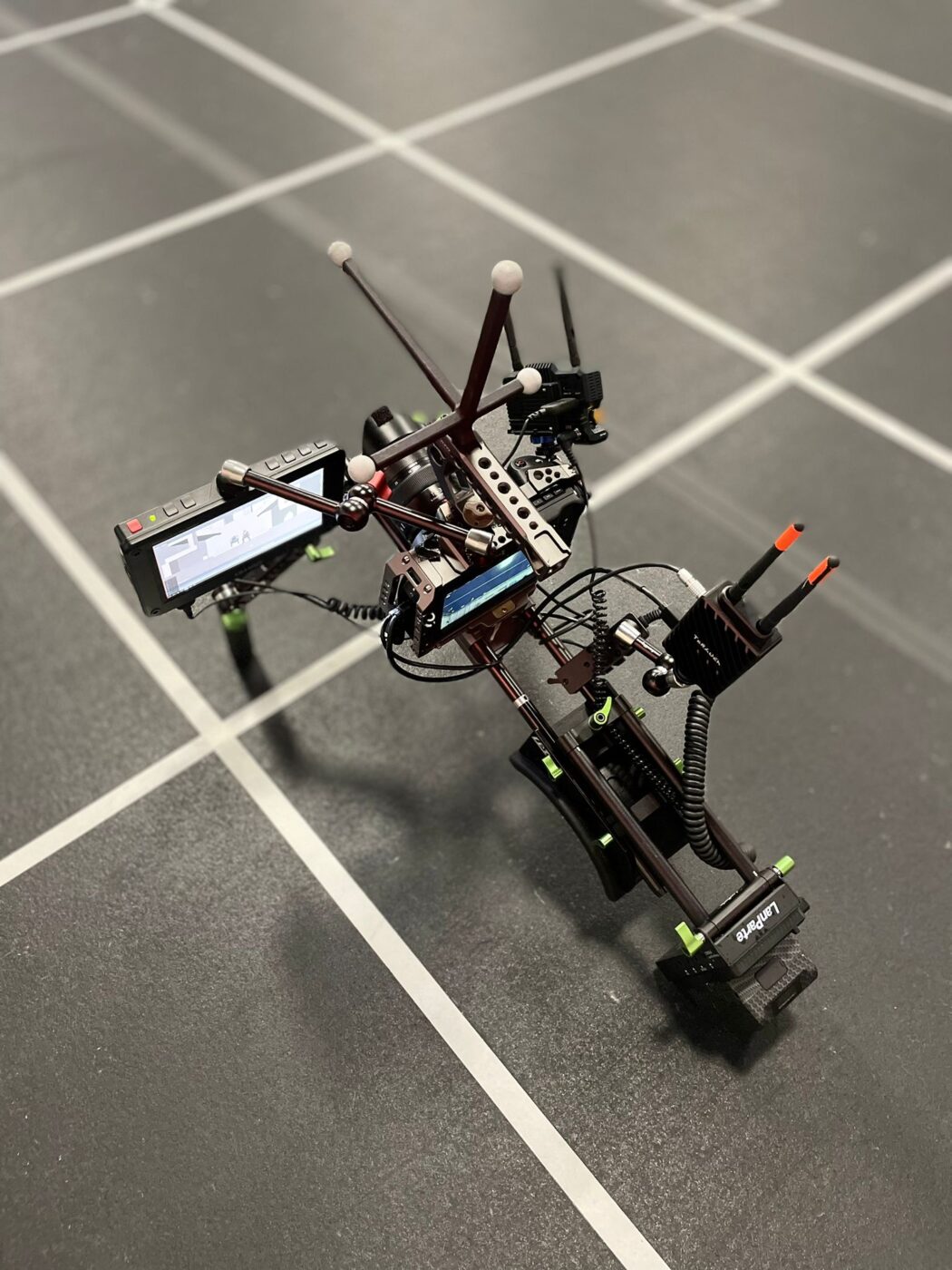
Left: camera and lighting tests on the virtual production stage. Right: the camera configuration used on ‘Fable’. © Michael-David McKernan.
How were the cinematic sequences for the game shot?
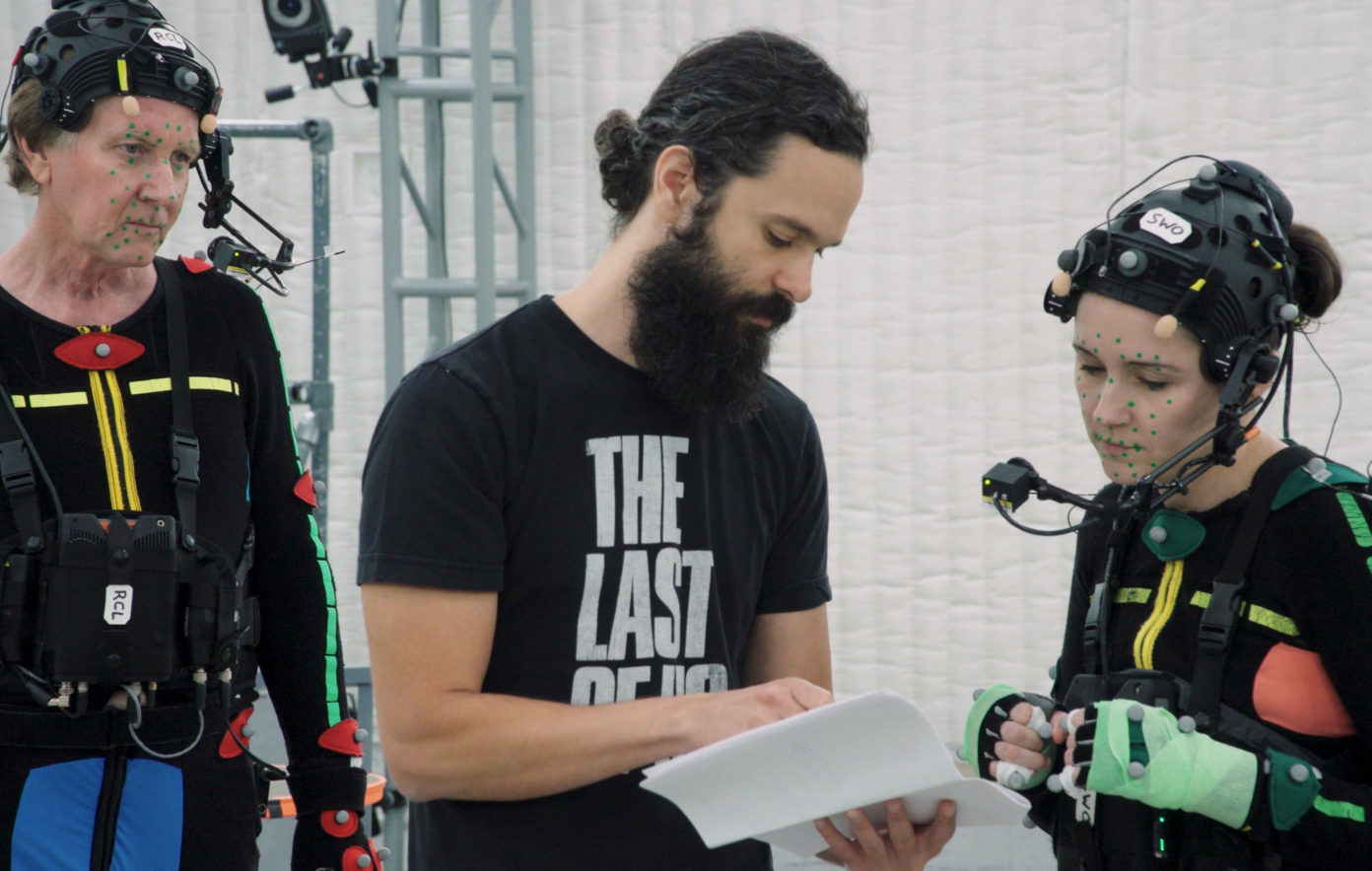
We worked on two stages dedicated to motion capture and virtual production, with actors, suits, tracking cameras and LED screens.
The camera and lenses were fitted with motion-capture sensors, so the camera movement in the game originated from the physical camera movement on set. That allowed us to retain small imperfections associated with live-action shooting.
I think the live-action shoot was fundamental to achieving the degree of realism they wanted for the game. When actors are on a set surrounded by cameras, lights and technicians, they perform and move differently than when they are alone.
There is one scene I particularly like in which a character moves down towards a chair. On the final take, the actor unexpectedly changed the action and my camera move became slightly erratic, creating a documentary quality that I thought was fantastic.
I told the director I would love them to keep that take because it conveyed something very real, and those kinds of imperfections are not something you normally find in a video game.
How would you describe the previs process?
The first day was essentially an initial session with the actors while the writers were still making changes to the script.
Then we would create a rough physical mock-up of the spaces in which the scene was going to take place so the actors could understand the dimensions and movement within the environment.
That is something they have adopted from live-action filmmaking, and it helps the cinematics feel real because people are physically interacting with elements from the scene, and you can sense that.
Once the actors were happy with their choices, we would take a break and then return to block the scene. A lot could still change at that point because our approach was documentary-like.
I would record those sessions with the camera, then we would review the material to see whether it worked and discuss how we could improve it.
We were quite fast: it usually took us between 45 minutes and an hour to establish the basic skeleton of a scene.
After that, we would carry out the full previs using different 3D modelling applications, rebuilding the scene in animation and defining both character and camera movement.
Once that was done, we would shoot and inevitably discover situations that had not emerged during previs. But previs gave us a reference for the movement and made it easier to identify when something genuinely wasn’t working.
We also improvised because we knew exactly what the scene was trying to say and had already established its emotional core.
Working with Mark Tan was wonderful because he knows exactly how to direct actors. With his guidance, performers could enter a situation —fighting a dragon with a prop, for example— while he communicated his intention to them, sometimes through cinematic references.
“In animation, you have the ‘superpower’ of going back in time and deciding to create another shot because the previous one doesn’t work.”
What camera did you use to shoot these sequences?
We tested several cameras and lenses —ARRI, Sony, RED, Panavision C Series, Hawk and others— but because the sequences were going to be very long and shot shoulder-mounted, we opted for a Blackmagic Cinema Camera 6K with a lightweight zoom.
We balanced the rig —which was complicated because the camera body is not particularly ergonomic— so that I could operate it on my shoulder, use the zoom and transmit the image wirelessly.
That allowed the director, producer and writer to see focal-length changes, the base lighting, animation and environments on the monitors, both in 3D and as live-action imagery.
What was the lighting process for these sequences?
It took place in several stages. The first was to create a base lighting setup for the live-action shoot, which we could visualise through the 3D software.
Because we had a quad-view monitor displaying the different live camera feeds, I would establish a relatively simple, non-dynamic base lighting scheme designed primarily to establish the intended time of day. And because we were shooting in 360 degrees, there was no way to adjust the lighting between takes.
Once we had completed the editing stage and everyone was happy with it, we would meet with the gaffer / lead lighting artist and the lighting director and share all the visual references we had developed for those sequences.
The lighting department would then work on the lighting in software, while I reviewed their progress, gave notes and suggested changes to the lights and colors —or told them to keep what they had done.
That department was fantastic. They had tremendous artistic sensitivity and understood exactly the kind of lighting we were looking for.
Did your work also cover the interactive gameplay?
No, only the cinematic side of the game, although I would have loved to work on the interactive side as well.
The video game industry has not quite reached that point yet. There isn’t one person overseeing the overall lighting. Generally, there is a base lighting approach for the entire game world, although on Fable we developed specific lighting for different locations.
How would you describe the visual language you used on the game?
It was a cinematic language.
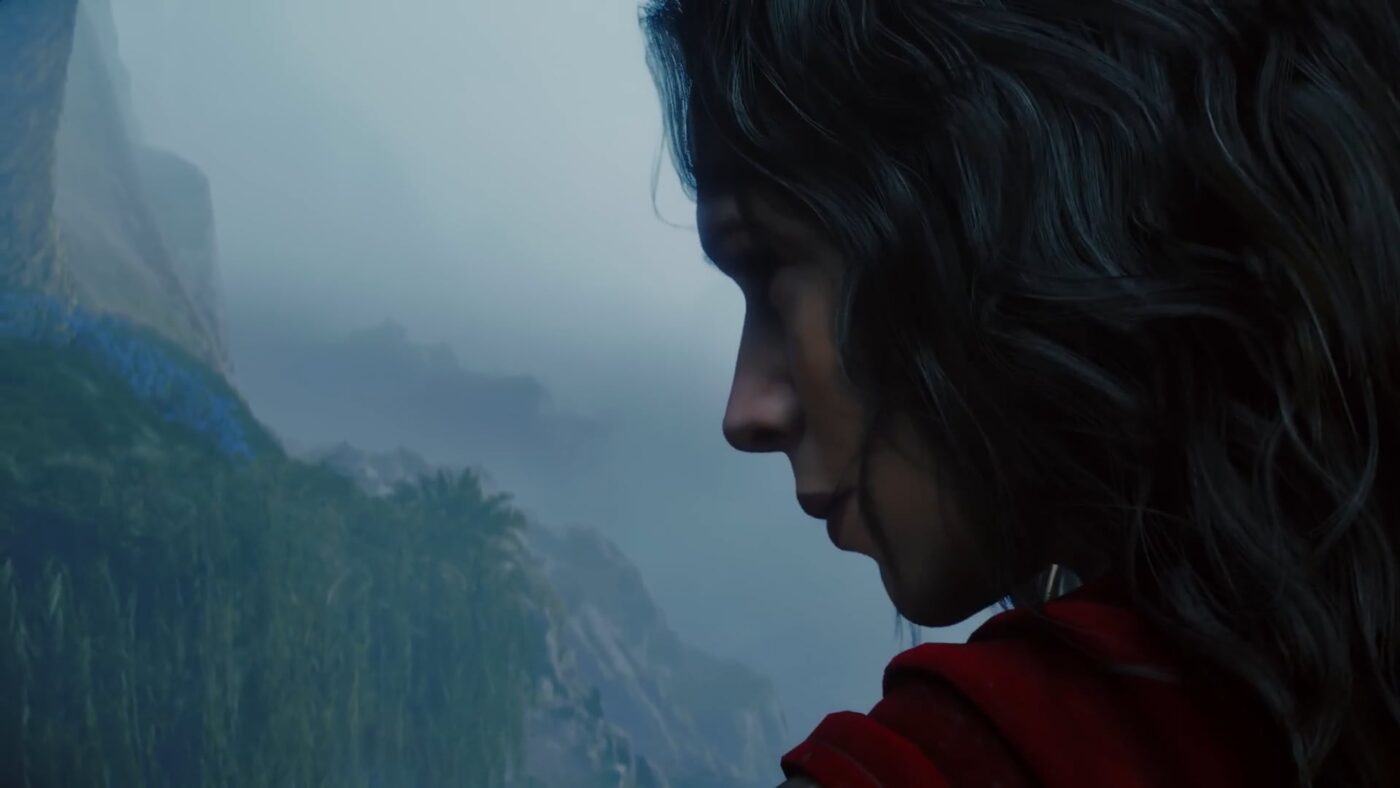
Although they wanted a documentary feel in the camera movement, the lighting and composition were closer to a major Hollywood production such as Maleficent, because Fable combines a fairy-tale aesthetic with a documentary element.
I think they have arrived at a very interesting place by combining those two approaches.
Video games often offer a much wider field of view. How do you approach point of view in these environments? Can you give us an example?
I think one of the reasons I was chosen to work on the game was that I shoot and light for a 360-degree environment.
Because they wanted a more documentary-like approach, I think my way of working suited them. If there is natural light that works, I am not going to change it.
That way of thinking about light is something we brought into Fable: lighting the environments and then allowing the characters to move through them.
The game is divided into two periods: childhood and adulthood.
The childhood section is much more cinematic in narrative terms. We decided to place the camera below the character’s eye level so that everything would feel larger.
We used 18mm and 25mm lenses, and visually the approach is reminiscent of The Hunger Games: The Ballad of Songbirds & Snakes in terms of camera height, lens choice and movement.
We also decided to follow the child from behind, keeping the camera close to the shoulder with a smooth Steadicam-style movement.
For adulthood, we used a zoom because the point of view is that of a BBC documentary crew that has arrived in this world to make a film about its different characters.
For the close shots we used lenses in the 25mm to 29mm range, while for action we used 50mm or 75mm.
We followed a fly-on-the-wall principle, observing without interacting with the characters.
How do the cinematic sequences transition into the sections where the player controls the character?
The technical camera department was responsible for moving the camera smoothly into the position where the cinematic sequence begins so that the player does not notice the transition.
Working with our lighting department, we recreated morning, afternoon and night lighting to maintain continuity.
‘Fable’ also has a global lighting system for gameplay that is treated in a very cinematic way. The position of the sun determines the shadows, the direction of the light, its hardness and its warmth.
Clouds even pass randomly in front of the sun, changing the appearance of the environment.
“In animation, you have the ‘superpower’ of going back in time and deciding to create another shot because the previous one doesn’t work.”
How do the different artistic departments collaborate on projects like this?
In video games, the art director develops the overall visual language and defines what they want the player to feel at different moments.
It is a huge responsibility because they are one of the few people with a global vision of the game and an understanding of what every department is doing.
That makes it very important to talk to them and understand what they want. From there, you can begin making proposals.
Our art director came from an audiovisual background, so he was extremely receptive and understood the references perfectly.
They see things that we, as live-action cinematographers, don’t necessarily see. For example, they pay enormous attention to lines, to the relationships between objects and to geometry.
When you enter their world, it is almost as though you start seeing in 3D.
Another key department is lighting. From my point of view, there should be a distinction between gameplay lighting and cinematic lighting, because they respond to different requirements.
I think the cinematographer should be the person overseeing both departments. But that role does not yet really exist in video games because the camera and lighting departments have different directors.
The software team is also incredibly important because they determine what kind of lighting is possible within the different engines.
If you are using Unreal, for example, you might be able to create a type of light that cannot be replicated in another engine.
So you need to work with that department to understand how you can achieve the lighting you want using the available tools.
That is why learning about the engine itself is so important: it allows you to reach the visual intention you are after.
The live-action department, meanwhile, operates much like a film crew. It includes a producer, a gaffer, a motion-capture team and a software team that makes it possible to visualise the virtual environment during the shoot.
Because the art department builds the environments and defines the elements that will appear on camera, coordination is constant from the outset in order to integrate the needs of lighting, camera and staging.
“They see things that we don’t. For example, they pay enormous attention to lines, to the relationships between objects and to geometry.”
Where do you think cinematography could go next in these fields, particularly with tools such as Unreal and AI?
I think we will continue making live-action films, but AI is already fully integrated into our workflows.
I recently read that Netflix had used artificial intelligence efficiently in more than 300 productions, allowing them to create shots that would otherwise have been impossible.
I have worked on several AI-based campaigns myself and, although the job no longer involves physically operating a camera, the creative process is very similar.
As cinematographers, what we contribute is not so much tied to the tool itself as to the way we understand light, camera and the emotion we are trying to convey alongside the director.
That perspective can be applied equally to a comic book, a video game, an AI-generated production or a live-action film.
Projects will emerge in which the traditional position of cinematographer may not exist. Instead, we may become closer to visual designers, responsible for building the visual universe from scratch.
In some ways, we will become more like video game art directors: defining the atmosphere, connecting sequences and guiding AI systems or Unreal technicians towards the feeling we want to achieve.
That is something we have already experienced on Fable through virtual production, and it has helped us visualise sequences more effectively.
It is an area worth exploring because there are still very few examples of these kinds of hybrid cinematographers.
Equivalent Roles Across Film, Video Games and Animation
| Film | Video Games | Animation |
| Director | Creative Director | Director |
| Cinematographer | Lighting Director / Lighting Supervisor | Lighting Director |
| Camera Operator | Cinematic Artist / Virtual Camera Operator | Layout Artist |
| Gaffer | Lead Lighting Artist | Lead Lighting Artist |
| Sets / Production Environments | Environment Artist | Environment Modeling |
| Actors | Motion Capture | Voice Actors + References |
| Colorist | Look Development | Look Development / Compositing |
“They see things that we don’t. For example, they pay enormous attention to lines, to the relationships between objects and to geometry.”
The table in the article maps familiar film-crew positions onto roughly equivalent roles in video games and animation.
What experience do you have in animation?
I am currently immersed in an animation project.
I became involved because they were looking for realistic lighting and someone who approached visual language differently from the way it is traditionally understood in animation.
I suggested shooting the sequences as though they were live action. Understanding that aspect —which was unfamiliar to them— has changed the way they see the project.
So we are now approaching pre-production as though it were a live-action film, including technical location scouts.
I think it is important for DPs to collaborate on these kinds of projects because, even if we do not have an in-depth knowledge of the software, our contribution can focus on how we understand lighting, camera and the way both interact with the actors and the environment.
The relationship with the director is also essential if you want to create a sequence that has soul and can communicate with the audience on several levels.
Another factor that makes this integration difficult is that on an animation project you do not physically shoot anything: everything is done on a computer.
There is also a financial-structure issue. In live action, you work on a project for several months, often with very little time off or holiday, and part of your compensation reflects that almost total availability.
Animation does not work in the same way. If you want to be part of an animation or video game project today and have control over the different decisions being made, you may need to work nine to five, Monday to Friday, for several years.
Studios do not have the same budget model as a live-action production when it comes to bringing in an additional team whose role they are not even sure they want yet.
In that sense, it is up to us as cinematographers and members of live-action film crews to educate studios and demonstrate how much value we can bring to these projects, from pre-production all the way through conform.