









The Photochemical Lab in the Digital Age

AUTHORS: CARMEN V. ALBERT, DANI BENEJAM
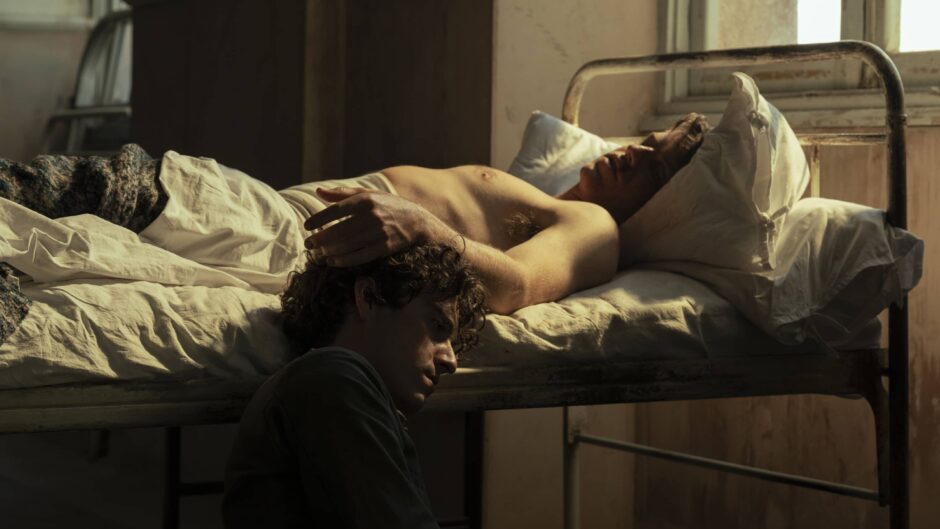
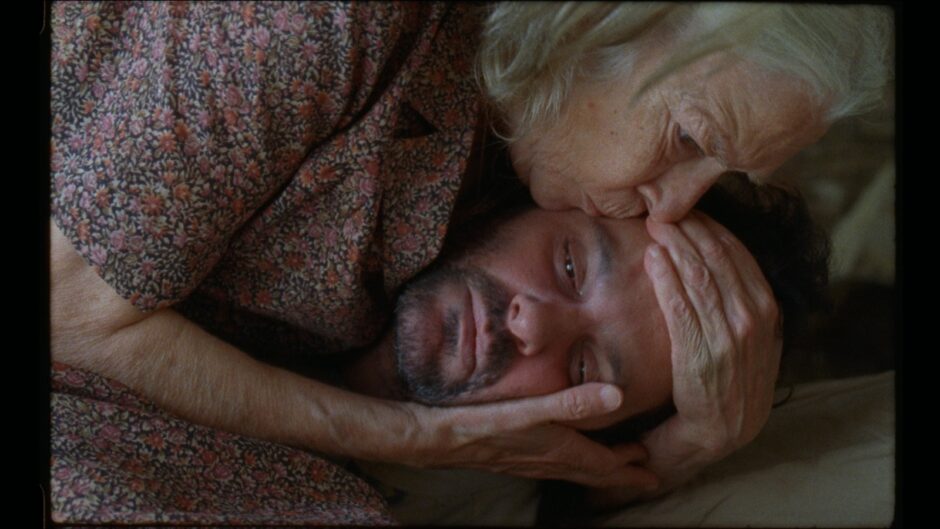
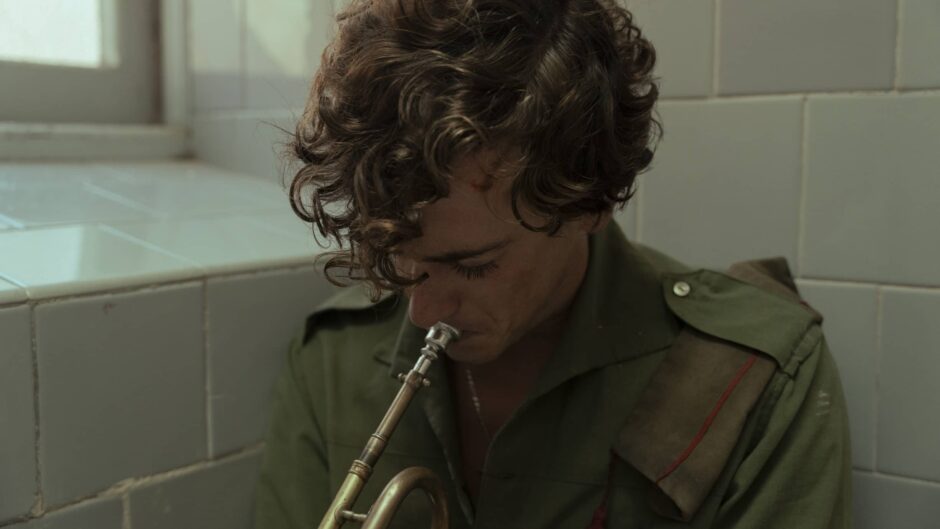
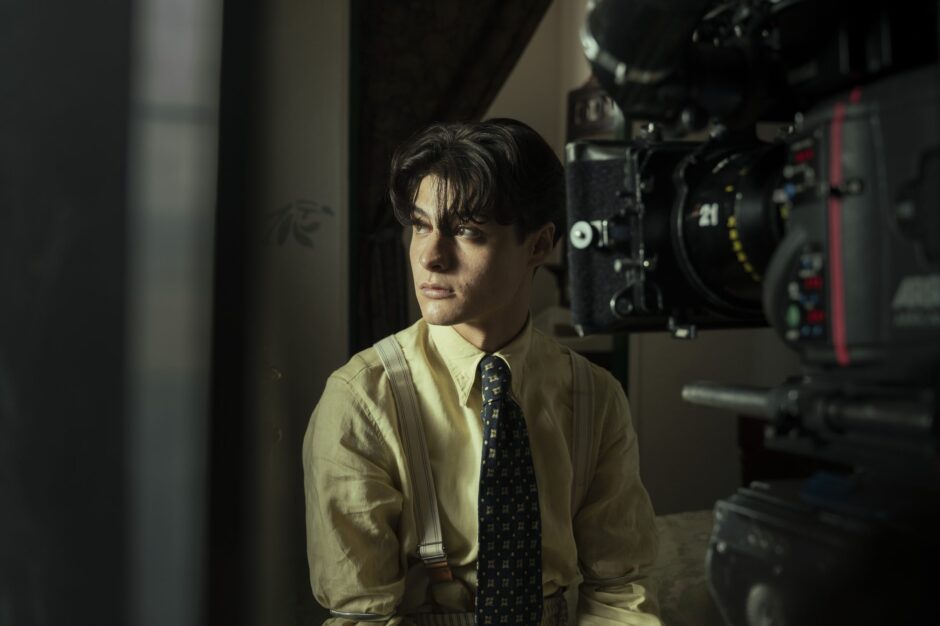
Imagine having access to a motion picture film processing laboratory in Spain. What has become a matter of nostalgia here since Deluxe’s Barcelona lab closed in 2015 remains a reality in several European cities. Nevertheless, Spanish cinema has joined a growing trend already visible in countries such as the United States and the UK: the return of photochemical film among some of the most internationally prominent productions. Two of this autumn’s major Spanish releases, both presented at Cannes —El ser querido and La bola negra— were shot on film and processed at Augustus Color in Rome. The negative for Sirât, meanwhile, travelled to Paris, while Society of the Snow turned to Cinelab London for a DFD (Digital–Film–Digital) process.
This summer, thanks to an invitation from postproduction partner company Only Postproduction, we attended a workshop led by Kimberly Yurani González Rodríguez, In-house Producer and Sales & Acquisition at Andec, and Ludwig Hagelstein, one of the directors and owners of Berlin-based laboratory Andec Filmtechnik —formerly Cinegrell—, a partner of Madrid rental house Lenso and the only European laboratory offering 35 mm Ektachrome processing using the E-6 process. The 35 mm footage for the beautiful Estrany riu, for example, was processed there.

It is worth noting that the workshop was organised by Only Post and Kimberly as part of their cooperation agreement, and that Andec’s In-house Producer put us in touch with the producer of ‘Adiós, Ríos’, whose contribution to this article is essential to understanding the issues it explores.
“Everyone should have access to a professional workflow.” Ludwig Hagelstein
A laboratory that refused to disappear
Andec’s motion picture film laboratory has been operating since 1957. It works with 8 mm, 16 mm and 35 mm film, while also providing restoration, postproduction and other services related to photochemical film.
One of its defining characteristics is the diversity of clients it works with. “Everyone should have access to a professional workflow,” Ludwig Hagelstein tells us as he begins his talk. At Andec, in terms of quality, a small project receives the same standard of service as a major production. In terms of speed, the laboratory adapts to each project’s schedule, with deliveries generally completed within a maximum of 24 hours. They know that if the photochemical workflow cannot be integrated into contemporary postproduction schedules, the project will ultimately be shot another way. The same applies to cost: they want to prevent productions from automatically ruling out negative film because they assume it will be unaffordable.
Their handling of Super 8 differs from that of 16 mm or 35 mm. Since they receive large numbers of small cartridges, these are grouped together and processed once a week.
Andec was the last laboratory to survive in Germany during the transition to digital, and it did so thanks to film enthusiasts who continued shooting on Super 8. That is why it continues to serve the small-scale clients who historically helped keep the laboratory alive.

The laboratory is no longer a ‘black box’
Historically, laboratories have operated rather like a black box: you send in the negative and it disappears inside the lab until eventually a result comes back. Andec does not want to work that way and considers direct communication with the production to be essential.
That same philosophy of transparency also extends to budgeting. Traditionally, laboratories charged one rate per metre for processing, another per minute for scanning, fees for the gigabytes used to upload files, and a range of additional costs. To avoid producers becoming alarmed as soon as they hear the word ‘negative’, Andec believes it is important to make the total cost clear from the outset, with no hidden charges.

Andec, whose partner in Spain is Lenso, receives a significant amount of material from Madrid and Barcelona. Larger productions use runners to deliver the negative directly to the laboratory. When the budget does not allow for this, productions and rental houses send it by courier. “You finish shooting today, prepare the shipment, and the next day it can be in Berlin before noon,” Hagelstein says.
Prolonged exposure to high temperatures can be harmful, but a short journey should not significantly affect the negative. What is essential, however, is to label the package correctly with a ‘Do not X-ray’ notice.
Shooting on film without working as if it were the 1990s
Ludwig Hagelstein —who, incidentally, is quite young— explains that a completely digital workflow can be built around film. When the negative arrives, each roll is immediately registered in the laboratory’s electronic system. It then goes through processing before being prepared for scanning. If, for example, they receive three camera rolls, they can combine them into a lab roll and scan them together.
At 2K they can scan virtually in real time. At 4K they work at between 15 and 17 frames per second. The client receives a link to download the files, but also a preview version that can be played on a mobile device. “We don’t want people to have to download a huge file just to see the material. You can open a link on your phone and watch it immediately,” he explains, noting that this is how the advertising industry works.

Why continue shooting on film?
Hagelstein tells us that when someone was asked why they would choose film over digital, the answer was: “Because film has a soul.”
Perhaps that helps explain why, as more AI-generated content appears, interest in photochemical film seems to be growing. Hagelstein then shares one of the most surprising facts of the day: one of their major advertising projects this summer is for Claude, the AI chatbot. The commercial will use an amount of 35 mm film close to that of a feature film. Apparently, a London laboratory also processed the negative for another campaign for OpenAI.
It is possible that the rise of artificial intelligence is indirectly increasing the value attached to things perceived as physical or human. For Hagelstein, this does not mean that everything will return to being shot on film. “There will be an enormous amount of AI-generated content and a huge amount of digital production, but alongside that there may be a movement among people and brands looking for more physical processes and a distinctive visual identity.”
Film still requires specific infrastructure and skills. Hagelstein believes that knowing how to work properly with photochemical film could become a professional advantage in an increasingly difficult market. Nevertheless, the choice has to serve the project: digital works better for some productions, while film makes more sense for others.
What happens inside the negative
Motion picture film consists of a base —the plastic support— on which different layers of emulsion are coated, containing light-sensitive silver halide crystals suspended in gelatin.
When film is exposed inside the camera, those crystals react to the photons arriving from the scene, creating what we call a latent image. The information has been chemically recorded in the emulsion, but it must go through processing before it becomes a visible image.
In a colour emulsion, processing simultaneously creates a silver image and the dyes that will ultimately form the image. The process takes place for a specific amount of time and at precisely controlled temperature, pH and chemical-solution concentrations. All of these parameters are continuously monitored.

The difficulty, the Andec expert admits, is not simply getting an image to appear, but ensuring that the result from the first metre processed is exactly the same as the result from metre 500,000.
Motion picture negative incorporates a rem-jet layer [Kodak updated Vision3 film in 2025, replacing rem-jet with an AHU layer], which reduces internal reflections and helps the film travel mechanically through the camera. During processing it is removed, and this is one of the reasons why motion picture negative should not be treated like C-41 photographic film. Colour motion picture negative normally uses the dedicated ECN-2 process.
Chemistry also creates the look
The amount of time film remains in the developer directly affects the result and makes processes such as push and pull possible.
In push processing, the negative remains in the developer for longer than usual, intensifying development and increasing density. But there is a common misunderstanding: pushing by one stop does not mean that a full stop of sensitivity has been gained. According to Ludwig Hagelstein, it may provide approximately one third of a stop of additional useful information.
That is why we cannot take a 500 ISO stock, push it by three stops and assume that it will behave like a 3200 ISO film. “If the photons never reached the film, the laboratory cannot invent them afterwards.” What a push does is develop the information that is actually present in the negative more aggressively. It usually results in higher contrast and more visible grain.
Push processing is not used only to compensate for underexposure. One example is IKEA’s Coming Home commercial, shot mainly in Spain by cinematographer Max Pittner. Most of the material was processed at Andec with a one-stop push. Slight overexposure combined with push processing can produce an image that is somewhat cleaner in terms of grain, with greater density and slightly increased saturation —a technique they use quite frequently in advertising.
Pull processing works in the opposite direction, reducing development time. When combined with overexposure in camera, more light is given to the negative than its nominal sensitivity would normally require, while chemical development is subsequently restricted. This can produce very clean images with lower contrast and a finer grain structure. A 16 mm 50D stock overexposed and processed with a one-stop pull, for example, can approach the appearance of 35 mm while remaining a more economical format.

Another possibility is bleach bypass. During normal processing, the silver is removed because otherwise a black-and-white image would remain superimposed over the colour image. Bleach bypass partially or completely omits this stage, meaning that the silver image remains alongside the dyes, creating a more desaturated image with greater contrast.
The combination of emulsion, exposure and processing can therefore alter the image significantly. If a special process is being considered, the ideal approach is to speak with the laboratory in advance and carry out tests.
Ektachrome: the positive image
Ektachrome is reversal film. This means that once processed, the camera original itself is already a positive image. What we physically see on the film are the final colours.
For Hagelstein, this is one of its most fascinating characteristics: “You look directly at the camera original and you already have an almost finished image. The price you pay is having much less latitude than with negative film.” With Ektachrome, many of the contrast decisions are effectively built into the film itself, so exposure has to be extremely precise. Hagelstein tells us that some colourists, when seeing the material, ask whether a LUT has been applied because they find the contrast so strong. “We have to explain to them that this is simply what the film looks like.”
Cross-processing Ektachrome involves using colour-negative chemistry to achieve greater contrast and a different colour palette. Andec does not usually recommend it because the laboratory performs the genuine E-6 reversal process, which is extremely complex and scarcely available in Europe.
Working in ACES with Wes Anderson
One example of just how thoroughly a photochemical shoot can be integrated into a contemporary pipeline is Andec’s work with Wes Anderson. On The ‘Phoenician Scheme’, they worked with an especially complex colour pipeline because a large part of the film involved virtual production. When photochemical film is introduced into this type of environment, the entire workflow has to be integrated and calibrated within a broader ACES pipeline.
To achieve this, they carried out tests with different lenses, cameras and filters, and created specific IDTs (Input Device Transforms) for the different configurations. The main reason was the potential colour deviations introduced by the LED screens, as extremely precise calibration was required.
Ludwig stresses that colour management is fundamental when working with film. “You can have a good negative and a good scan, but if that scan is interpreted incorrectly, the result may look nothing like what you expected.”

The level of precision required by that complex ACES pipeline led Andec to achieve a calibration standard they have maintained ever since. “If we scan a negative today and scan that same negative again in a year’s time, we should obtain exactly the same result.”
Andec uses two machines for its highest-quality scanning: Scanity and Arriscan XT. Both systems operate at 16 bits per channel, with the aim of preserving all the colour information available in the film.
In the past, a telecine would be created for editing. Once picture lock had been reached, the editor would generate an EDL (Edit Decision List) and the production would return to the original negative, scanning at final resolution only those sections actually used. Today, the entire negative is scanned once, from the outset, at final resolution. Any version can then be conformed from those files without physically returning to the negative. Editing and grading remain flexible, rescanning costs disappear and the negative only has to be handled once.
The journey back to film
The Berlin laboratory recently produced a run of 35 mm prints for a film shot on 16 mm that was to be screened for the German Film Academy in 35 mm. The film had been scanned, edited and graded digitally. An image negative was then created from that digital master using an Arrilaser, together with a separate sound negative. Both were subsequently run through a film printer to create the exhibition print.

“The result from the first metre processed [must be] exactly the same as the result from metre 500,000.” Ludwig Hagelstein
Ludwig tells us that there is always a necessary digital step. Even in Christopher Nolan’s films, which retain a traditional photochemical workflow, shots involving VFX have to be digitised so that the effects can be created before returning to film.
Andec also uses positive film to develop looks. The negative is scanned as a reference, a positive print is made and then scanned again. From these tests, LUTs can be built that reproduce, within a digital workflow, the way contrast and colour behaved when that negative was printed onto positive film.
Another increasingly common process is film-out —or DFD—, which involves transferring a digital image onto photochemical film. Ludwig Hagelstein explained why this process is interesting.
In a digital image, the pixel structure remains fixed. Film grain, however, never occupies exactly the same position in two consecutive frames. Every frame is unique. This introduces permanent movement within the texture itself. Even when the grain is extremely fine, a subtle underlying activity remains.
Thanks to this microvariation, for example, when a VFX shot is transferred onto film, the effects become embedded within the photochemical structure itself, which can help integrate them with the rest of the image.
To produce a 35 mm film-out, Andec uses an Arrilaser that records three colour separations onto film by laser with extremely high precision.

That said, Ludwig points out that digital characteristics can still be visible in a film-out, such as the behaviour of the highlights. Nor should we automatically assume, from a budgetary perspective, that shooting digitally and transferring to film afterwards will necessarily be the cheaper option. Finally, for the best result, the material must be correctly graded. This is part of a colour workflow and needs to be approached as such. To make the process controllable and repeatable, Andec records colour charts onto film and subsequently scans them again, building the transformations required to make the result predictable.
One of the most extreme examples shown during the workshop was a music video shot on an iPhone and subsequently transferred to 16 mm.
Thinking about the image before shooting it
The conclusion we take away from the workshop is that a hybrid digital-photochemical workflow should not be approached as a sequence of isolated processes. Cinematography, laboratory work, VFX and colour grading are all part of the same chain.
During the conversation, Only Postproduction colourist Maria Nualart shared something she notices when receiving rushes: she can often gauge a cinematographer’s level of experience simply by looking at how the material has been lit. Veteran cinematographers tend to work with light very confidently and understand how to create volume. Perhaps this is due, at least in part, to the fact that for many years they had to physically measure light and understand what it was doing. When photochemical film was the only way of recording an image, there was no possibility of constantly relying on a monitor to check the result. You had to understand light.
Photochemical film introduces a series of decisions that force filmmakers to think about the image before capturing it. The laboratory therefore stops being merely the place where the film arrives after the shoot and becomes part of the construction of the cinematography.
“If the photons never reached the film, the laboratory cannot invent them afterwards.” Ludwig Hagelstein
‘Adiós, Ríos’: comparing the cost of the system, not the price of the medium
‘Adiós, Ríos’ was initially planned as a digital shoot. Shooting on 16 mm was therefore neither the original decision nor a choice made regardless of cost. It emerged when we began developing budgets for both options in parallel and discovered that the real financial difference was considerably smaller than we had imagined.
The comparison forced us to stop thinking simply in terms of ‘film versus card’ and instead compare two complete production workflows: camera, media, crew, storage, backups, laboratory, transport and delivery of the material to editorial.

In our case, the cost of the camera package was fairly similar for both options. The main difference with 16 mm was, logically, the negative stock, processing and scanning. For the film, we purchased approximately 40 rolls of 122-metre 16 mm stock, around 12 minutes per roll, using Kodak 250 and 500 ASA negative.
If you look only at that particular cost, digital clearly wins. But once we expanded the comparison to include the entire process, the gap began to narrow. According to our calculations, the overall additional cost of shooting on 16 mm was approximately 15–20%, depending on which items were included in each workflow. It was certainly nowhere near the doubling of the budget that is so often automatically associated with shooting on film.
One reason was that certain costs simply moved elsewhere. With digital, negative and laboratory costs disappeared, but a much larger data infrastructure appeared in their place.
Taking an ARRI Alexa shooting RAW/Open Gate as a reference and assuming an equivalent shooting ratio, we estimated that the material generated would amount to approximately 40 to 80 TB, depending on the shooting ratio and configuration used. And those terabytes are not free either: they have to be downloaded, verified, organised, stored and duplicated.

With a professional three-copy policy, those 40–80 TB can turn into 120–240 TB of storage over the course of a project. That means drives, backup systems, copying time and staff dedicated to data management. It is a less visible cost than buying a roll of film, but it exists and has a direct impact on both the budget and the workflow.
With 16 mm, our situation was very different. The 4K scans generated approximately 6.6 TB of material, plus around 0.5 TB of proxies: just over 7 TB of working digital material. Even maintaining three copies, we were looking at around 21 TB, compared with a potential 120–240 TB in the digital scenario we had considered.
A role we had included in the digital workflow also disappeared: the DIT/data manager. On our shoot, there was no massive card offload at the end of each day. From a production standpoint, handling the medium was very straightforward: the assistant took care of the magazines and the exposed negative began its journey to the laboratory.
And this is where another of our preconceptions about film fell apart: the laboratory did not necessarily slow down the edit. The negative was processed, scanned and digitally prepared, and we received the material synced, organised and conformed on a timeline, meaning that the editor could begin working almost as soon as it arrived. We were shooting photochemically, but from the laboratory onwards we entered a completely digital postproduction workflow.
“It was certainly nowhere near the doubling of the budget that is so often automatically associated with shooting on film.”
Film did, of course, involve certain specific additional costs. In our case, for example, transporting the negative from Galicia to Berlin cost approximately €1,200 over the course of the shoot. We also took out production insurance, although we did not consider this a decisive factor in the comparison because it is standard and advisable coverage whether working on film or digitally.
Another issue that initially concerned us was lighting. ‘Adiós, Ríos’ had a three-week shoot, including six night shoots, and much of the film was shot outdoors in mountain locations. On paper, this could have appeared to be an especially challenging context for 16 mm. However, working with Kodak 250 ASA stock for much of the exterior work and 500 ASA for lower-light situations and nights allowed us to keep the lighting package relatively contained. Film did not force us to turn the exterior locations into huge illuminated sets. Our strategy was much more about supporting, reinforcing and shaping the existing light than replacing it.

That is why we believe that simply stating that shooting on film is more expensive provides an incomplete picture. Raw stock and laboratory costs are highly visible, whereas digital costs are much more dispersed. They appear in storage, redundancy, offloading, data management, personnel and processing time.
There is also another consequence that is difficult to put into an Excel spreadsheet: negative film changes the discipline of the shoot. A roll has a finite physical duration. The crew knows this. Rehearsals happen before rolling, decisions are made about exactly when the camera should start, and there is a very tangible awareness of every minute being filmed. In our case, this did not mean being afraid of using stock, but rather concentrating the shoot.
That was precisely our experience on ‘Adiós, Ríos’. We were going to shoot digitally until we produced both budgets. Once we compared not only the cameras, but everything that happens from the moment an image is captured until that image is secure and available for editorial, 16 mm no longer seemed economically out of scale.
Film was still somewhat more expensive —approximately 15–20% in our case— but the difference was small enough to allow us to ask the question that really mattered to us: not which of the two formats was cheaper, but which one was right for the film we wanted to make.
And once we reached that point, we chose 16 mm.
Gael Herrera, Tamboura Films
Gael is the executive producer of Adiós, Ríos, a forthcoming film directed by Sebastián Uría and shot by cinematographer Ion de Sosa. Camera equipment: Lenso. Photochemical laboratory: Andec.