







Augustus Roma: Precision in the service of vision

From negative processing and dailies to 4K scanning and 35 mm release prints, Augustus Roma reveals the laboratory work behind La bola negra and El mal hijo.
The freedom to experiment with film negative rests on the precision of the laboratory. On La bola negra and El mal hijo, Augustus Roma supported the cinematographers’ decisions from the initial tests through to the final scans. Augusto and Alessandro Pelliccia explain how they approached film processing, dailies and the handling of different formats and film stocks, as well as the production of 35 mm theatrical release prints for Los Javis’ film.
How did pre-production on La bola negra unfold?
It was an extensive testing phase carried out with cinematographer Gris Jordana, covering every technical aspect: film stocks, lenses, lighting and processing methods. The aim was to establish a reliable workflow, from the negative through to the final image, before shooting began.
The entire film was shot on 3-perf 35 mm. We chose Kodak VISION3 250D 5207 and 500T 5219 for colour, and Eastman Double-X 5222 for the black-and-white material.
As for logistics, the exposed negative reached our laboratory by air courier. Together with the production team, we organised shipments and processing so that dailies could be delivered smoothly throughout the shoot.
Did you make any colour adjustments to the dailies?
Our colourist always began with the same LUT, established during testing, to maintain visual consistency throughout the shoot. Adjustments were limited to careful primary balancing of RGB and contrast. Our aim was to give the directors and editing team a faithful image, without pre-empting creative decisions that belonged to the final grade.
For each shooting day, the colourist prepared a selection of still frames and sent them to Gris Jordana. Once she had approved them, the footage was rendered and delivered to the editing team through secure platforms.
The black-and-white footage was processed separately in our black-and-white processor. After scanning, it followed the same dailies workflow as the colour footage.
As for scanning, which codec did you use for the digitised files on La bola negra and El mal hijo? What was the output colour space?
Both films followed the same two-stage workflow:
Dailies. The camera negative was scanned in HD. The files supplied to editorial were Avid DNxHD 36 for La bola negra and DNxHD 115 for El mal hijo, both in the Rec.709 colour space.
Final scans. Once picture editing was locked, we rescanned only the shots used in the cut, working from the EDL. On both films, final scans were made on the ARRISCAN, producing 16-bit 4K DPX files with Cineon print-density encoding. This gave the colour grade access to the negative’s full latitude.
We did not use wet-gate scanning. Instead, we cleaned the negative before each scan.
Do you use the same scanner for dailies and final scans?
Our laboratory has several scanners, including an ARRISCAN, a Spirit DataCine and a Sondor. Each has its strengths, and we choose the machine according to the job.
We use two different machines for dailies and final scans. For dailies, we employ a high-speed scanner that allows us to handle large volumes of negative every day and meet editorial deadlines. We reserve the ARRISCAN for final scans because of its image quality, dynamic range and precision, which are essential for a 4K master and the final colour grade.
How did you manage turnaround times for the 120,000 metres of film shot on La bola negra?
Each working day began before the negative even entered the laboratory. We carried out preliminary checks on our processing machines, including sensitometric control, to make sure every machine was operating within specification. Only then did we begin processing the production’s footage.
We ran two processors in parallel: one for colour negative using the ECN-2 process, and another dedicated to black and white. The laboratory worked in shifts to guarantee delivery the day after the negative arrived, always within 24 hours.
Did you use any special processing techniques on La bola negra?
Yes. At the cinematographer’s request, some rolls were push-processed and others pull-processed. The black-and-white material was processed using the standard procedure.
Our job is to keep processing calibrated to Kodak’s standard. Only with a stable, reliable baseline can we respond precisely to any special request. When the cinematographer asks for a push or pull, she knows exactly what she will get because the starting reference never changes.
Since 35 mm release prints were made for theatrical screenings of La bola negra, how did you transfer the digital master back onto film?
We received the final P3-D65 digital master from Moonlight, the post-production facility in Barcelona. From this we generated logarithmic DPX files for film recording, using LUTs developed in-house. The real challenge of a film-out lies in translating the digital master to film negative. A projected print has its own colour, contrast and saturation response, and the conversion must anticipate that response so that the image on screen matches the one approved in the grading suite.
The DPX files were recorded with an ARRILASER onto Kodak VISION3 5254 Color Digital Intermediate film. There are two versions of the film, differing in their logo sequence and subtitles, so we recorded two internegatives, one for each version. The release prints were made on Kodak VISION Color Print Film 2383.
How do you ensure consistency in colour, contrast and saturation, and make sure the finished print faithfully reflects the directors’ intentions?
Consistency depends on the same principle that guides our negative processing. Printing and print processing have their own specific controls, but the aim is identical: to keep every machine balanced so its response is always uniform. This allows us to predict the outcome of the film-out and reproduce it identically across all prints.
The prints include a Dolby Digital soundtrack encoded in SR-D from the original 5.1 mix. Audiences seeing the film on a photochemical print therefore hear the full 5.1 mix, just as they would at a digital screening.
Approval took place through projection, in front of the people who had created the image. We screened the answer print for Gris Jordana in Barcelona. After making the corrections, we screened the revised print for the directors in New York. In total, we made 26 prints: five with Spanish subtitles and 21 with English subtitles.
El mal hijo makes use of underexposure. How did you process the footage?
The underexposure was a creative decision by the cinematographer, and our job was to respect it, not to correct it. Unless the camera department gives us a specific instruction, such as a push or pull, the negative is processed to Kodak’s standard.
That is precisely the value of a stable process. The cinematographer knows exactly how the negative will respond, so they can take underexposure as far as they wish, knowing what they will find in the image. How that latitude is used is decided later, during the colour grade.
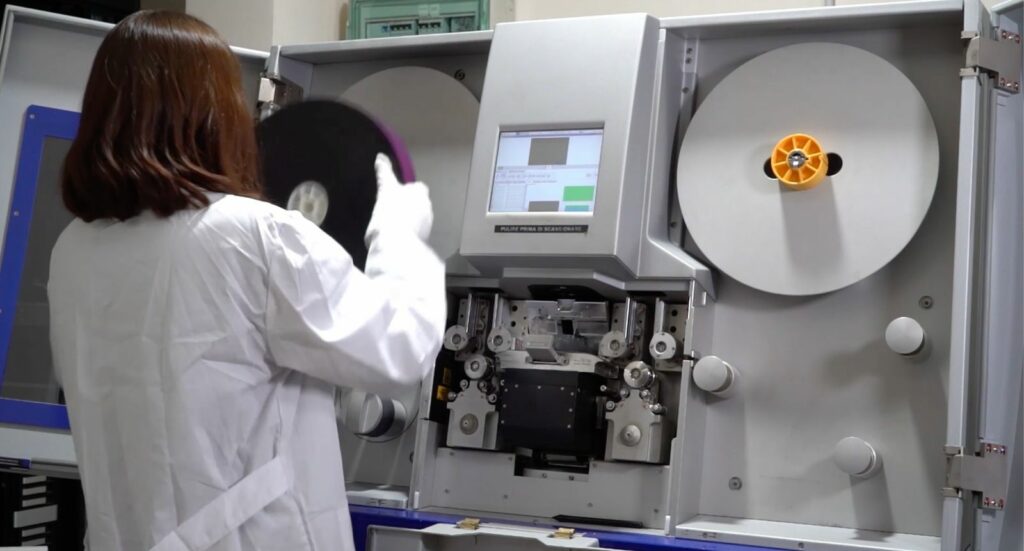
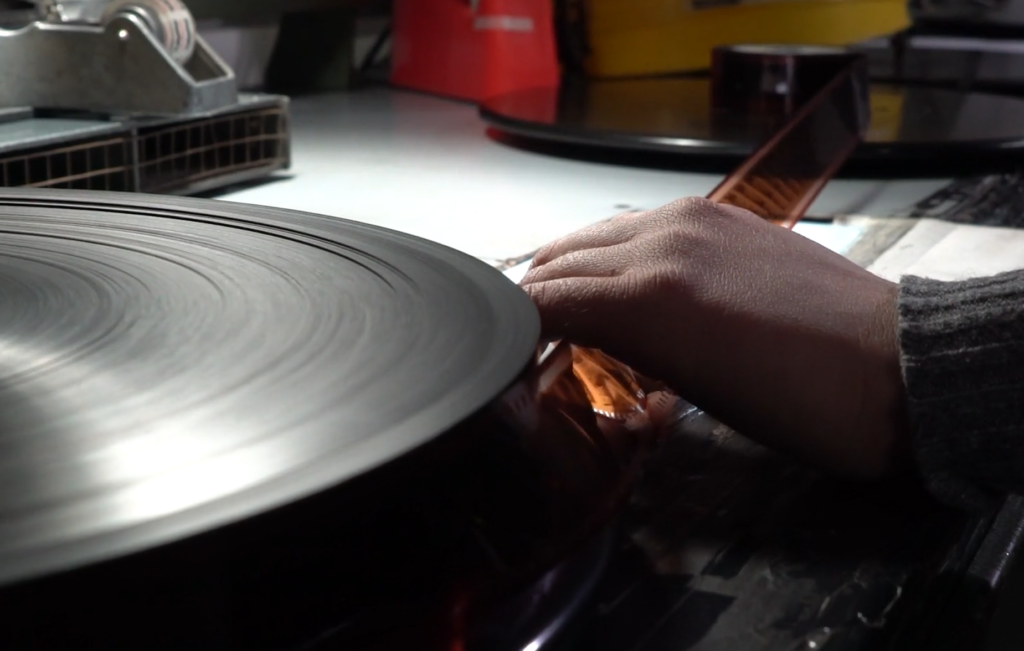
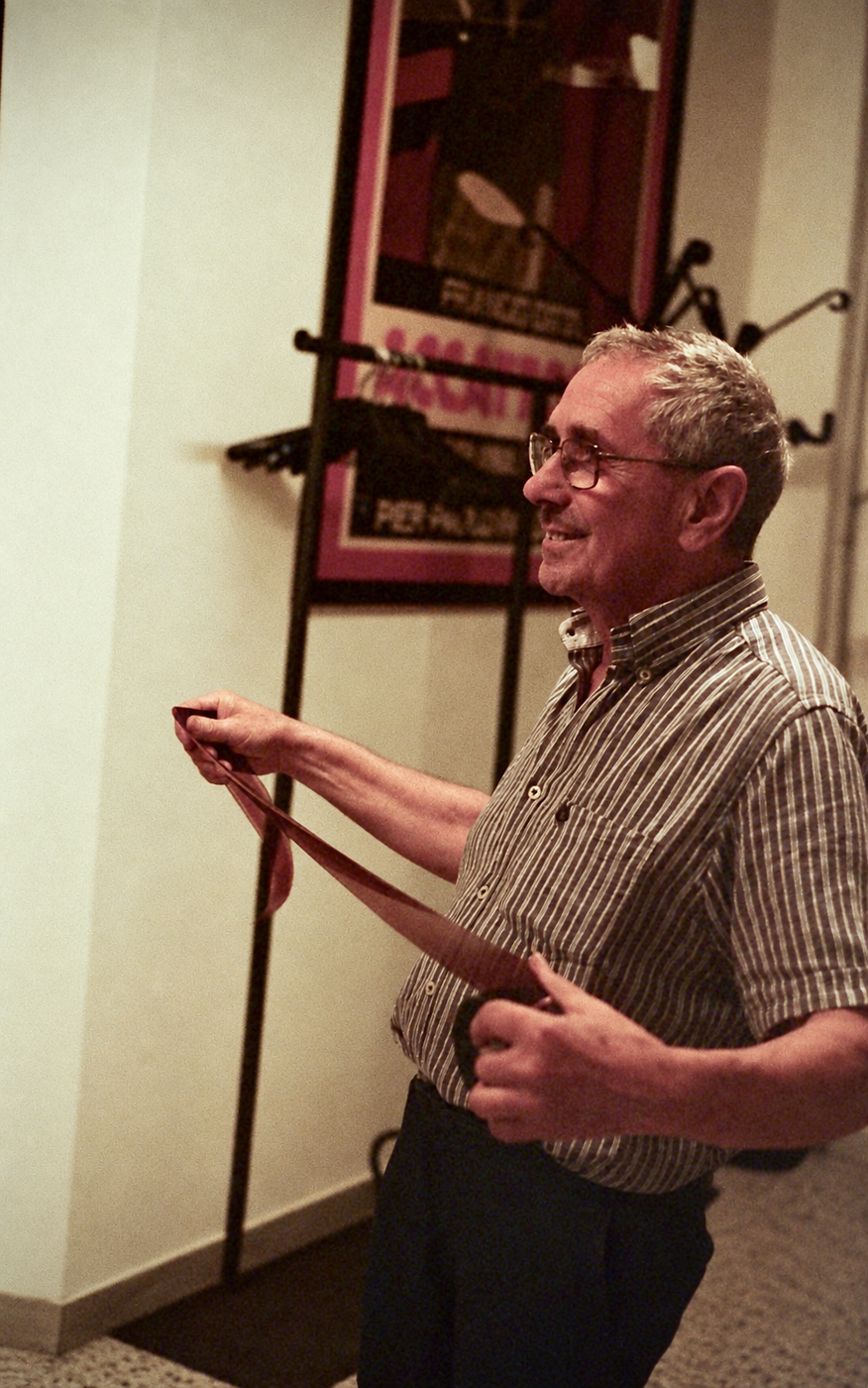
Images supplied by the laboratory showing the ARRISCAN, an inspection of a film negative and, below, Maurizio Lacoella, lab supervisor at Augustus Roma.
El mal hijo was shot on both 16 mm and 35 mm. Are there differences in how the two formats are processed?
El mal hijo was shot on Super 16 and 3-perf 35 mm, using Kodak VISION3 50D 5203, 200T 5213 and 500T 5219.
There is no difference in processing. Our ECN-2 colour processor uses friction drive rather than sprocketed rollers, so it can handle Super 8, 16 mm and 35 mm in the same machine, with the same chemistry and process control. This allows both formats to respond identically, and gives the cinematographer the confidence to combine them knowing that they have undergone the same processing. The scanning workflow was also the same for both formats: HD for dailies and 4K ARRISCAN scans for the finals.
The real difference is in handling. Super 16 requires much more care than 35 mm. The frame is smaller, so it is enlarged much more, making every speck of dust or tiny scratch far more visible on screen. That is why cleaning the negative before scanning, and the work carried out by our digital clean-up department on the scans before delivery, are even more important with this format.
Given that different film stocks usually require different processing times, as they do not always have the same sensitivity, how do you ensure consistent processing across different film stocks and materials?
There is a small clarification worth making here. In the standard ECN-2 process, all Kodak VISION3 colour negatives share the same processing time, regardless of their speed. Processing times only change when the cinematographer requests a push or pull.
The only material requiring a separate process is black and white, such as the Double-X 5222 used on La bola negra. It is processed in our black-and-white machine, with its own chemistry.
Uniformity is therefore achieved not by adapting the process to each stock, but by keeping the process itself constant and checking our machines every day so that every roll produces the same response.
El mal hijo used several special techniques, including push and pull processing. How did you coordinate the workflow with the production team in these cases?
Push and pull processing are achieved by adjusting the first stage of the process, the developer bath, through a combination of changes to time and temperature. Push processing intensifies development, increasing the negative’s effective speed and contrast. Pull processing reduces both. We can work in half-stop increments, up to two stops in either direction, and on El mal hijo some rolls were pushed by as much as two stops.
Coordination with the production follows a precise procedure. The camera department informs our in-house producer in advance. Film cans are clearly identified using colour coding: red for push processing and blue for pull processing, with the amount of adjustment marked on each. This allows us to organise processing and avoid any risk of error.
For certain digitally shot sequences, we proposed our DFD (Digital-Film-Digital) process to the production. The digital material is recorded with the ARRILASER onto VISION3 50D or 250D camera negative, which is then processed and scanned at 4K. In this way, the digital footage acquires the colour response and grain of real motion-picture film and blends naturally with the rest of the footage.