






‘Cronos’:The Camera at the Service of Time

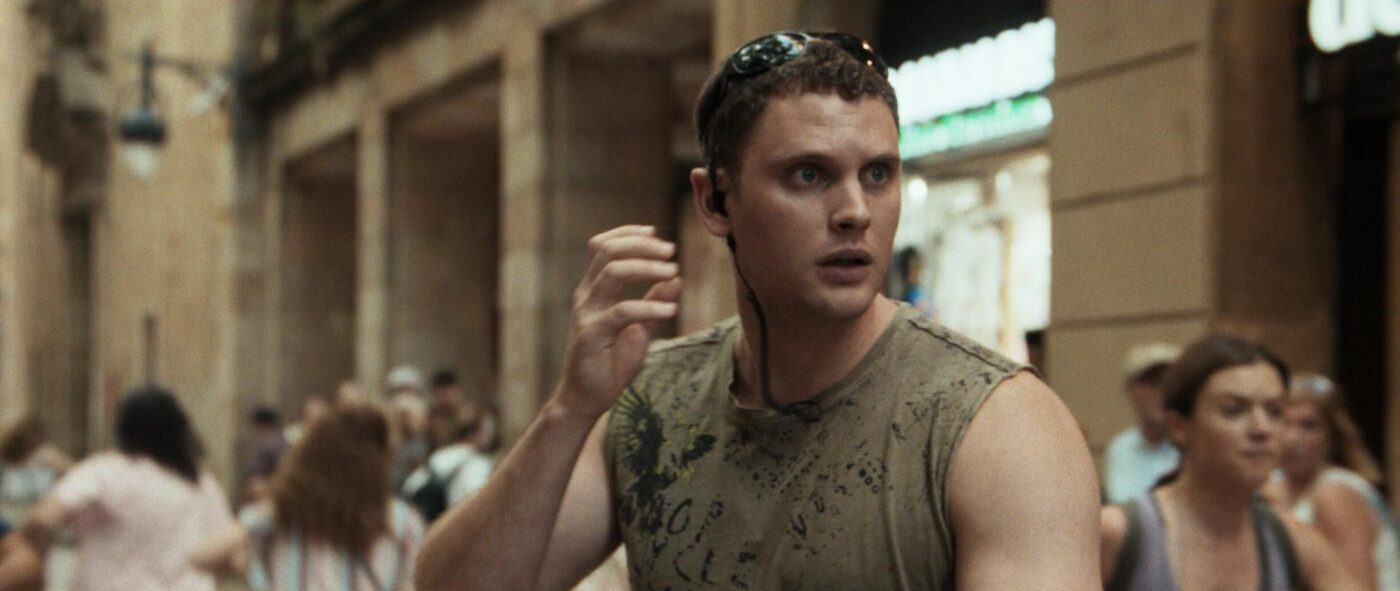
Drawing inspiration from the action cinema of Paul Greengrass and the political thrillers of Kathryn Bigelow, director Fernando González Molina builds Cronos as an ensemble narrative chronicling the 124 hours that followed the terrorist attack on Barcelona’s Las Ramblas on 17 August 2017.
Working with an eclectic language that draws on drama, thriller and action cinema, González Molina places the audience at the heart of the tension and siege-like atmosphere experienced over four days by a small group of public servants whose actions prevented the tragedy from becoming even greater.
Four seemingly endless days of confusion, tension, grief, frustration, anger and political confrontation culminated in the killing of the last terrorist still at large, leaving many wounds unresolved.
The film stands out for its handling of time —the element around which both the screenplay and cinematography were constructed— and for its meticulous camera design, built around movement and its many nuances to portray each character in a distinct way.
We spoke with cinematographer Pau Castejón Úbeda AEC about his photographic approach, shaped by the director’s precision in defining every artistic and technical decision on set. The film’s visual language, which at times shifts towards a more dramatic register, relies on elements such as zooms and a rawer, more transparent image resulting from the combination of the ARRI ALEXA 35 and Cooke S4 lenses.
By Juan Andrés Esparza
PAU CASTEJÓN ÚBEDA AEC — CINEMATOGRAPHER
The visual approach to Cronos draws on several different genres. How did you translate that mixture into a camera language?
Fernando and I knew from the beginning that we wanted to use the camera language to differentiate the way our characters emotionally experience the drama, thriller and action unfolding around them. The result became a mixture of genres and different narrative approaches that coexist, complement one another and evolve throughout the story.
For example, Enric Auquer plays the head of emergency operations for the Mossos, a character whose emotions are contained, solid and rooted in control, so we chose to photograph him primarily using a dolly and Technocrane.
In his case, precise moves and camera choreography are always motivated by the actors’ movement: the camera only moves when they do.
The storyline involving the police officers who experience both the tragedy itself and its immediate aftermath at street level is told through a frenetic camera language designed to create disorientation and chaos. The camera becomes much more dynamic and nervous, mostly shoulder-mounted and constantly searching through zooms.
Diana, a character connected to the political sphere, is portrayed from two different points of view. One is more observational, using distant zooms and shooting through foreground elements that partially conceal her as she moves through the web of politics. The other is more intimate, using Steadicam or dolly moves that snake alongside this elusive character through corridors and conversations.
For the police storyline in Ripoll, we developed a more solid and classical language that I described as “a Catalan Fargo”. It begins with a certain stillness that gradually evolves and becomes destabilized as the drama engulfs the town.
Here we used mid-range prime lenses, mostly static camera positions without track, following the characters with pans or slow zooms from inside the car.
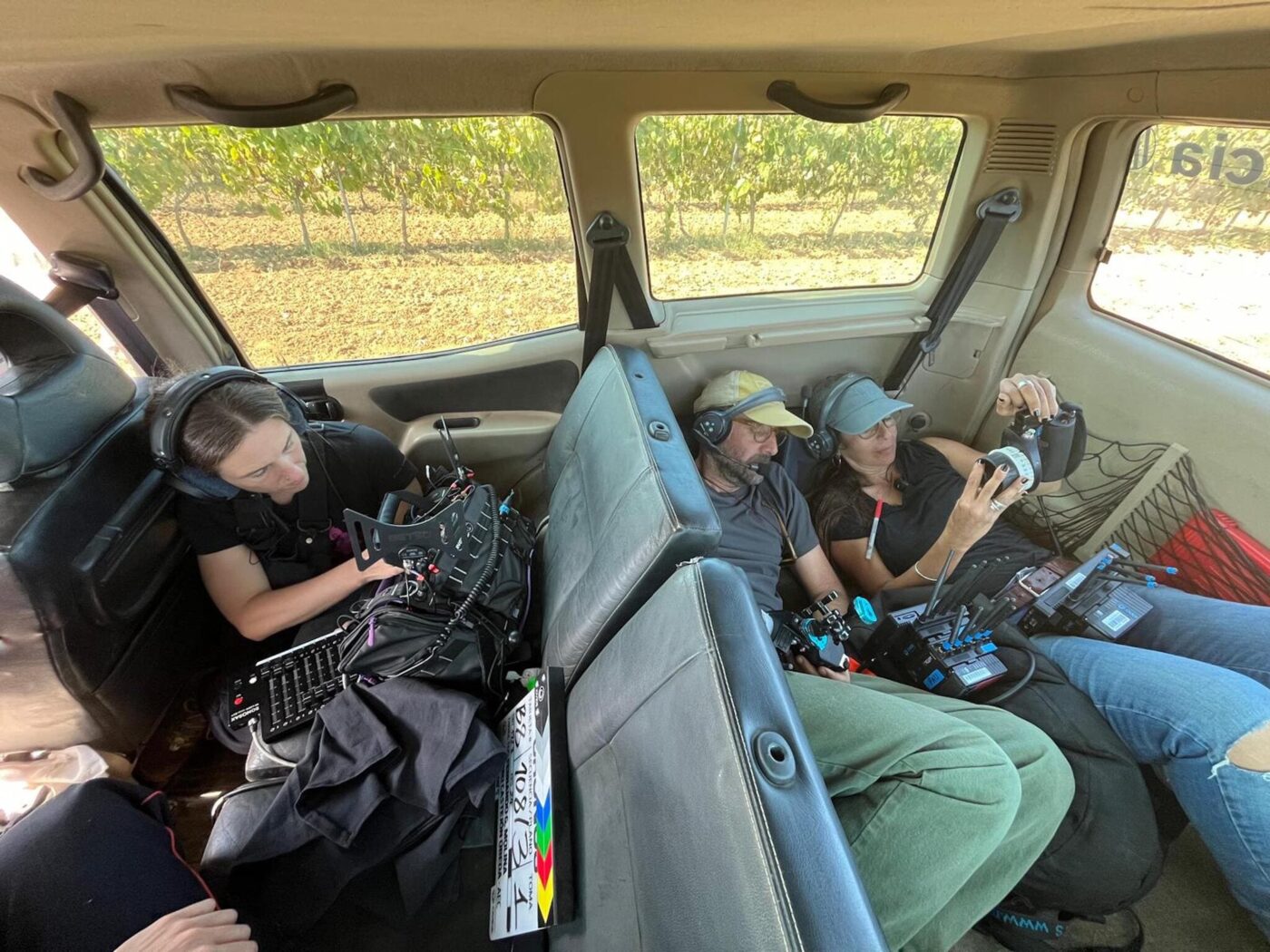
“The zoom helps direct the viewer’s eye and creates that chaotic world, closer to the cinema of Greengrass or Bigelow.”
In ‘Cronos’, particularly in the Las Ramblas section, there are several overhead shots that reinforce the police-thriller language. There is also a considerable amount of aerial photography. How did you approach those shots?
Many of the overhead shots were already written into the screenplay, while others emerged during shot design.
They became both a narrative and stylistic device that helped us convey the scale of the disaster, the desolation and the state of emergency.
Some of these overhead shots simulate police helicopters or drones operating during Operation Cronos, while others are purely narrative.
We shot all the aerial material on a DJI Inspire 3. The exception was the final pursuit in Subirats, where we used a real helicopter and recorded footage through its built-in HD camera.
The helicopter itself served as a reference that was later replaced by a 3D model of a Mossos helicopter, which is what appears in the finished film.
We also used the real helicopter as an SFX element to generate actual wind in the aftermath of the shootout. That made the image far more convincing visually and also gave the actors something real to react to.
We reproduced the texture of that original mid-2000s HD camera and applied it to other shots captured on the Inspire, creating the same sensation of helicopter surveillance footage and distinguishing it from the rest of the aerial photography.
You mentioned earlier that the different characters were assigned different camera points of view. How did you design the camerawork for the action sequences?
Although it may look as though we shot with several cameras, the film was generally designed around a single camera.
Fernando is an extremely precise and hardworking director. During pre-production, we spent a great deal of time designing the shots in meticulous detail, without wanting to compromise the A-camera position simply in order to obtain additional coverage from another camera.
Several action scenes were designed as long takes —or with very few cuts, some of them invisible— because we felt that was the best way to preserve the momentum of the action without losing the emotional tension of the moment.
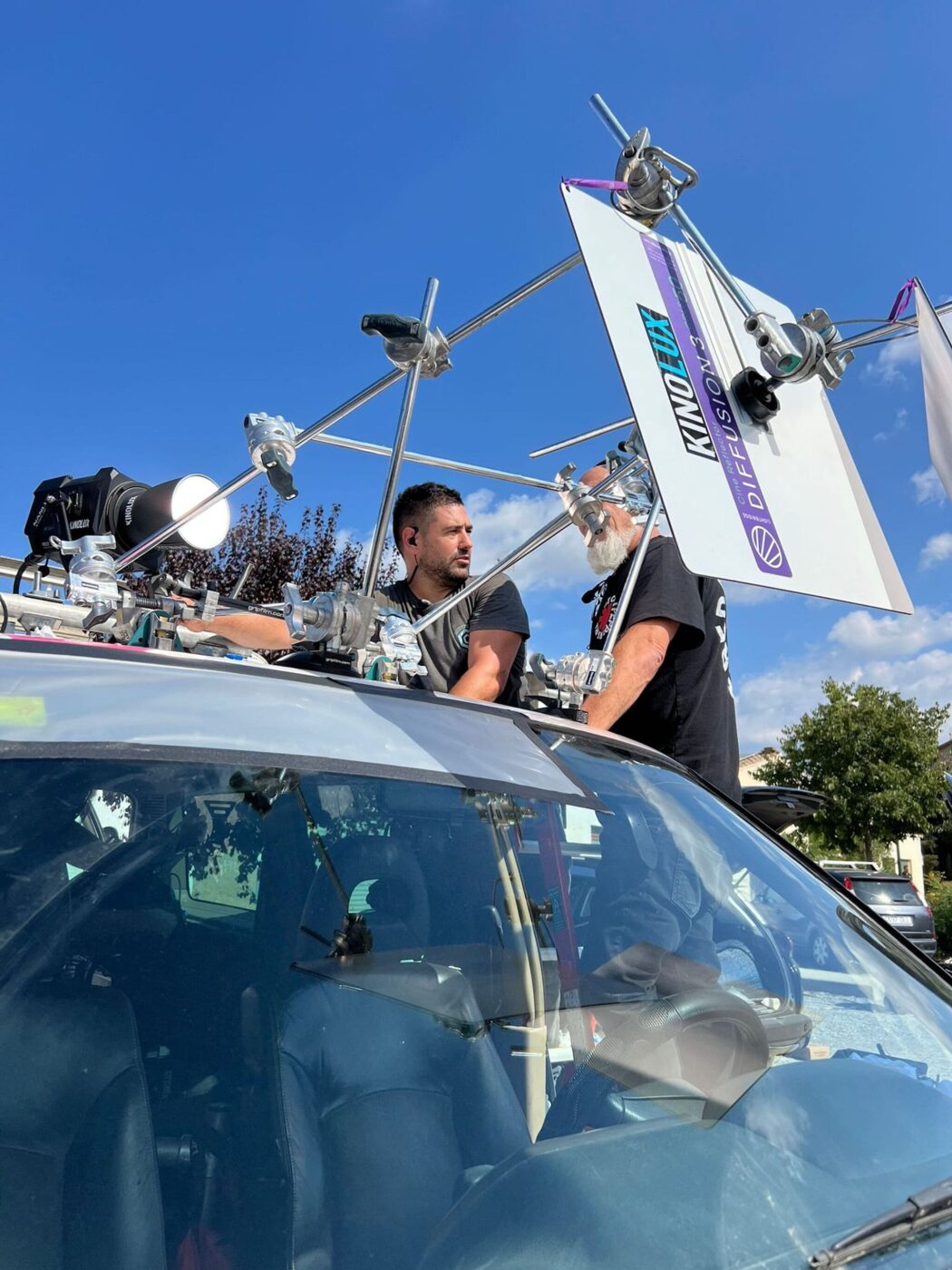
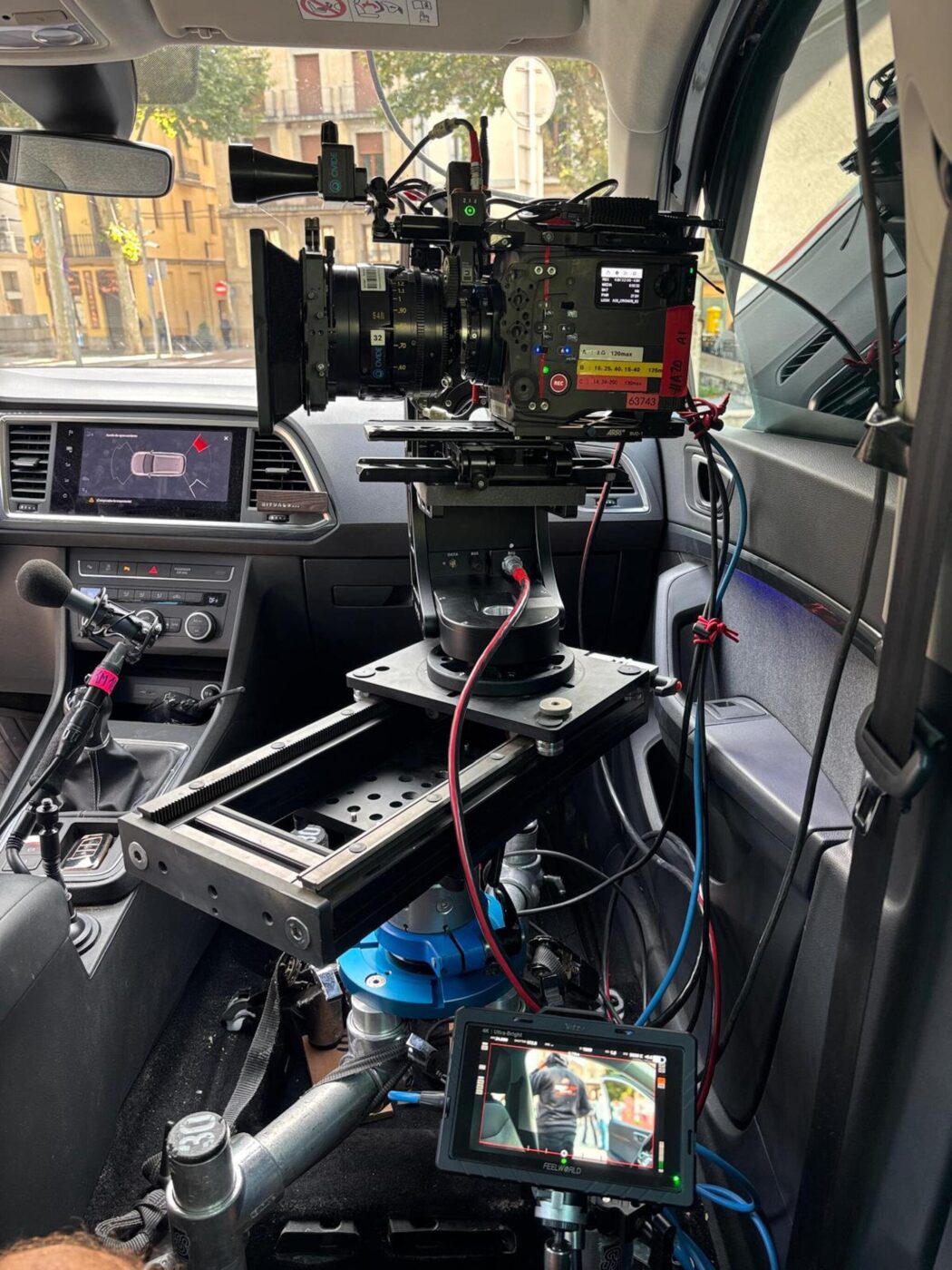
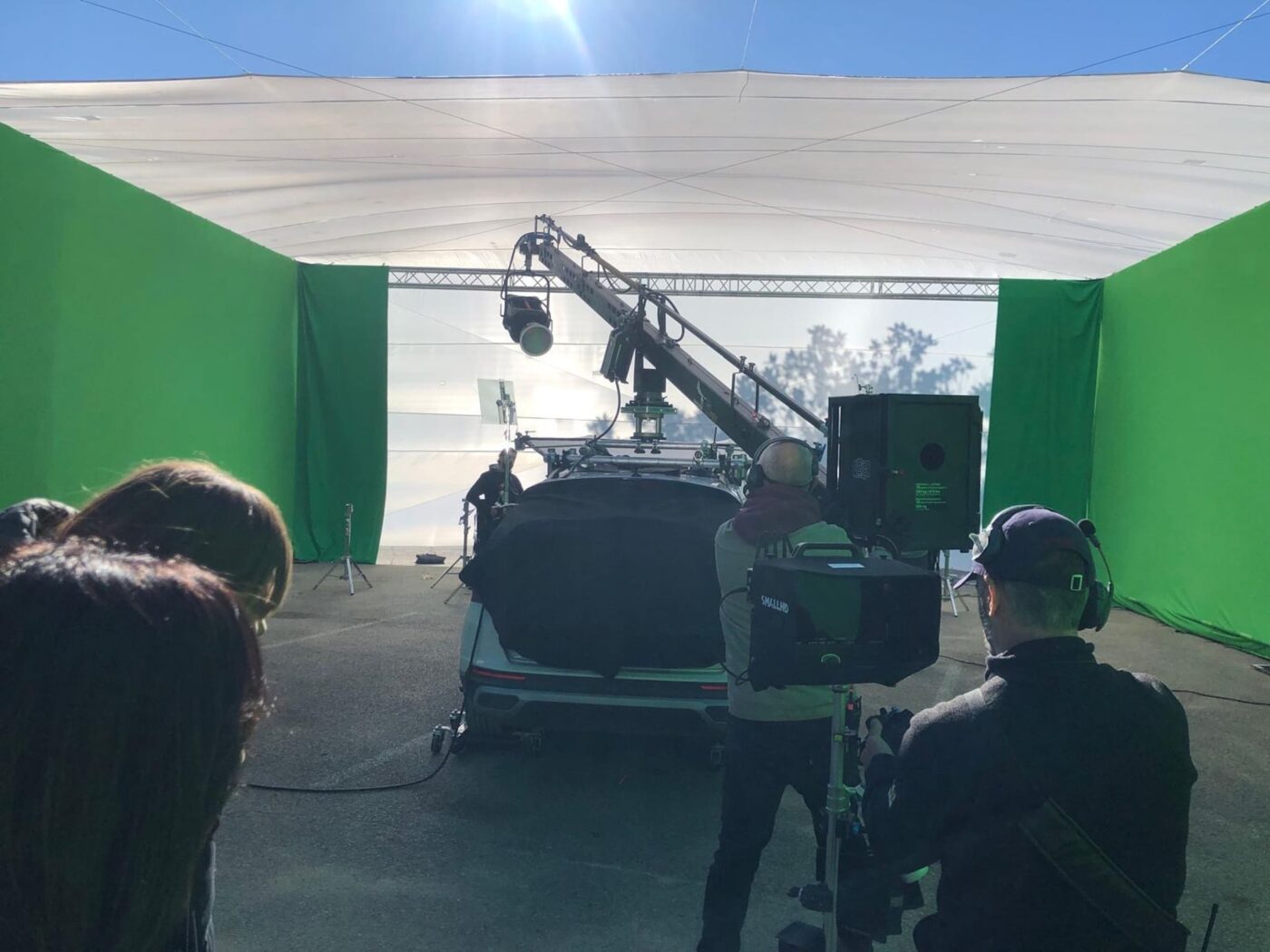
Removing the cut meant designing technically very complex sequences from both a grip and logistical perspective. We combined cranes, Ronin rigs and an Ultra Arm mounted on a vehicle to create the illusion of moving through a single uninterrupted shot, even when there were actually editorial cuts.
Our key grip, Xavi Gordi, modified several pieces of equipment to make those movements possible. Alberto Borque operated the Ronin and the cranes, while Pau Reig handled B camera, working with Steadicam, shoulder-mounted configurations or long zooms to follow the action.
The zoom is an important device in the film and contributes significantly to its atmosphere of tension. What led you to use it so extensively in Cronos?
There were two narrative strands behind it.
One came from a more documentary-like language used immediately after the attack, when the police encounter the massacre and the camera follows the action in a much more physical, intimate way.
That strand is closer to the cinema of Greengrass or Bigelow. We used short zooms on a handheld camera, with the zoom itself controlled remotely, to generate nervous energy and confusion while also helping direct the viewer’s attention within the chaos.
The other use of the zoom is more observational and psychological. We used long zooms to move away from the characters and read the situation from the outside, while still maintaining a clear focus on what they are feeling.
For example, when photographing Diana, we tried to trap her within the spaces she occupies and observe her through foreground elements, allowing us to feel the tension she experiences amid the manoeuvring and politics of the police hierarchy.
I understand that planning the sequences in central Barcelona was extremely complex. Beyond managing the locations themselves, places such as the Hard Rock Hotel and the CECOR police command centre also had to be recreated or extensively dressed. What did that process involve?
Around 250,000 people pass through Las Ramblas every day, so obtaining permission to control those streets was a major achievement by the production and locations teams.
We also had the limitation that both Las Ramblas and Plaça de Catalunya were undergoing construction work, and we were subject to very restricted shooting hours.
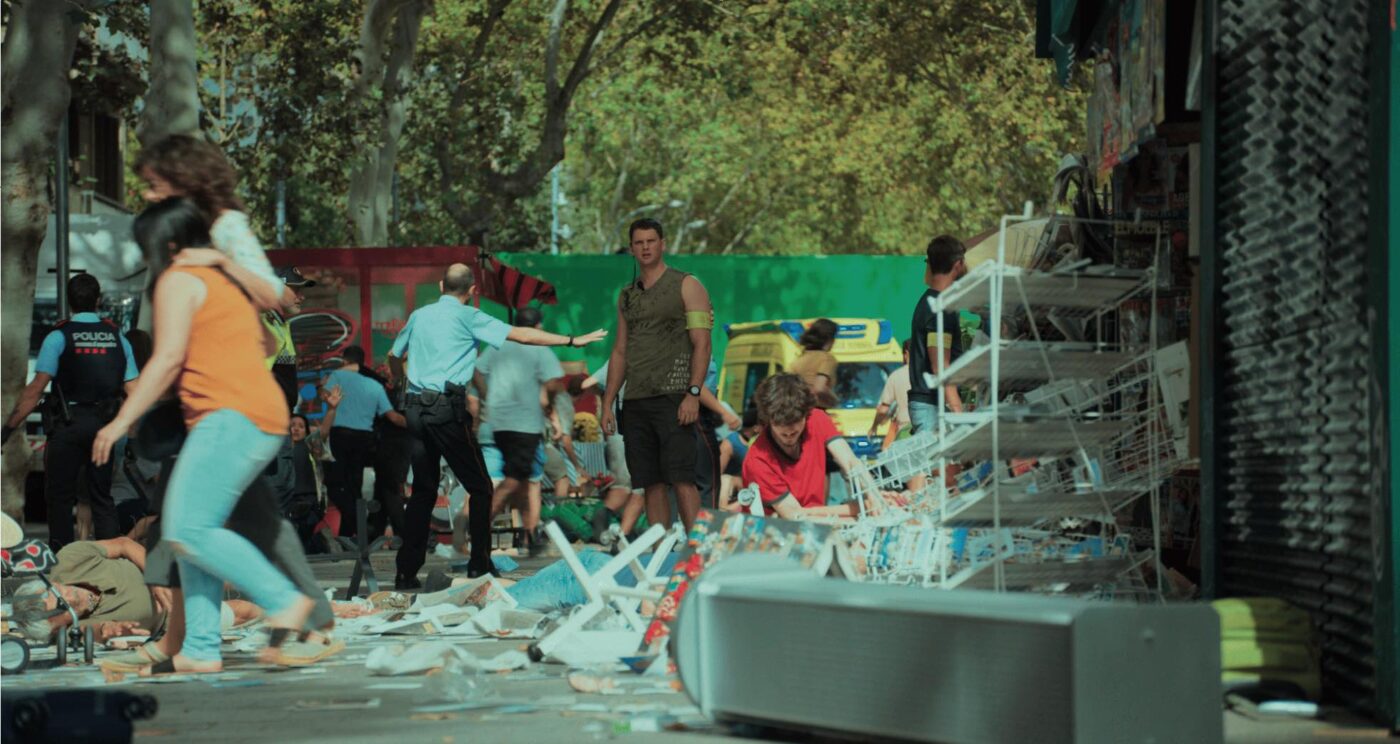
As a result, we had to build the Las Ramblas sequences section by section and assemble an extremely complex puzzle with the help of VFX to recreate the area as it looked in 2017.
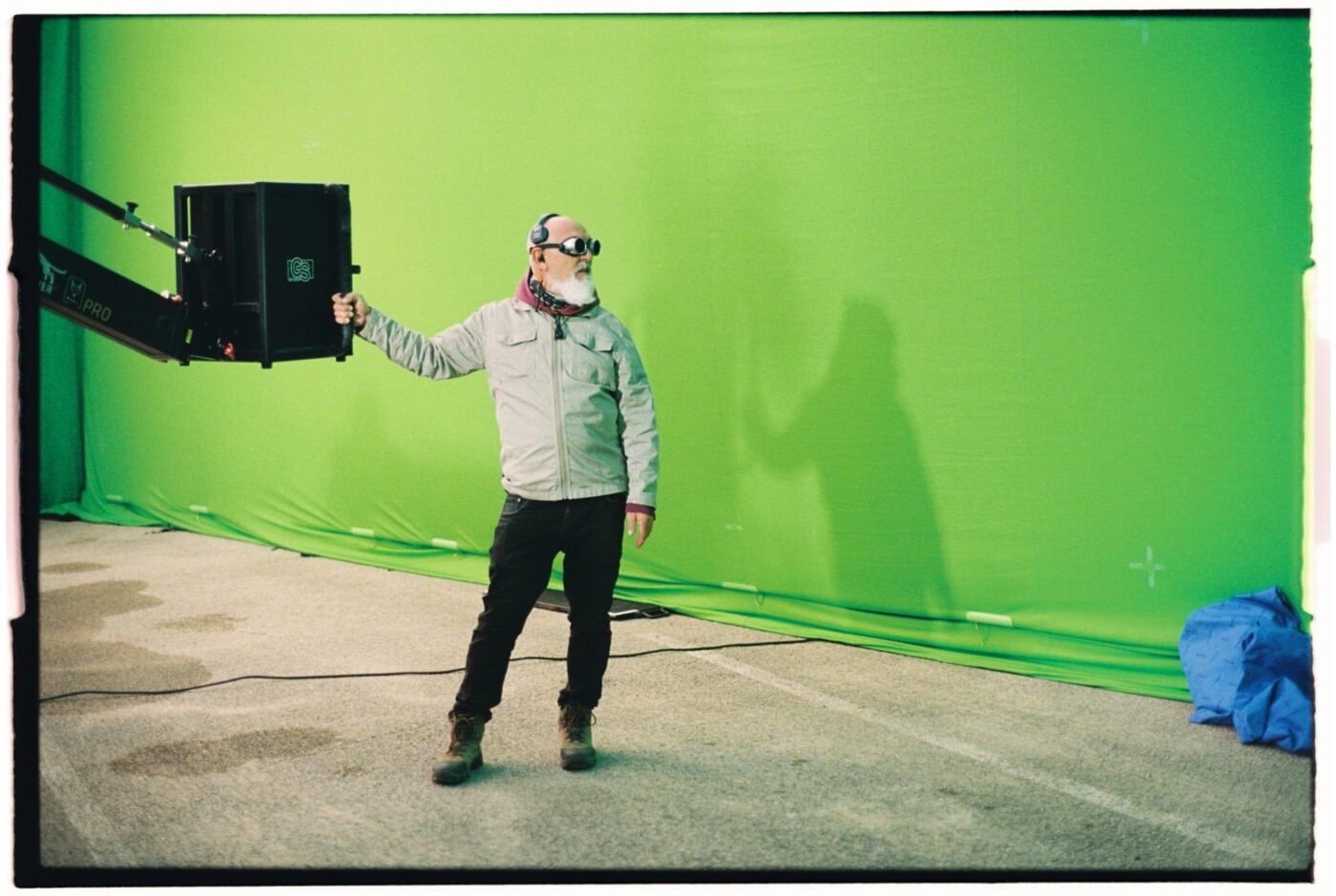
We doubled one of its central sections on Ronda de Sant Antoni, a location we could control completely. The art department built devastated flower and newspaper kiosks, while sightlines covered with greenscreen were transformed into Las Ramblas in post.
In terms of interiors, there were two principal locations where we spent several days shooting.
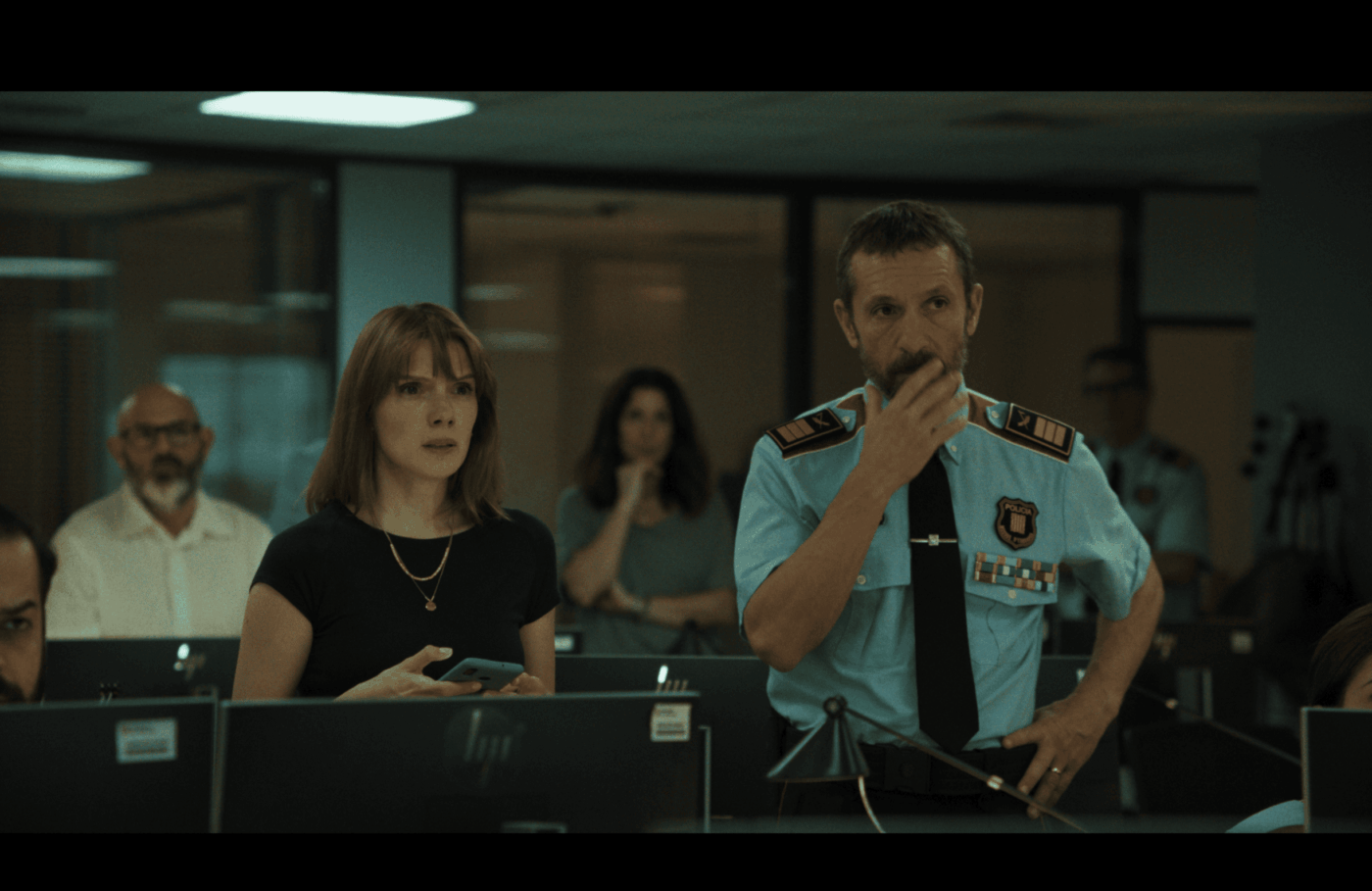
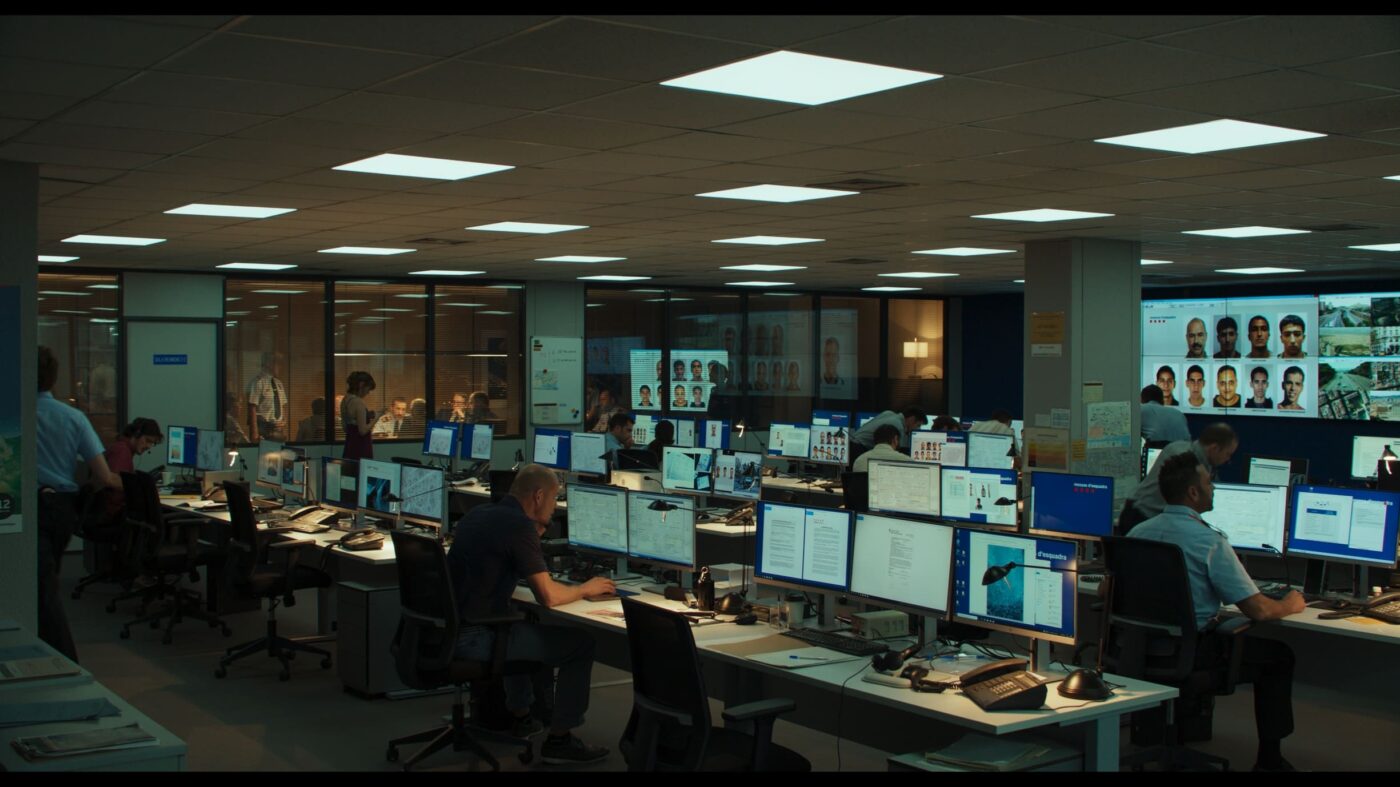
One was the CECOR police command centre, a dark room where senior figures from the different police forces gather and through which Diana’s character moves.
Finding a location that allowed us to shoot the way we had planned was not easy. We wanted to work through layers of foreground elements to create depth and maintain visual connections between the different spaces.
Production designer Marc Pou managed to bring to life a location that was very different from the real CECOR, while still creating something both believable and cinematic.
We created three distinct areas of action, with different densities, colors and textures, enriching what could otherwise have been a fairly uninteresting space.
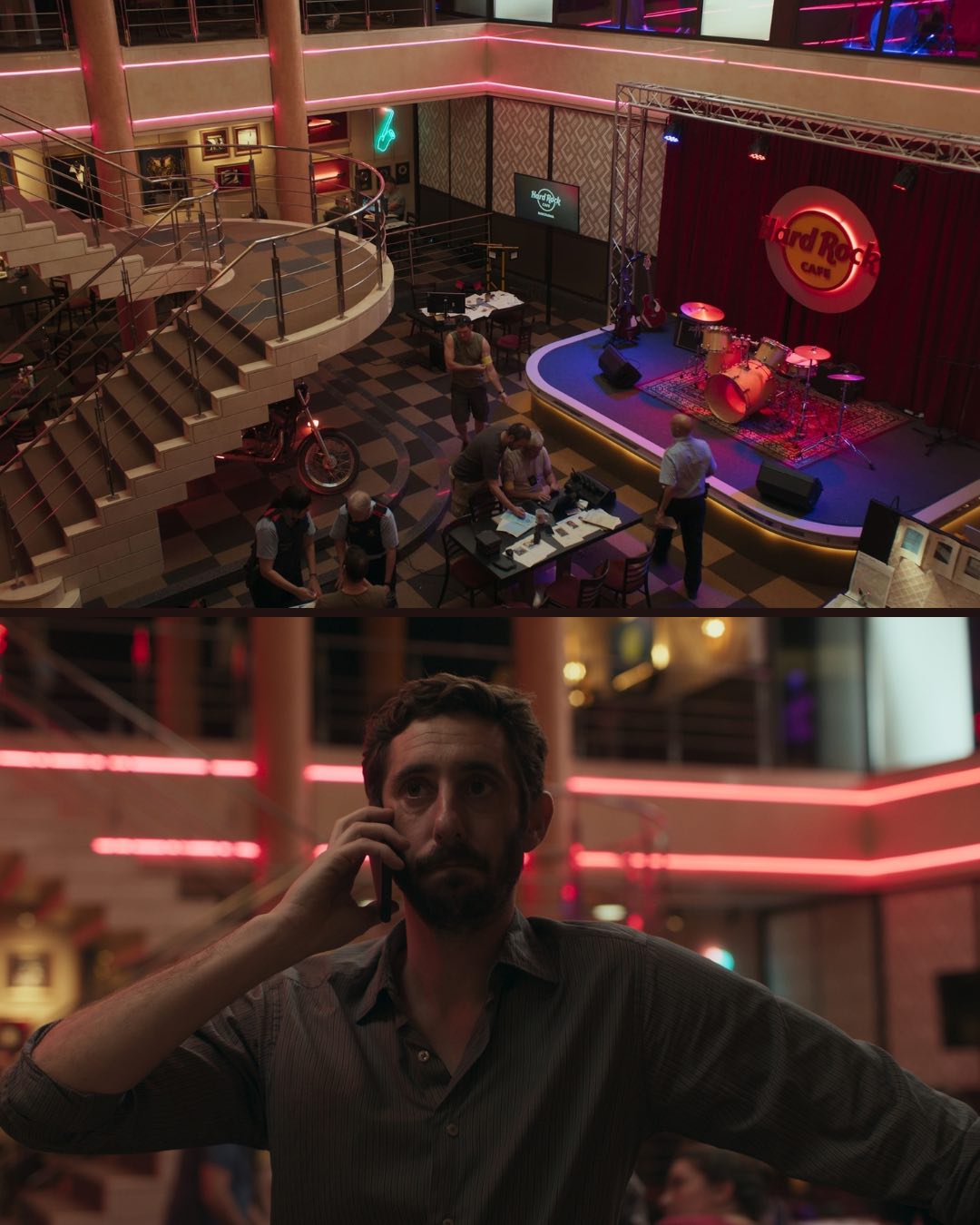
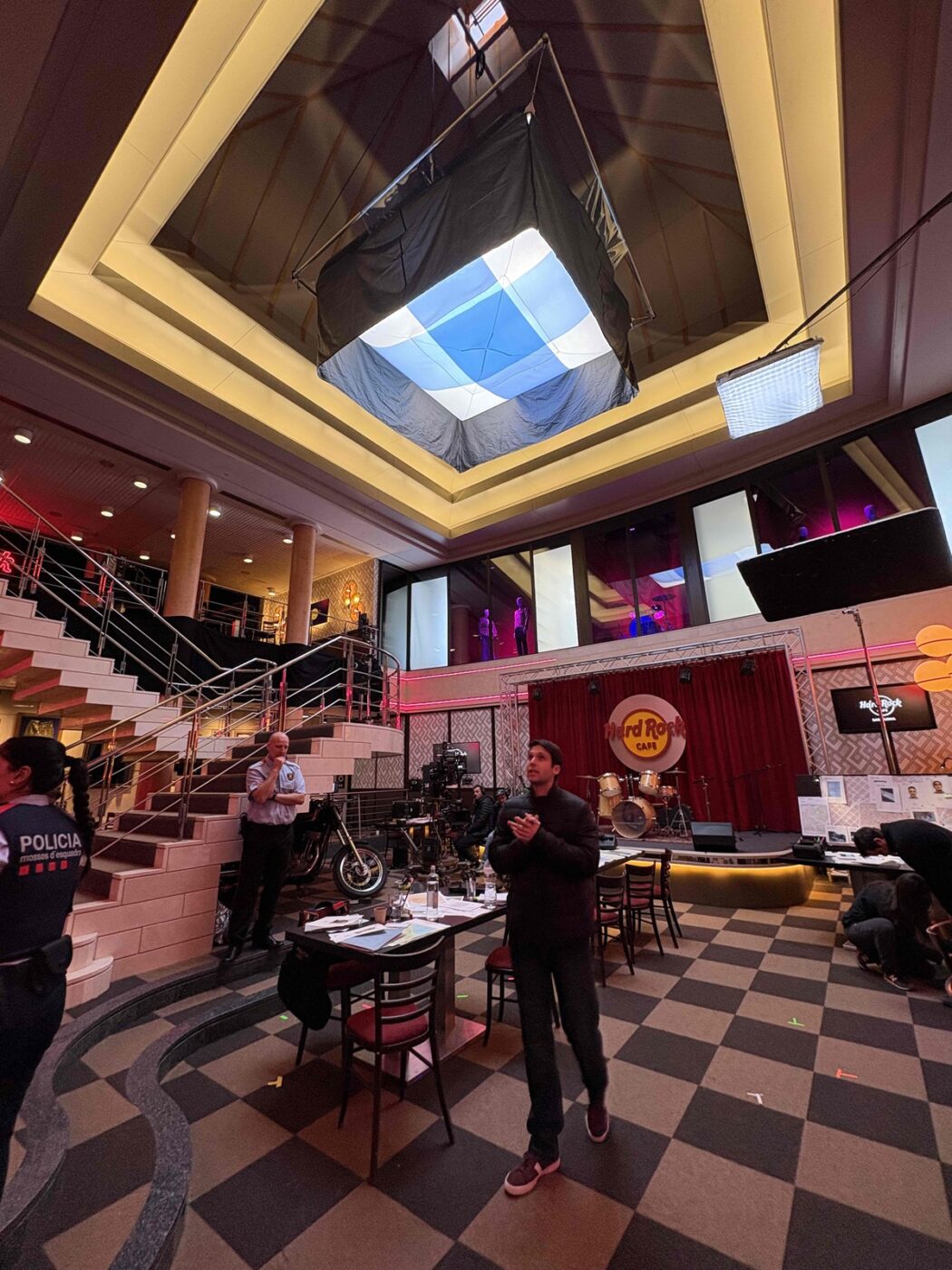
The other major interior was the Hard Rock. Because we could not shoot in the real café in Plaça de Catalunya, the art department completely transformed the lobby of a golf club.
It was originally a space full of windows, all of which we completely blacked out.
Its split-level design, connected by a staircase, gave us a great deal to work with in terms of structuring Enric’s narrative around the architecture. We used a small Technocrane to choreograph the camera movements through the space.
“We wanted there to be a sense of transparency between what you are seeing and the way the image reaches you.”
How did you design the integrated lighting so that it would support the camerawork?
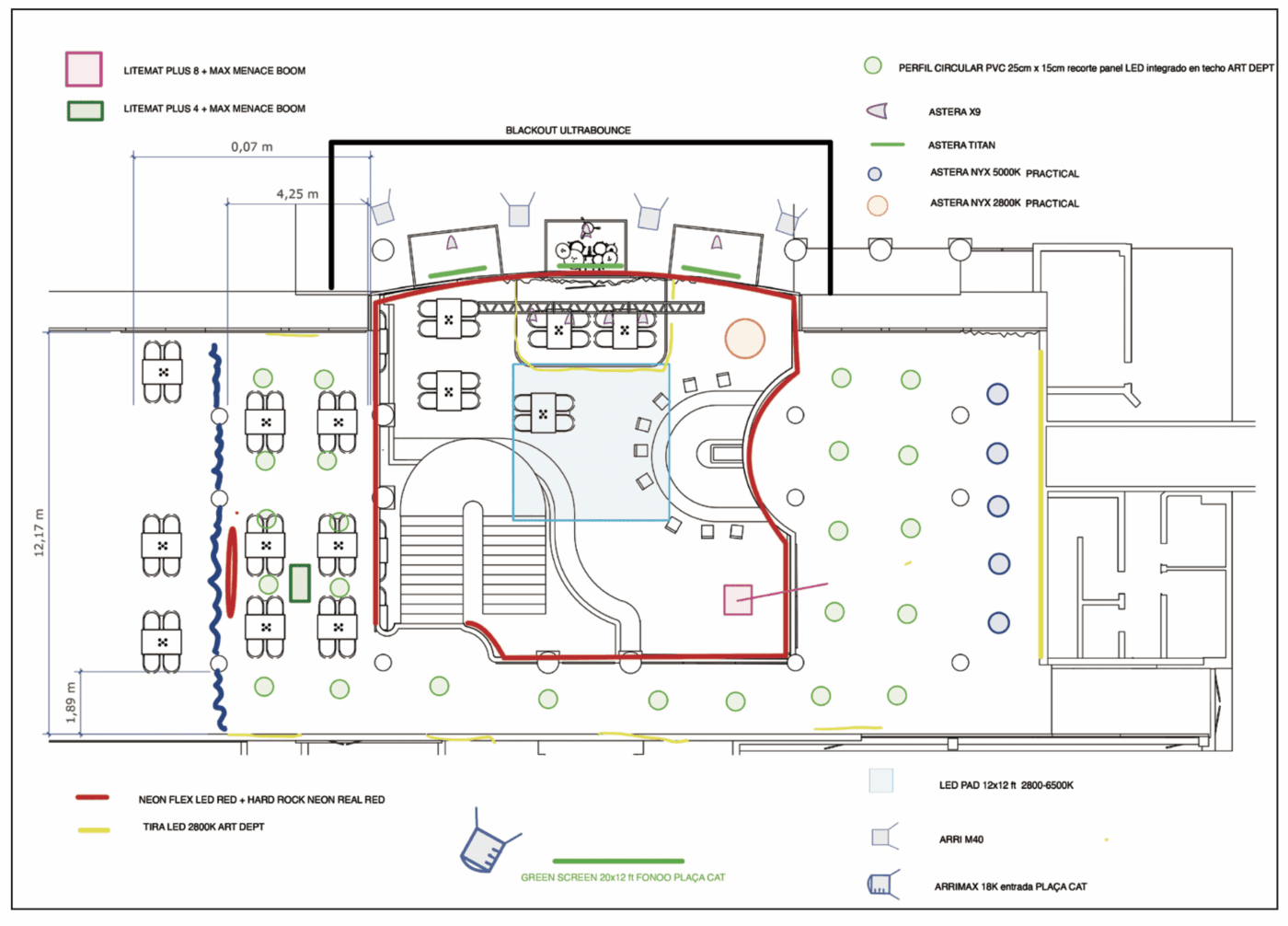
The only visible connection between the Hard Rock set and the exterior was a doorway with greenscreen beyond it and some blacked-out windows in the upper part of the space.
We therefore motivated the overall illumination from an imaginary lightwell outside the frame, which we simulated using a 4 x 4 m inflatable bi-color LED soft source.
That gave the actors freedom of movement while also allowing us to suggest the passage of time inside the location by changing the intensity and color temperature as afternoon moved into evening and night.
The colorful backgrounds were motivated by LED strips, neon and practical fixtures integrated into the set by the art department.
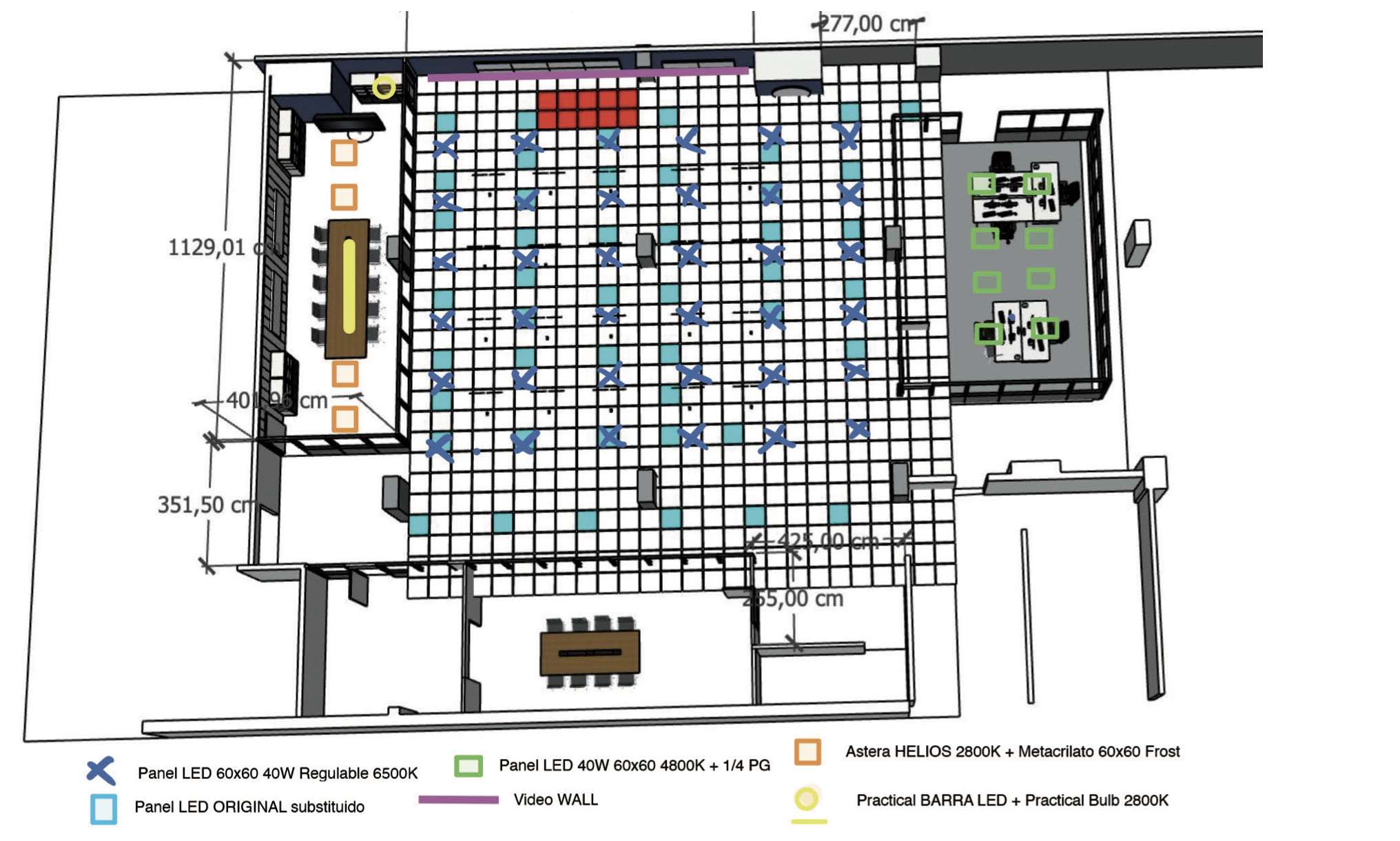
In the dark CECOR control room, where the characters sit in front of screens and computers, we replaced the existing ceiling panels with dimmable LED fixtures.
That gave us control over their intensity and allowed us to create a lower ambient level in the centre of the set and a higher one towards either end, where the two offices were located.
It was a collaboration between the art and electrical departments that allowed us to keep the screens and monitors reading above the ambient exposure of the room.
What did your collaboration with the VFX department involve?
This is a film where you hardly notice the effects, but there is an enormous amount of work by the VFX team at Orca Studios.
The collaboration was constant from pre-production onwards. Although we used large greenscreens to extend and control backgrounds, there was also a huge amount of VFX removal and compositing because there was simply no practical way of hiding some of the major construction works visible in our frames while recreating the city accurately for the period.
We also used VFX to design some of the film’s most complex shots. Sequence 3, for example, involved the convergence of many different departments, and the final assembly of what appears to be a single uninterrupted take ultimately depended on VFX to create that false continuity.
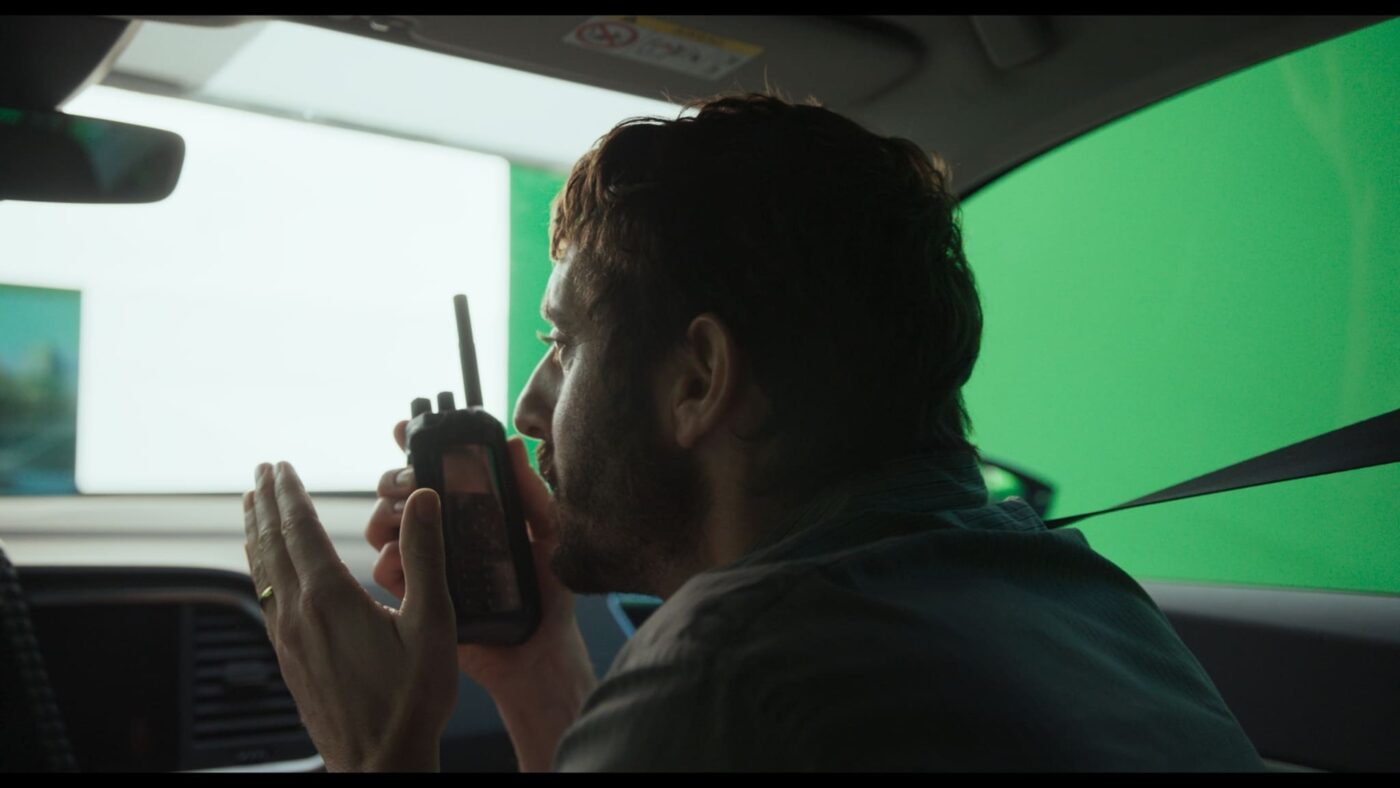
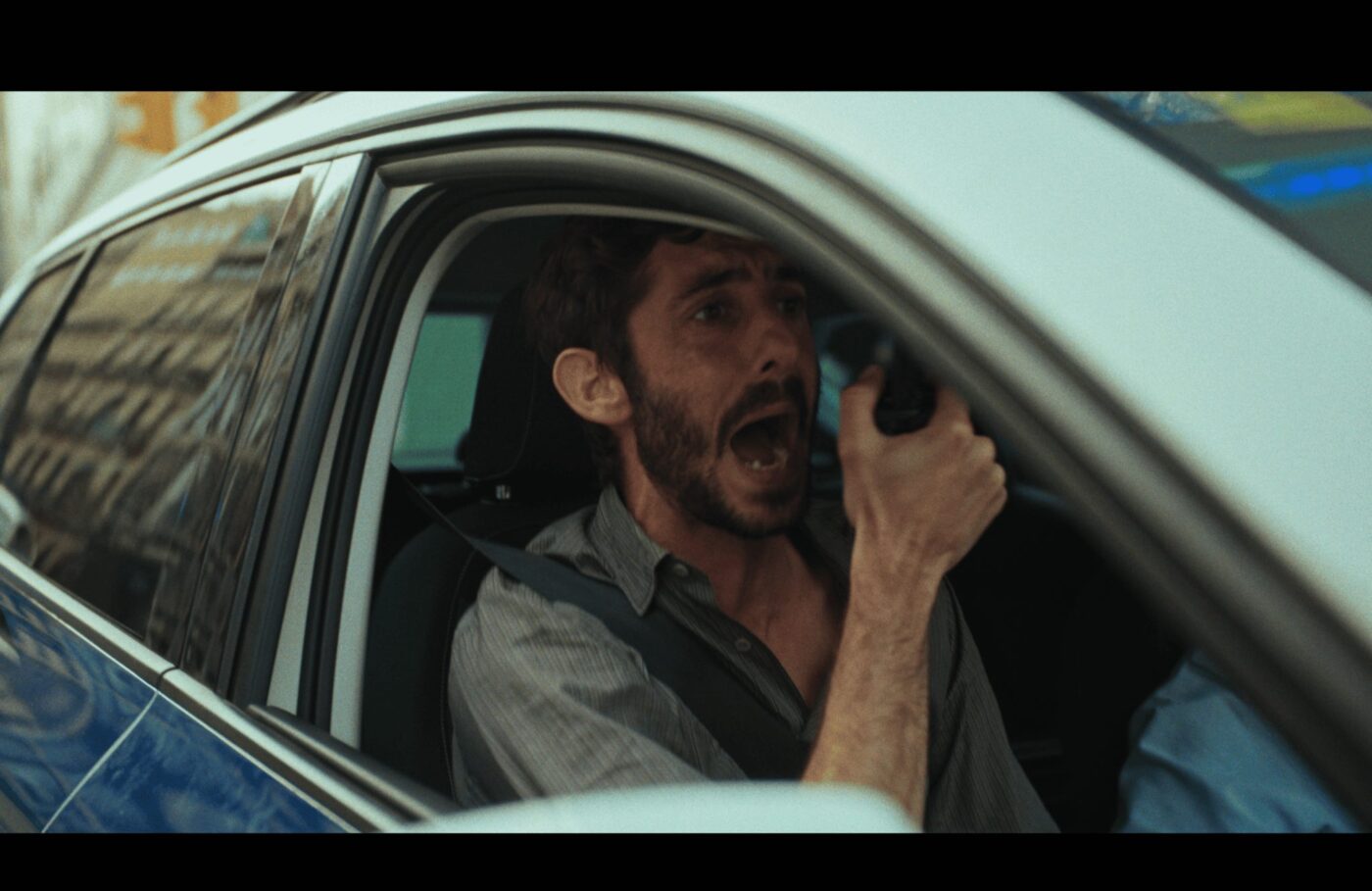
We shot part of the car work against greenscreen. In post-production, the action outside the vehicle —which we had shot separately with a 360-degree camera with the dialogue in mind— was re-edited so that events outside the car matched precisely with what was happening inside.
A great deal of fine work went into removing grip equipment and creating the illusion of a continuous shot travelling through the city and eventually reaching Plaça de Catalunya.
At that point, the camera finally exits through the car window, pivots around Enric Auquer’s character and rises on a crane until Las Ramblas comes into view, apparently without a cut.
How did you create the sense of time passing through the lighting?
Creating the illusion of continuity and conveying the sensation of heat was one of my main concerns because the story begins on 17 August and unfolds over 124 hours, whereas the main shoot took place in October.
During pre-production, in July, we shot some documentary-style summer material in central Barcelona for the prologue, as well as material for the Cambrils night sequence. That gave us a connection to the atmosphere, light and intense summer heat that we later needed to reproduce.
When we shot the main film, the sun was much lower than it should have been for August. On many occasions we had to shoot in shade because there was simply no way to get direct sunlight into the locations.
We therefore tried to keep brightness in the backgrounds to create the impression of sun and heat even when our characters were standing in shade, and I think it worked. We had considerable equipment limitations when lighting the Las Ramblas exteriors, so essentially we ended up working with diffusion overheads, bounce and a couple of additional fixtures.
As the afternoon progresses, the characters move into narrower streets during the sequences around the siege of the fast-food restaurant on Calle Luna. The afternoon light gradually evolves into a run of sequences taking place in continuous story time during a blue-toned magic hour, creating a clear sense of time passing until we finally reach night.
How did you match all those shots and bring them together within a single overall look?
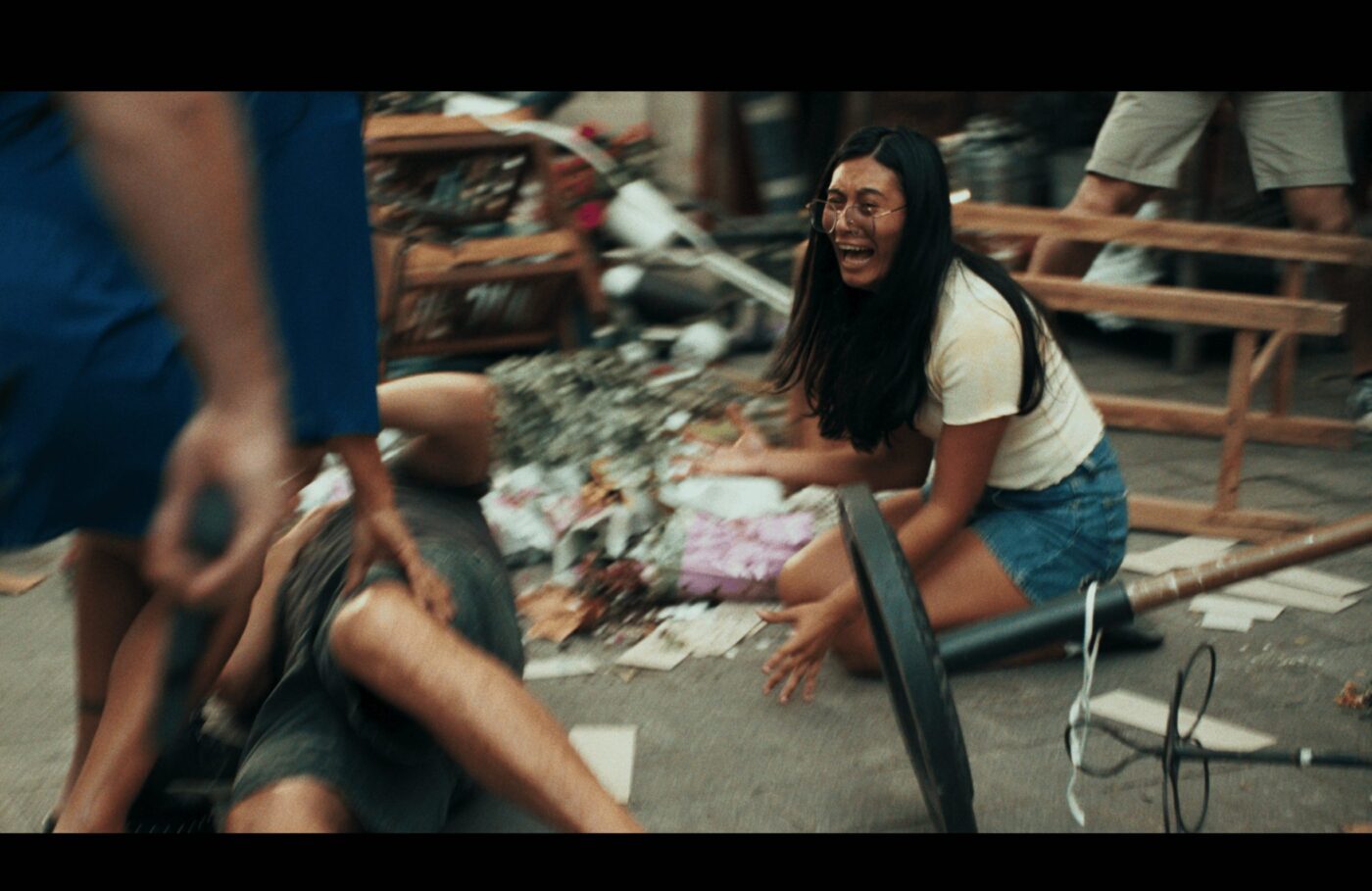
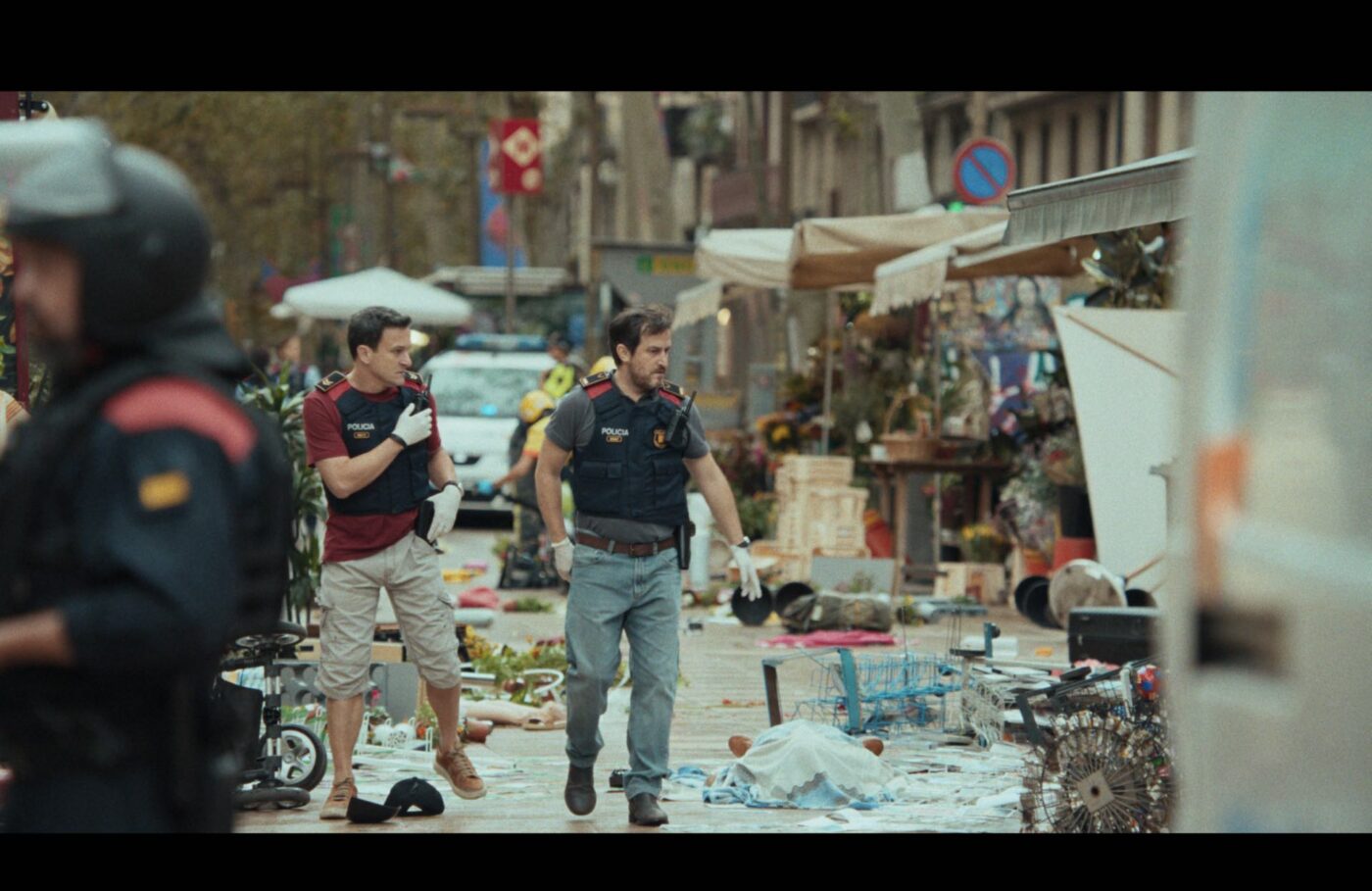
Our starting point in color was to create a feeling of heat and summer. The first thing we did was therefore design a warm LUT that conveyed that sensation and also had texture and strength without becoming overly beautiful or polished.
The look of the film is rooted in naturalism and believability, which we tried to preserve, although we allowed ourselves to stylize it slightly in interiors such as the Hard Rock and CECOR.
On day exteriors we took a less controlled approach and often embraced the reality of the location, whether that meant harsh sunlight or shade.
But matching those day exteriors and creating chronological continuity between them became a laborious and delicate part of the grade.
The shooting LUT evolved throughout the process until the image became dirtier and more contrasty, with what Fer and I jokingly called a “broad-brush” look.
Colorist Quique Cañadas created an organic image that was unafraid of color and saturation, incorporating grain and a color response that at many points reminded us of 35mm film.
How did your choice of camera and lenses contribute to this visual approach, which deliberately avoids feeling artificial?
The fact that we had four zooms in the main camera package —plus additional ones on specific shooting days— already had a major influence on the optical character of the film.
We were looking for a transparent, truthful image without an overly defined “look”, something that could connect directly with reality.
The Cooke S4s paired very well with that mixture of glass. Fundamentally, we were looking for an image that didn’t feel overly constructed, without obvious aberrations or excessive flaring.
There was a softness across the different lenses that we liked, and at times we balanced differences in edge definition using extremely subtle diffusion.
Beyond its color depth and highlight latitude, the ALEXA 35 is a camera that, to my eye, produces a more organic and raw image than other digital cinema cameras.
We leaned into the texture of the sensor by shooting at higher ISOs, then added grain using Filmbox and a small amount of halation in DaVinci Resolve until we arrived at the final texture.
“We leaned into the texture of the ALEXA 35 sensor by shooting at higher ISOs, then added grain texture using Filmbox.”
Technical Specifications
Camera: ARRI ALEXA 35
Lenses: Cooke S4, Angénieux Optimo zooms and Angénieux EZ zooms
Aspect ratio: 1.85:1
Crew
Production companies: Nostromo Pictures, Beta Fiction Spain, Hogar Producción, RTVE, 3Cat, Movistar Plus+
Director: Fernando González Molina
Screenplay: Alberto Marini
Cinematography: Pau Castejón Úbeda AEC
Production design: Marc Pou
Colorist: Quique Cañadas