






‘The Beloved’, Following the (il)logic of the Narrative

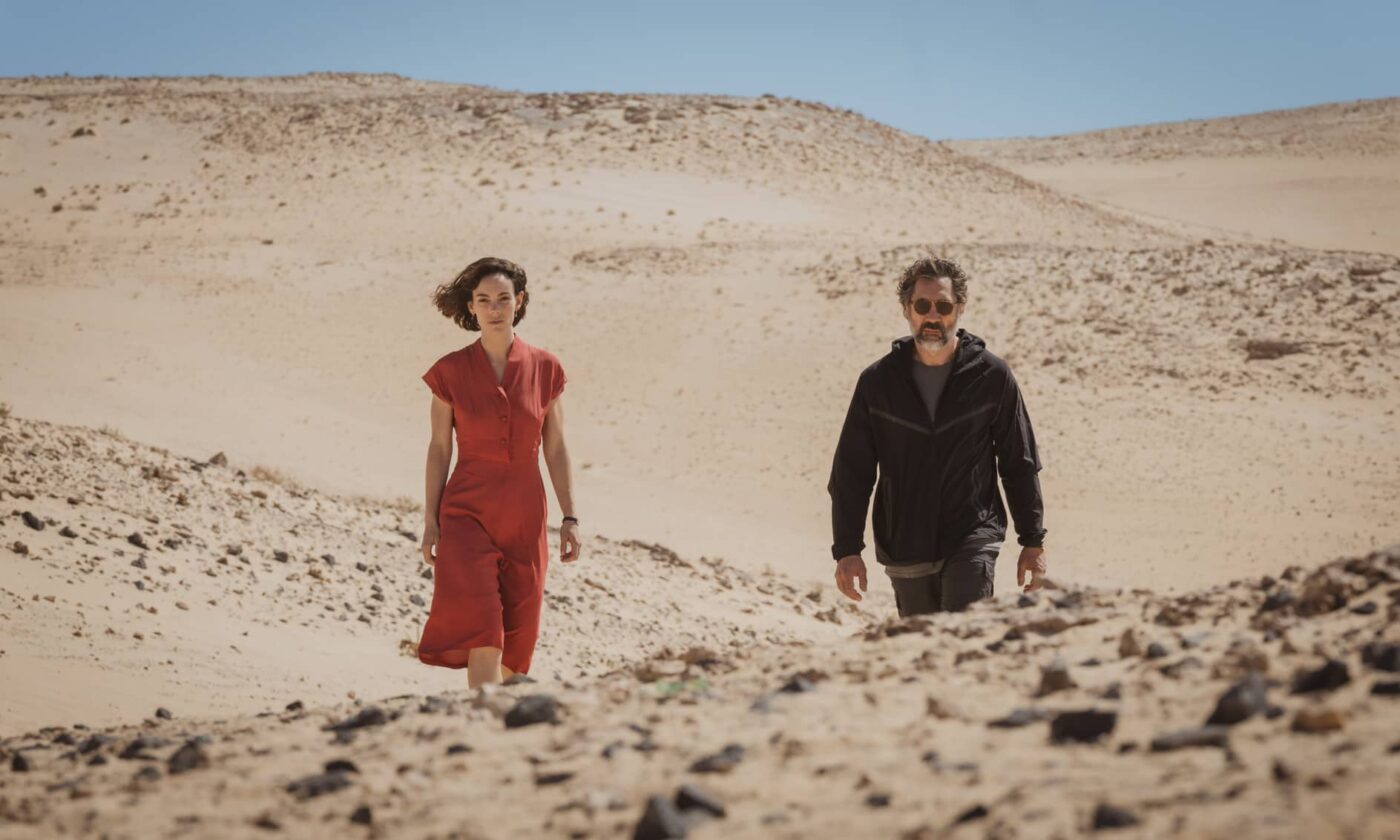
With The Beloved, Rodrigo Sorogoyen moves away from the formal precision of The Beasts (As bestas, 2022) to embrace a more intuitive way of working. With storytelling itself as the film’s central concept, it abandons the idea of a single visual language, instead devising a specific approach for each sequence and combining, in a way rarely seen in Spanish cinema, an extraordinary range of formats and capture media: black and white, color, 65mm, 35mm, 16mm and 8mm film, digital and MiniDV.
To mark its theatrical release following its appearance in Competition at the Cannes Film Festival, we spoke with director Rodrigo Sorogoyen, cinematographer Álex de Pablo, gaffer Pedro Sánchez and colorist Paulino F. Ibáñez to piece together the creative process behind this film about filmmaking.
Rodrigo “Rui” Sorogoyen, one of the most technically minded filmmakers working in contemporary cinema —in the very best sense of the term— pays tribute to film crews in his sixth feature, questions power relationships on set and places cinematography at the very heart of the film: in content and form, ethics and aesthetics. Anyone who makes a living on a film set will appreciate, and perhaps understand better than anyone, this story made up of stories.
By: Dani Benejam
RODRIGO SOROGOYEN — DIRECTOR
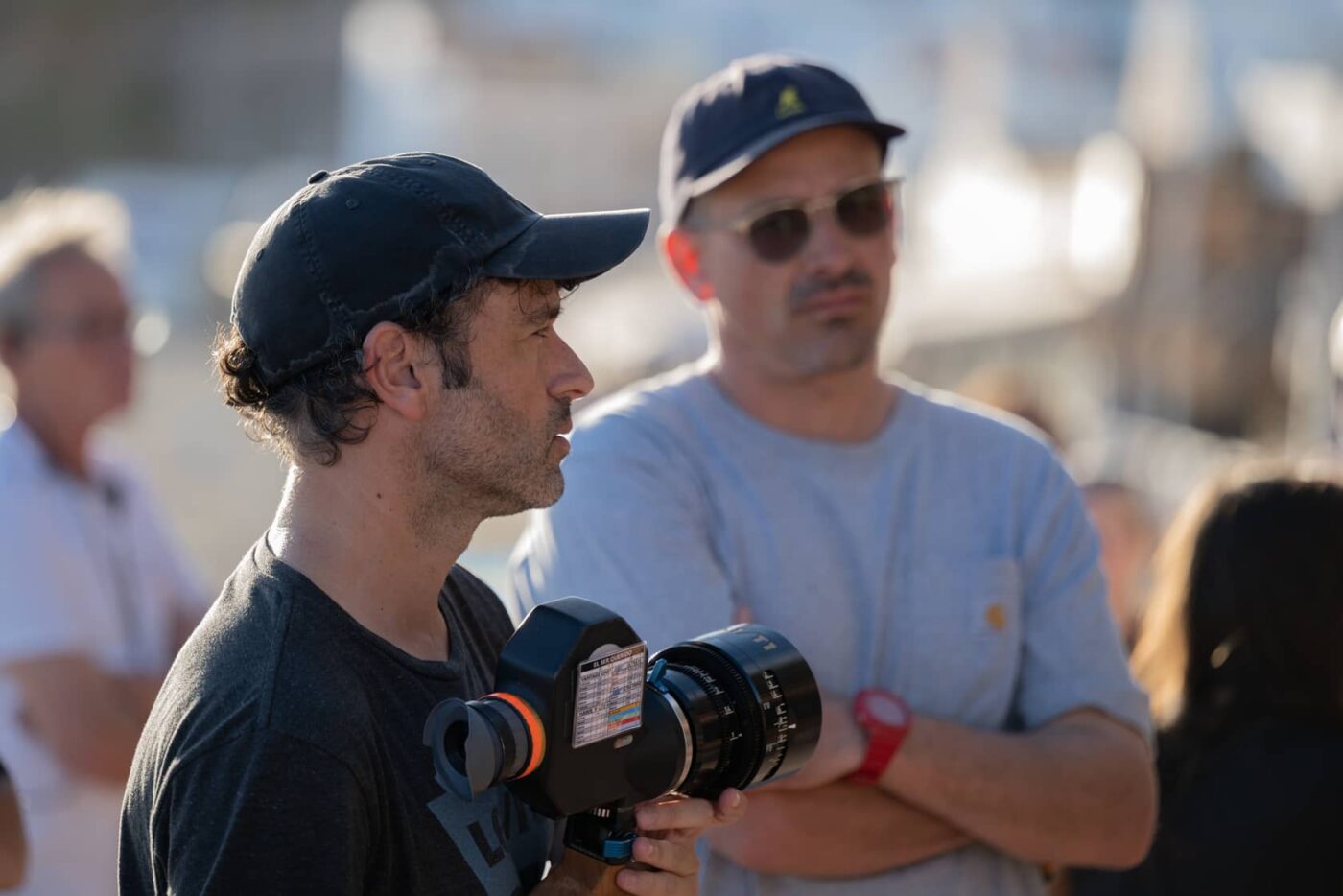
Sorogoyen explains how the very premise of The Beloved led him away from the clearly defined formal rules of his previous films and towards an intentionally intuitive way of choosing formats, lenses and camera language.
Your films have always had very clear formal rules. What was your approach on The Beloved when combining different formats, textures and ways of shooting?
In ‘As Bestas’ [see C&L 120], for example, it was very clear. The first part is extremely classical: everything is shot either on a tripod or a dolly. There is something very grounded about it, very heavy, very masculine. But after Antoine’s death, the entire film switches to Steadicam because I wanted that floating sensation for Olga’s story.
With The Candidate (El reino), however, the idea was completely different. I wanted a film with a lot of energy, a lot of cutting, with a handheld camera constantly following the protagonist. Although that changes in the final few minutes, it was the rule for almost the entire film.
With The Beloved, I wanted to tell a story about cinema and storytelling. Isabel Peña and I used to talk about how a film is full of stories, of different versions of reality. Every character has their own. So I thought: “How do I tell a story about storytelling through cinema itself?” At first I was looking for a single way of doing it, until I realized that the answer was exactly the opposite: to tell it in every possible way.
We began imagining all the possibilities: black-and-white negative, 16mm color, 35mm color… But then came the next question: “Which scene do we shoot in black and white? Which one in color? Which one digitally?” That is where intuition came in.
I wanted to try a different way of working, to move closer to those deeply intuitive filmmakers I admire so much. Quite often, we admire precisely what we are not. You watch a film and think, “Why did they shoot it like that?” And yet it works.
I wanted to get a little closer to that more artistic process, if you want to call it that. I wanted some decisions to come less from rational thought and more from an immediate intuition. That meant I made a lot of decisions very late: some five days before shooting a scene, others on the morning we shot it.
All of this was possible because we had extraordinary production design, an incredible crew and a budget that allowed us to have every format, every set of lenses and all the film stock ready to go. Although I was following my intuition during the shoot, that didn’t mean I wasn’t trying to build some kind of meaning around it. The decisions weren’t random; I was trying to maintain a certain coherence. What I deliberately avoided was giving myself too much time to rationalize everything. That is how we gradually built the film.
Then, in the edit, I came across things that didn’t make quite as much sense or didn’t entirely fit. That was where I constructed the final logic.
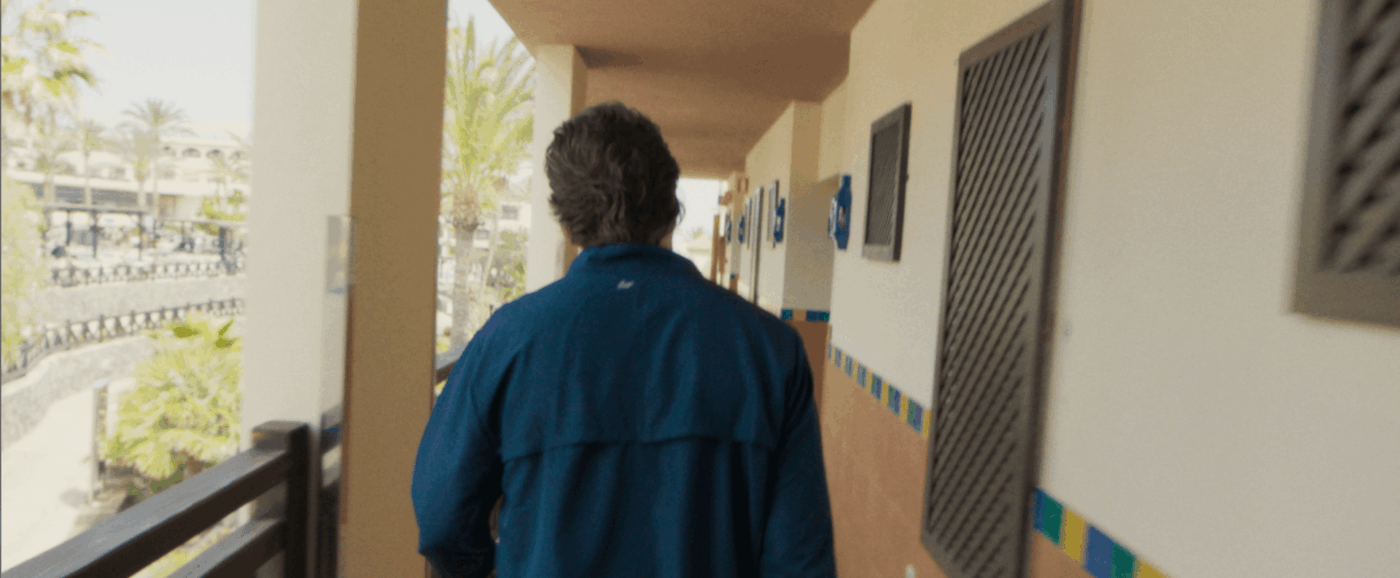
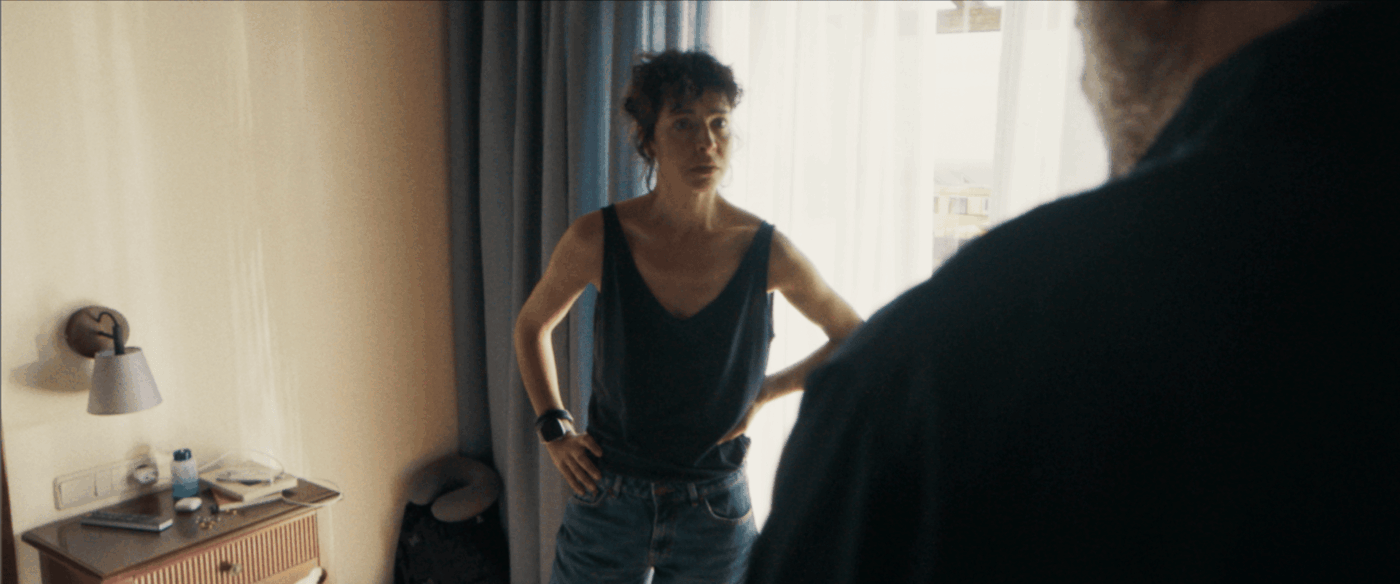
For example, when Javier Bardem’s character [Esteban Martínez] enters the cinematographer’s [Pepa de Pablo] room, we return to a language reminiscent of The Candidate or Riot Police: handheld, on a very wide lens, following him from behind. It is practically the only scene in the film shot that way. Intuitively, I felt that the scene needed tension and violence.
Other scenes were planned much further in advance because of their complexity. The opening sequence, for example, could never have been improvised because it required an enormous amount of preparation. The climax, where Martínez makes Vicky [Emilia] eat the mackerel while they are shooting, was also designed in tremendous detail.
It’s interesting because you watch Natural Born Killers, with that wild mixture of formats, and you love it without necessarily trying to find an explanation for every decision. There is something about the madness that makes complete sense. You don’t think, “Why this shot? Why animation here?” Just because. So during the shoot I told myself, “I’m going to push this as far as I can, and I’ll find the meaning later in the edit.”
The sequence in which father and daughter watch one another across the hotel buffet is probably one of the film’s most complex. What was completely determined before the shoot, and what did you discover on location?
I was very clear about the movement. I knew I wanted to zoom in towards both of them. From there, once you arrive at the location you begin making adjustments, but the underlying idea was already very clear.
His point of view, when he watches her walking around, was shot on film because he looks and thinks in film. He is a filmmaker looking at his daughter, but he is also looking at an actress. There is something about the way he sees her that is mediated by cinema.
The shots of her looking at him, on the other hand, were shot digitally because she doesn’t think in terms of cinema. We tried to create those kinds of associations through the formats as well.
Gordon Willis once explained that many of the productions he worked on followed a particular method: first the director rehearsed with the actors until they found the right way of moving through the space; then the director and cinematographer decided how many shots were required; the actors would leave the set while the crew lit using stand-ins and, when they returned, everything was ready to shoot. How much do you identify with that way of working?
I love that method when I have doubts about the staging. Sometimes I arrive with a very specific idea but, after rehearsing it, discover that it makes no sense. Or the opposite: I see that it works, and I can then build the entire scene around it.
Except for scenes that require extensive preparation, I increasingly like to make the final decisions about the staging the day before, or even on the morning of the shoot. That doesn’t mean I arrive knowing nothing. I have the film’s rules in my head, and I know whether a scene needs eight to twelve shots or whether it can be done in three or four. I can tell Production that the day before so they can schedule accordingly. Then I arrive in the morning and decide exactly what those three shots are.
I think it also depends greatly on the film. The Candidate and The Beasts contained many scenes with similar approaches. They return again and again to the same kinds of spaces and situations.
The Beloved was exactly the opposite. Almost every scene was its own little universe. The scenes depicting the film shoot might share the same context, but even those were designed to be very different from one another. There is only one party in that room. Only one walk along the waterfront with the children. Only one encounter at the buffet. Only one scene in which Martínez enters the cinematographer’s room. Every sequence had its own identity, which often meant finding the staging from scratch.
Although you made many decisions during the shoot itself, others feel as though they were already embedded in the screenplay, such as the film’s two major face-to-face conversations. Where does an idea like that begin?
Isabel Peña and I really like working with contrasts between scenes that are in dialogue with one another, such as those two face-to-face scenes.
The first is shot on long lenses from a considerable distance. We only see their faces, often partially blocked by foreground profiles, people walking past or elements crossing in front of the camera.
That scene was the mirror image of the final face-to-face conversation, when father and daughter talk in the on-set tent. There I wanted precisely the opposite: a visual approach in which the camera practically disappeared. Everything is very classical: two very clean shots, no visual noise, with the camera much closer to them and on wider lenses.
By that point, the characters have become closer and have taken off their masks. We also liked the idea of the background being completely black. Only the two of them exist. All the noise of the outside world has disappeared. The characters receive all of our attention.
I knew that when I wrote the screenplay. Working out how to shoot it in that particular space is another matter, but the idea had been there from the start.
Listening to you describe such an intuitive shoot raises a question. Wasn’t it intimidating to work that way when you had a star like Javier Bardem standing in front of you?
I’m pretty bold when it comes to that. I didn’t change anything; I stuck to my ideas. I tend to believe in them quite strongly. Those were the rules of the film, and it made no difference to me whether it was Javier Bardem or any other actor.
What I did do was use him to our advantage. We had an extraordinarily intelligent actor, a brilliant performer, and someone whose physical presence has a great deal to do with the charisma he projects.
We used to joke about it during the shoot: one frame of Javier Bardem is worth ten frames of a normal actor. So holding a shot on him for ten seconds produces something that simply doesn’t happen with almost anyone else. We began discovering that during the camera tests, and then again during the shoot.
This film is also built around looks —the way the two of them look at one another, and the emotional weight carried by those looks. Javier has an extraordinary ability in that respect.
After so many years working with Álex de Pablo, how do you divide responsibilities between director and cinematographer?
We hardly prepare the film together at all. We spend a lot of time scouting, and I tell him my ideas as we go. We spend a great deal of time together, but not that much time actually “working together”. We have been doing this for so many years that I describe the universe I want to build, explain the kind of film I am imagining, and from there each of us takes care of our own area.
I do the shot design. Completely. He does the lighting. Completely.
In that sense, we are a perfect team. Other directors may prefer spending hours debating things with their cinematographer. We work differently. What I ask him is: “This is what I have in my head. What do you think? Can we do it? Can we achieve it?”
And that is probably the thing I admire most about him. Álex never says to me, “That can’t be done.” Never. And that is what makes me love working with him. It opens my mind enormously.
I think I am actually more conservative in that respect. I take risks when imagining things, but if he told me, “That can’t be done,” I would probably look for another solution. I think that is one of the reasons we work so well together.
Watching the film, it feels as though black and white appears whenever a character makes an emotional connection with a memory. Was that the logic behind it?
Yes. We used it whenever there was a kind of emotional interference, almost always involving painful memories.
For example, when Emilia goes into the bathroom and sees her father’s toiletry bag. At that moment, Esteban stops being the film director and becomes simply her father again. She enters the bathroom in color, but the moment she notices that bag, an emotional interference takes her back into her past as his daughter. That is when we move into black and white. We used the mirror to make that transition.
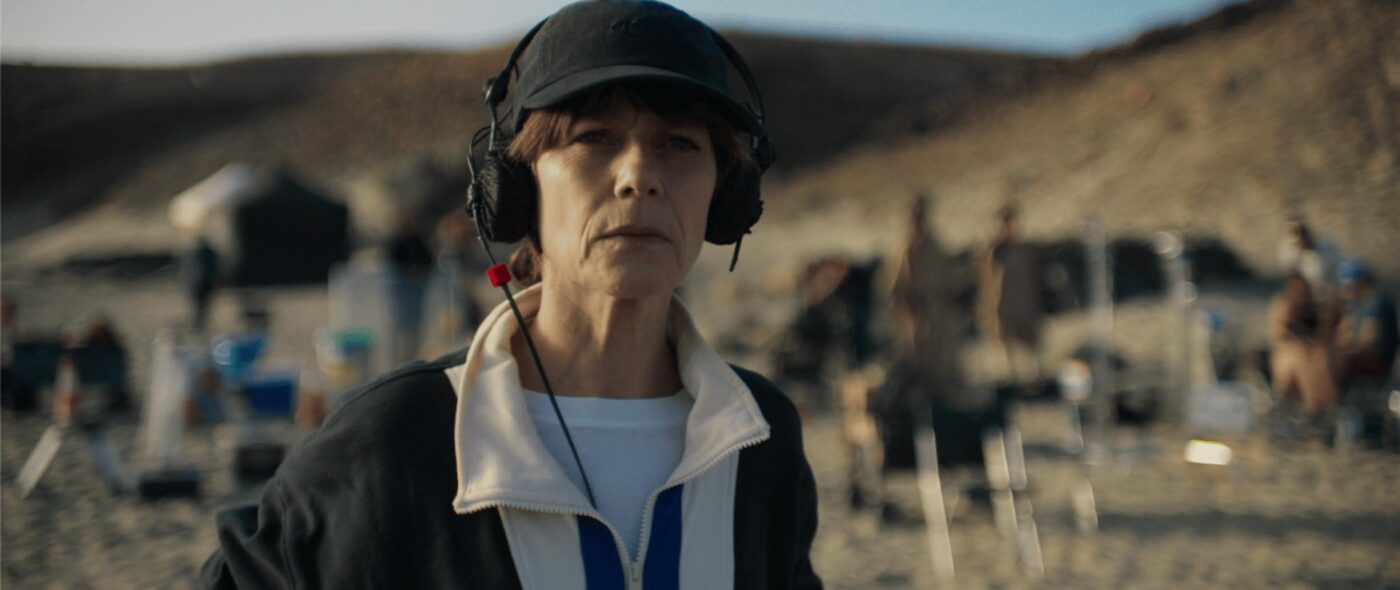
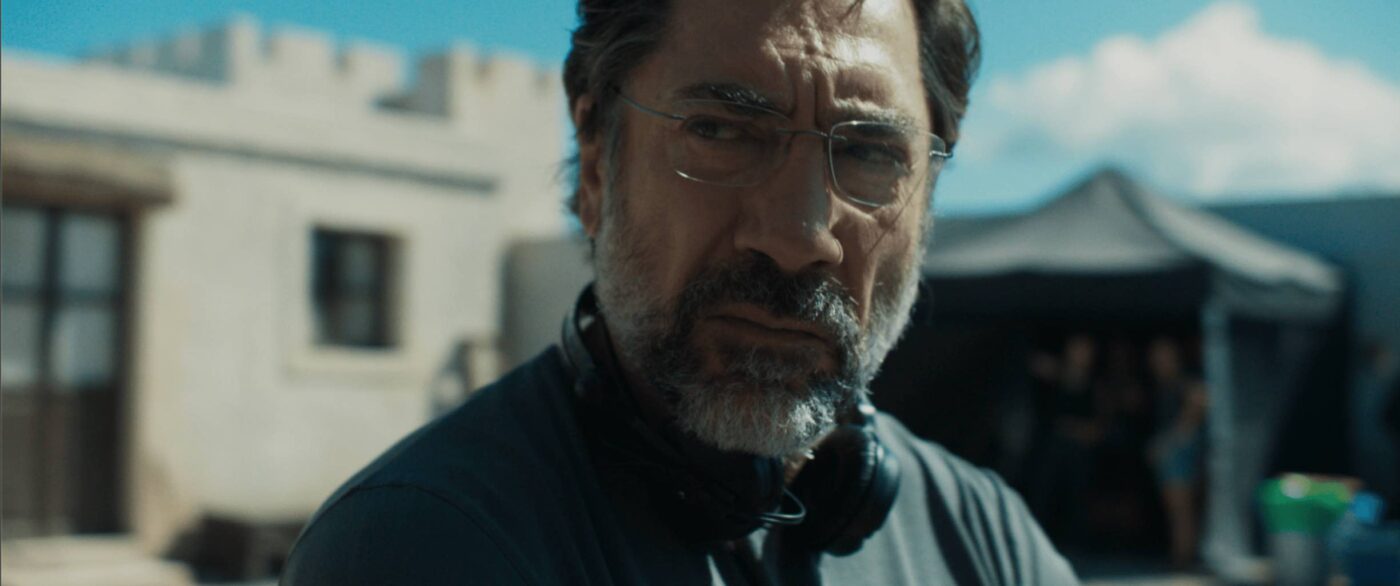
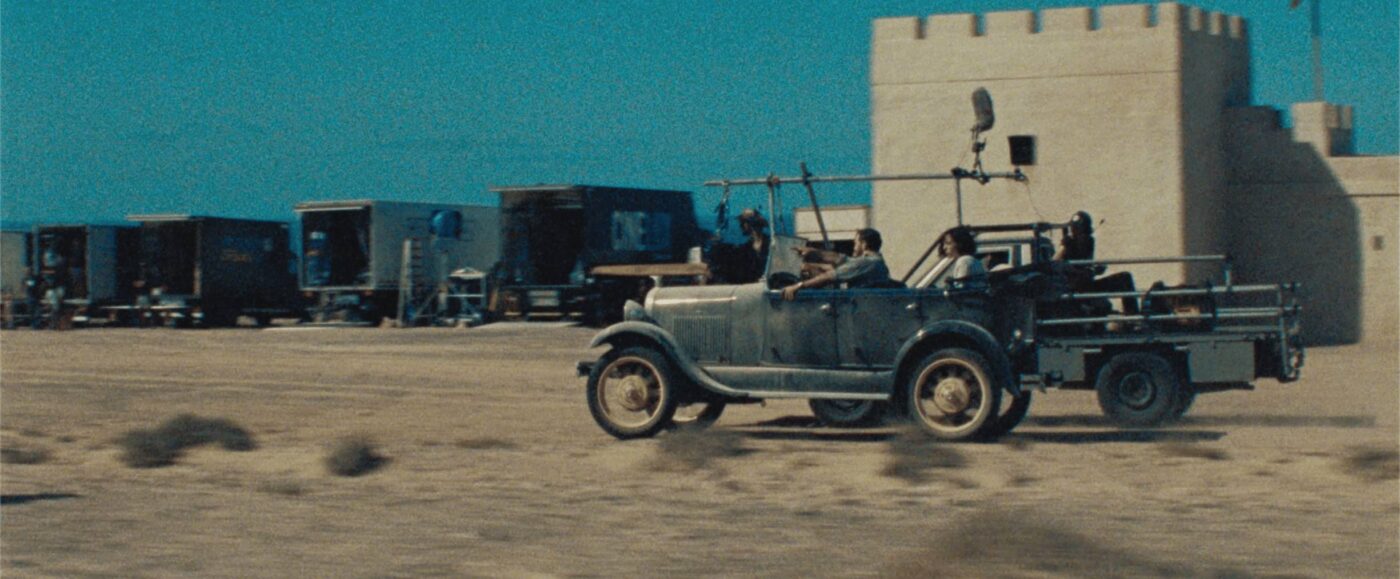
Álex explains [in the following interview] how you organized the shoot around all these different formats and mentions a parallel unit that was constantly recording on MiniDV. It reminded me of something I once read about Akira Kurosawa: he would keep a B camera rolling and barely look at that footage unless he needed it.
That is exactly what we did. Álex, who as you know is incredibly knowledgeable, knew that story about Kurosawa and told me about it. We tried to do it on The Candidate, but we couldn’t. Álex pushed for it, but I felt I already had a thousand battles to fight on that film without having to fight for another camera as well.
On The Beloved, we finally managed it. Rather than doing it on film, we used MiniDV. We had an operator —a friend of ours— who was constantly shooting whatever he wanted.
This isn’t the first film you have shot chronologically. I have always thought it would be wonderful if this became a more standard way of working. How much does it change the experience for the actors, the crew and even for you as a director?
Shooting completely chronologically is usually impossible, but anyone who has worked with us will tell you that we shoot chronologically. The New Years was shot that way, The Beasts was as well, and a large part of Riot Police. And of course The Beloved.
The downside is that I’ve become spoiled. If I were forced to go back to shooting the conventional way now, I think I would really struggle.
Working this way, you know exactly what story you are telling and you internalize the characters’ evolution. But more than anything else, I do it for the actors. They experience the process naturally. I’m convinced that performing a scene after having travelled the entire journey cannot be the same as doing it without having experienced any of what came before.
Imagine if we had shot the opening scene at the very end of production. It would have made no sense. Yet that could easily happen on a conventional shoot. There is something very special in that first scene: Vicky Luengo’s nervousness as she faces Javier Bardem for the first time, and Javier’s nervousness facing Vicky for the first time. They are beginning that adventure together, and you can feel it in the scene.
The same applies at the end. The final scenes in Madrid —him in the cutting room and her at home— were literally shot on the last two days of production. I am convinced Bardem’s tears would not have been the same if we had filmed that scene at the beginning.
Obviously, shooting this way helps me enormously in terms of structuring the film as we make it. It also helps the crew feel that they are telling a story rather than simply doing a job.
I try to involve the heads of department and encourage them to pass that involvement on to their teams. I talk to them about the characters and about what we are trying to tell. I try to bring them into the conversation, because that means all of us are pushing in the same direction.
That is the beautiful thing about filmmaking: sixty people trying to tell the same story.
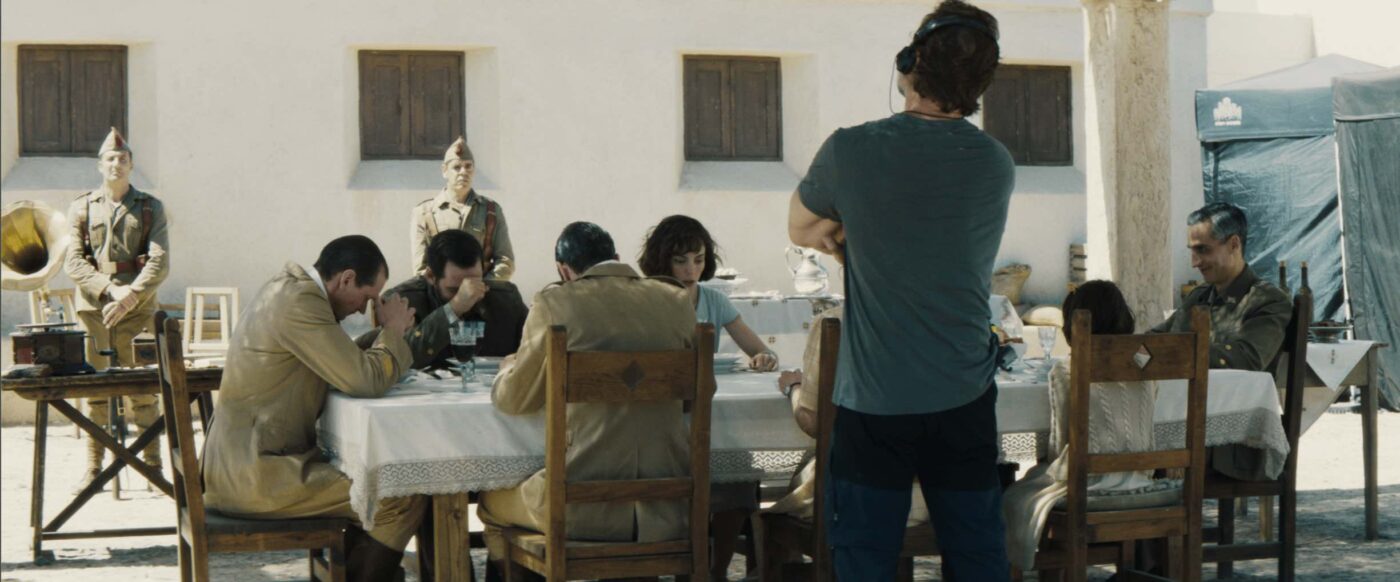
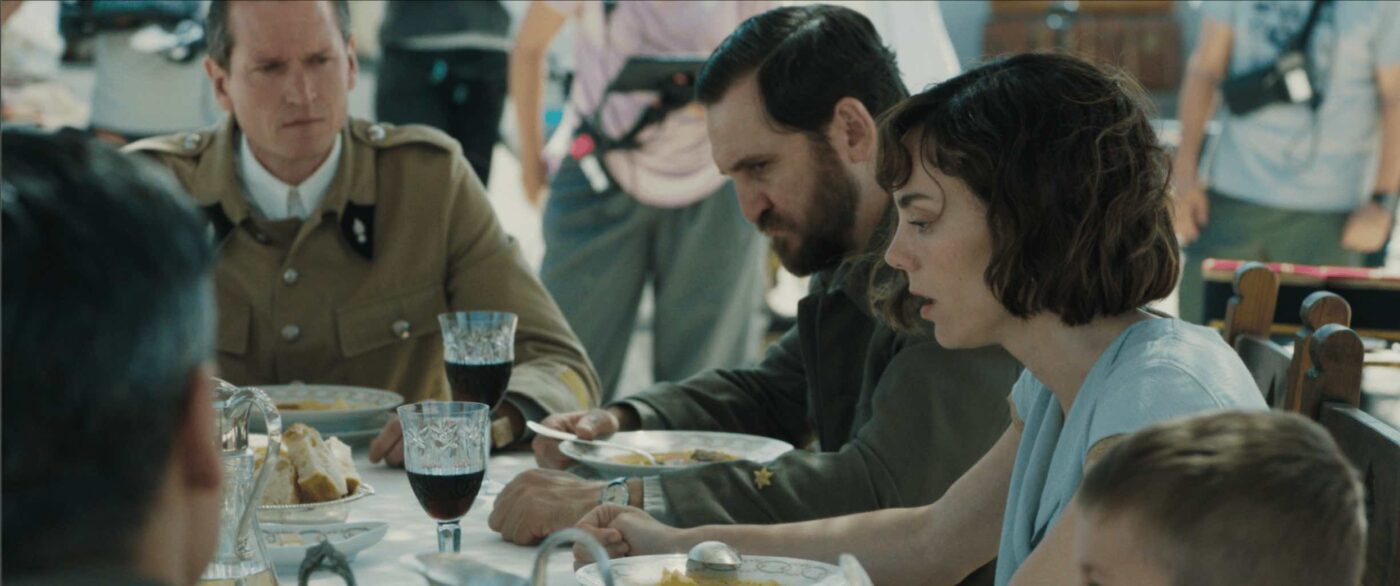
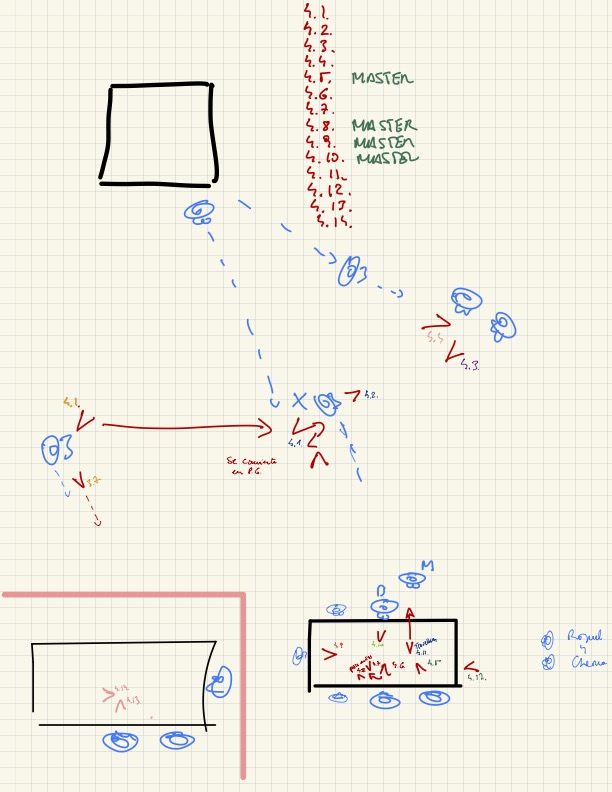
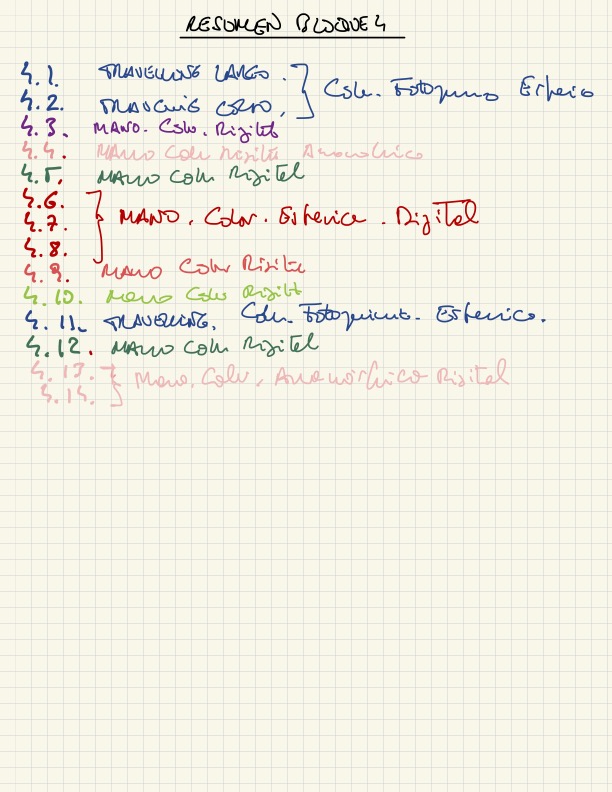
The approximately fifteen-minute climactic sequence in The Beloved is where the entire visual system developed throughout the film converges. Until this point, each scene has maintained its own formal identity. Here, by contrast, Sorogoyen condenses and combines all of those visual languages within a single sequence.
The result was one of the film’s greatest technical challenges: five days of shooting, around one hundred setups and a final edit comprising more than 230 cuts.
The scene takes place during the filming of a meal in the courtyard of a fort and is structured in nine blocks, corresponding to successive attempts to get a take. What begins as an apparently controlled situation gradually deteriorates as Martínez stops the shoot, corrects the actors and crew and progressively raises the tension.
The shot design mirrors that crescendo: the camera moves increasingly closer to the characters’ faces and multiplies the points of view until the set itself becomes an increasingly fragmented and oppressive experience.
To achieve this, Sorogoyen decided to film “from every possible point of view and in every possible way.” Within a single sequence, black and white sits alongside color; film alongside digital; 35mm, 16mm, 8mm and MiniDV; spherical alongside anamorphic lenses. The constantly shifting capture formats are matched by an equally fluid camera language combining tripod, dolly, handheld and Steadicam, as well as whip pans and increasingly reactive movements as the conflict intensifies.
This heterogeneity was built into the shot design. The opening blocks begin with relatively stable staging, establishing the space, the table and Emilia’s relationship with the film she is shooting as Gabriela. From there, every new interruption introduces variations in medium, lensing, camera movement or point of view.
The camera also begins to move towards other members of the crew and enters video village, bringing Martínez’s perspective in front of the monitors into the sequence.
The mixture of formats is not merely aesthetic experimentation. The gradual breakdown of the film’s visual grammar parallels the breakdown of the shoot itself: the more Martínez loses control of the situation, the more unpredictable, intimate and fragmented the camerawork becomes.
It is a deliberately extreme accumulation of techniques that Sorogoyen describes as “the strangest and riskiest” thing he has ever done in his career —and also the most difficult scene he has ever shot.
ÁLEX DE PABLO — CINEMATOGRAPHER
If The Beloved grew out of Rodrigo Sorogoyen’s desire to explore a more intuitive approach than the formal rigor of his earlier work, Álex de Pablo’s challenge was to turn that intuition into a coherent cinematic language for a film built around an unusual visual system in which multiple formats, media and textures coexist.
The visual language of your films together has traditionally been based on very clearly defined rules. Rodrigo, however, describes The Beloved as a film built on intuition. How did you experience that change as a cinematographer?
At first I found it difficult to accept how we were going to tell the story. I need a certain amount of control; I need to understand why something is going to be told in a particular way. But the proposition here was different: “Let’s feel it the way the characters would.”
For me, the most important thing was understanding what might give us a reason to relinquish that control.Rui [Sorogoyen] said something that helped me a great deal: “The film is about the construction of our intimate narratives.” And of course, we construct our intimate narratives unconsciously. We remember reality very imprecisely and reshape it according to our emotional needs. The construction of that narrative does not follow logical criteria.
From there, we thought the most organic way of creating a cinematic language that could engage with that idea was to keep asking ourselves: “How do we shoot this? How does it feel? Black and white? Digital? Spherical or anamorphic?”
If we wanted to create a parallel between the way that mental reality is constructed and the way cinematic reality is constructed, those decisions needed to be impulsive and made in the moment. To do that, we had to have all the formats available throughout the shoot so we could make the decision there and then.
I even ordered a set of dice so we could introduce an element of chance into those decisions, but they didn’t arrive in time… That doesn’t mean everything was random. There were sections where Rodrigo was quite clear about whether he wanted to shoot digitally or on film.
How has your relationship with Sorogoyen evolved after so many years of working together?
A great deal of the visual thinking in Rodrigo’s films comes from him. They are ideas he thinks through, imagines and proposes. I make suggestions too, of course, but my job is to filter what he wants, answer his questions and help develop his intuitions.
We normally understand one another very well because we have a very similar sensibility.We need less and less prep time. When you have worked with someone for many years, the time you once needed simply to understand one another can be invested in other departments where it is more useful. That is also connected to the fact that we don’t like working from references. We try to listen to each other and avoid arriving with everything excessively predetermined.
I like directors to arrive on set with a very clear vision for each sequence. I think any director should aspire to design shots with the camera and direct the actors. Just as a cinematographer needs to master their side of the craft, a director should also be involved in constructing the film visually. Because filmmaking involves so many people and so much money, you have no choice but to plan extensively. I don’t want to romanticize chaos either: you need to keep things under control.
What we try to do is make sure that, once that foundation exists, there is still room for unexpected things to happen. If everything is perfectly calculated, the result risks becoming mechanical.What interests us is maintaining that balance: keeping things under control while occasionally allowing them to get out of control.
We used to arrive on set having studied everything much more thoroughly. When you are shooting, there is always a fear that you haven’t done enough, and that fear makes you tend to overshoot for safety.
Over time we have realized that you might have planned seven shots, but if after three you already feel you have told the scene, why shoot the other four?
What role did camera testing play in developing the film’s visual language?
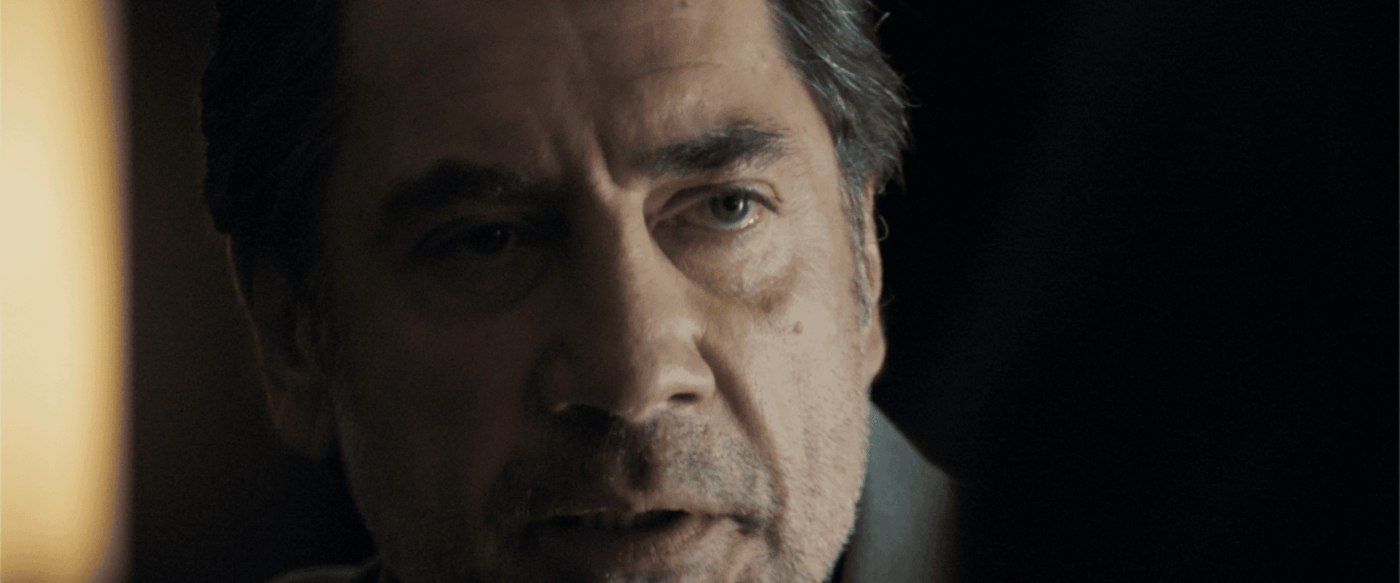
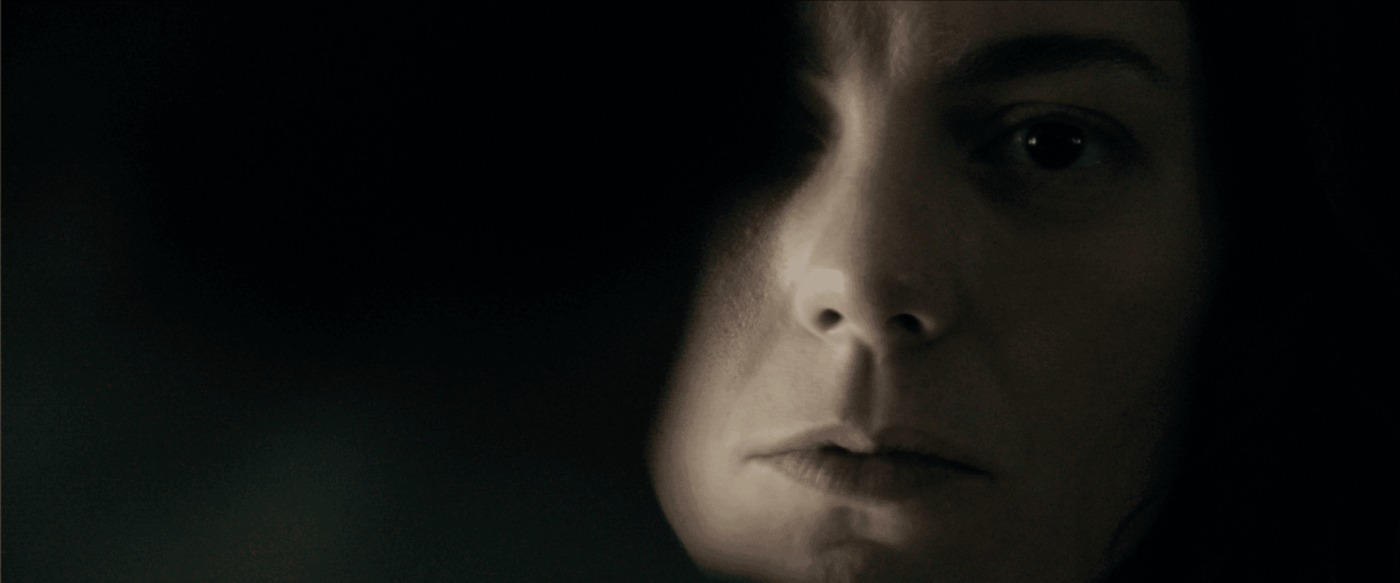
For me, the most important aspect of camera tests is making contact with the actors —beginning to understand the geometry of their faces, their features and their skin under different directions and qualities of light.
I also start experimenting with textures and with greater or lesser amounts of color. Rather than looking for specific answers, I familiarize myself with how highlights behave, how the skin responds…
Camera tests are a space for sharing impressions, beginning to establish a common language, connecting with the crew and building confidence.
I also test filters, textures and different camera sensitivities. I used to be much stricter and would test every possible ISO. Now I prefer combinations: a particular focal length at a particular sensitivity, a particular stop…
I prefer to discover things as I go. In fact, that process of discovery is one of the aspects of my job that interests me most. I see it as one of its greatest rewards.
One of the discoveries we made during those tests, for example, was shooting black-and-white film with Vantage V-Lite 2x anamorphics. I found it to be a beautiful combination.
The film opens with a fifteen-minute conversation between Esteban and Emilia. How did you construct that first encounter so that it would feel so authentic?
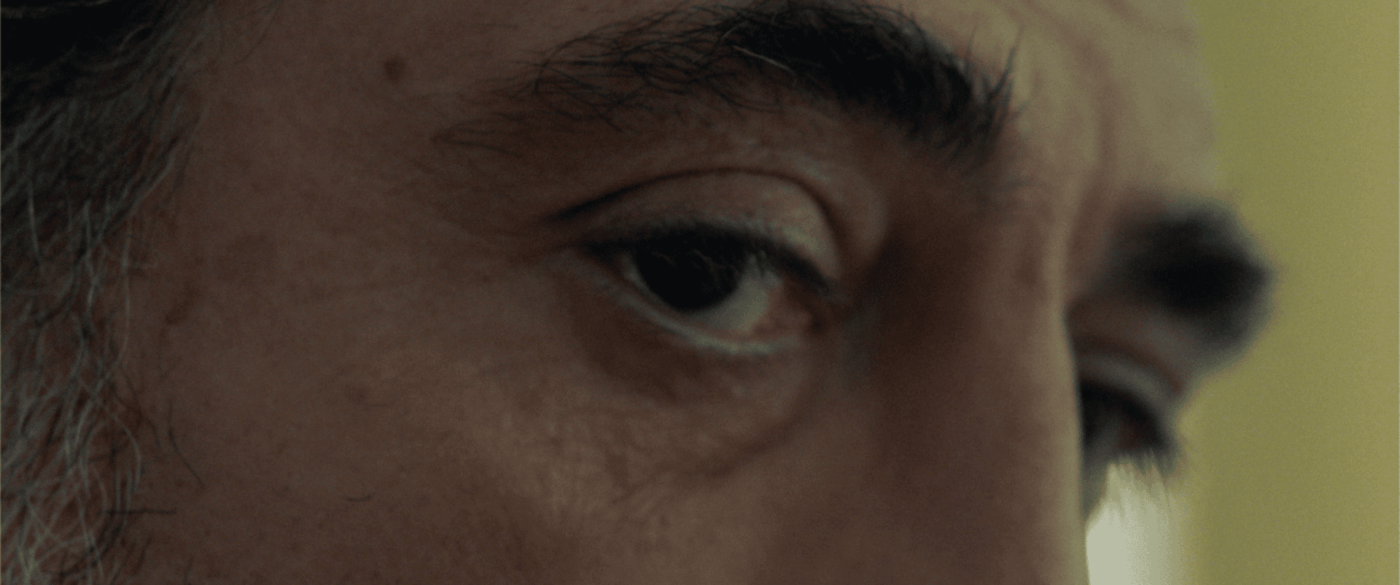
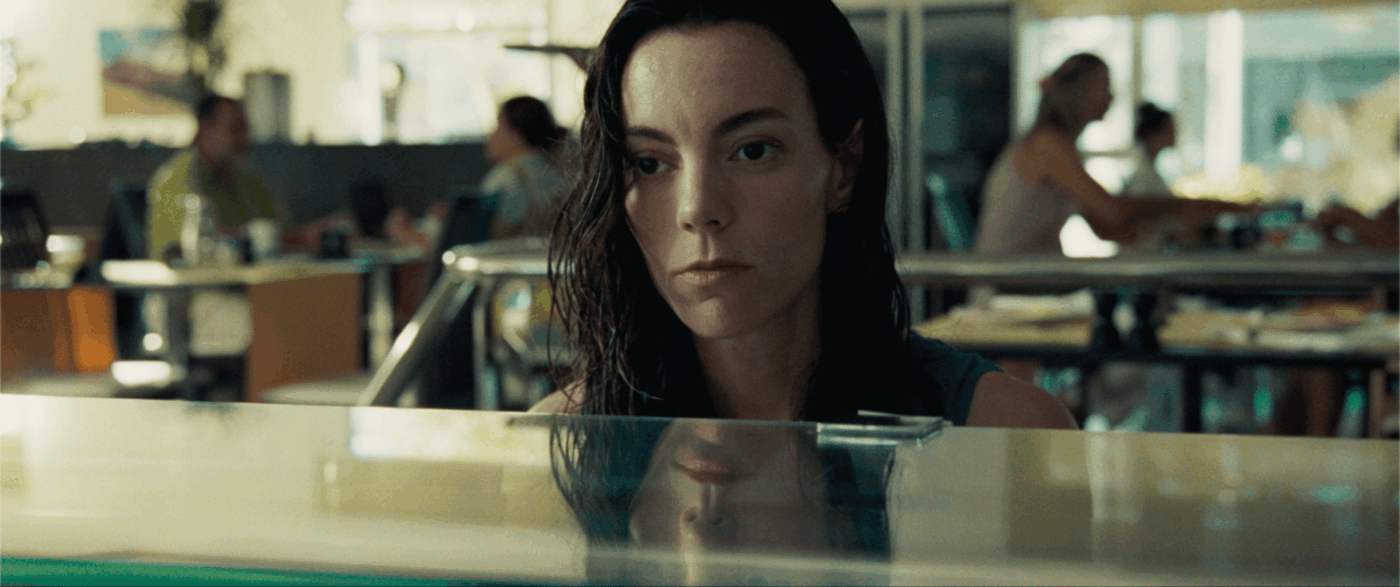
They are a father and daughter who have not seen one another for a very long time and meet in a restaurant. We thought it would be incredible if the actors themselves could experience something similar to the characters: not rehearsing the scene together and allowing that first encounter to contain something genuinely real.
To make that possible, we adapted the set so that all our technical intervention was completely integrated into the real location. The idea was that anyone could walk into the restaurant and there would be nothing that immediately drew their attention. One member of the AD department was even dressed as a waiter, so that if anyone needed to enter the scene and give an instruction, they could do so without breaking that sense of normality.
The cameras were concealed behind one-way mirrors. We tested several types of glass, including those used in police interrogation rooms. There were three camera positions. Two were dedicated to frontal close-ups of each character, while a third provided a side angle.
The idea was to have two very specific framings —an extreme close-up and a close-up— and to allow them to obscure one another within the frame, something we wanted to happen frequently. At the same time, we needed the option of separating them visually whenever the scene required it. So each of those cameras had a zoom mounted on a small slider.
How do you design a shoot that can accommodate so many different formats without the entire system becoming an obstacle?
I was very worried that using so many formats might work against the film. I kept asking myself, “If we can make a good film without imposing so many formal constraints on ourselves, is it worth taking this risk?”
Because it is no longer enough for the script to be good or for the actors to give strong performances. You also need the audience to connect with an unconventional visual language. That was the big unknown: how would the audience respond?
The story itself was captured on film, digital and MiniDV. In parallel, the film being made within The Belovedwas shot on an ALEXA Mini.
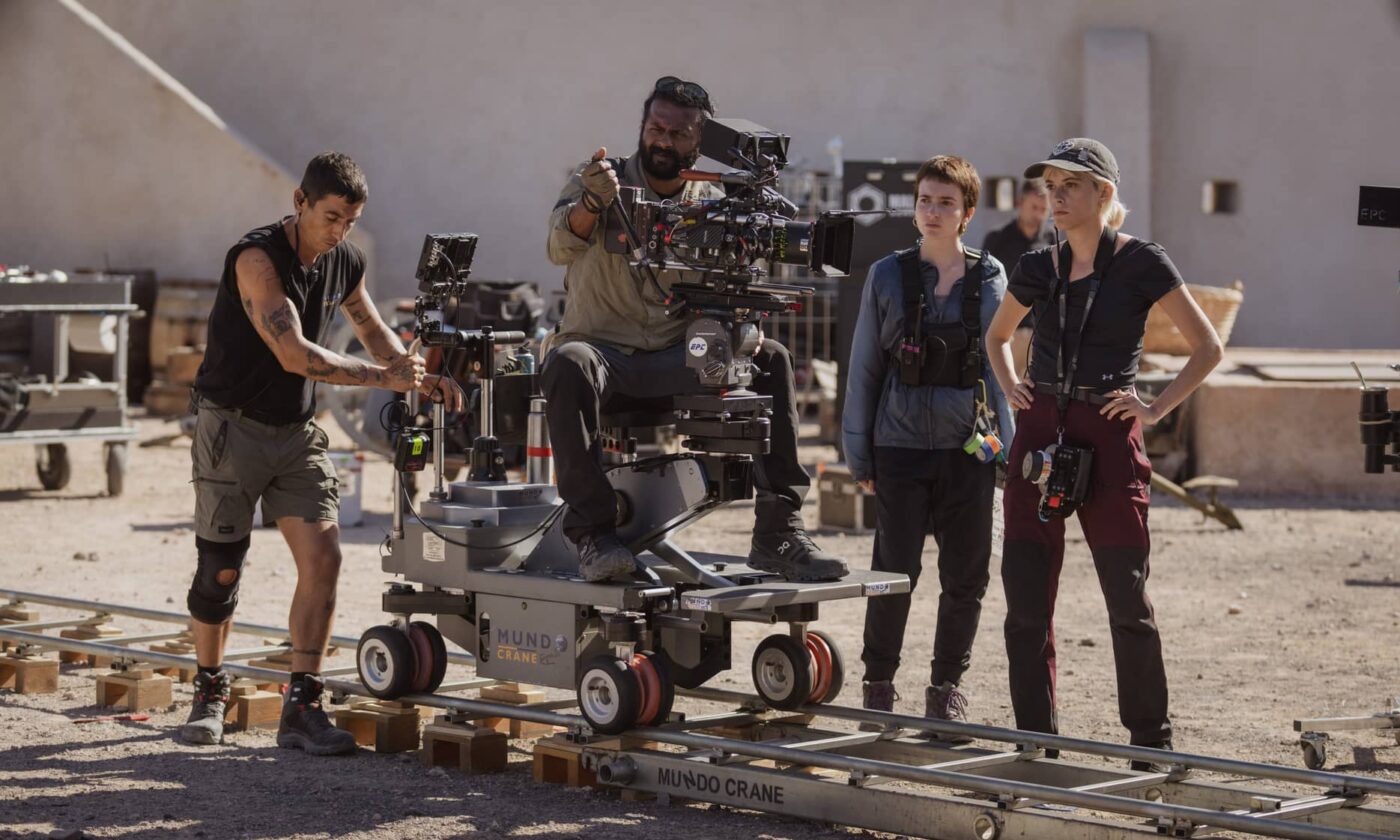
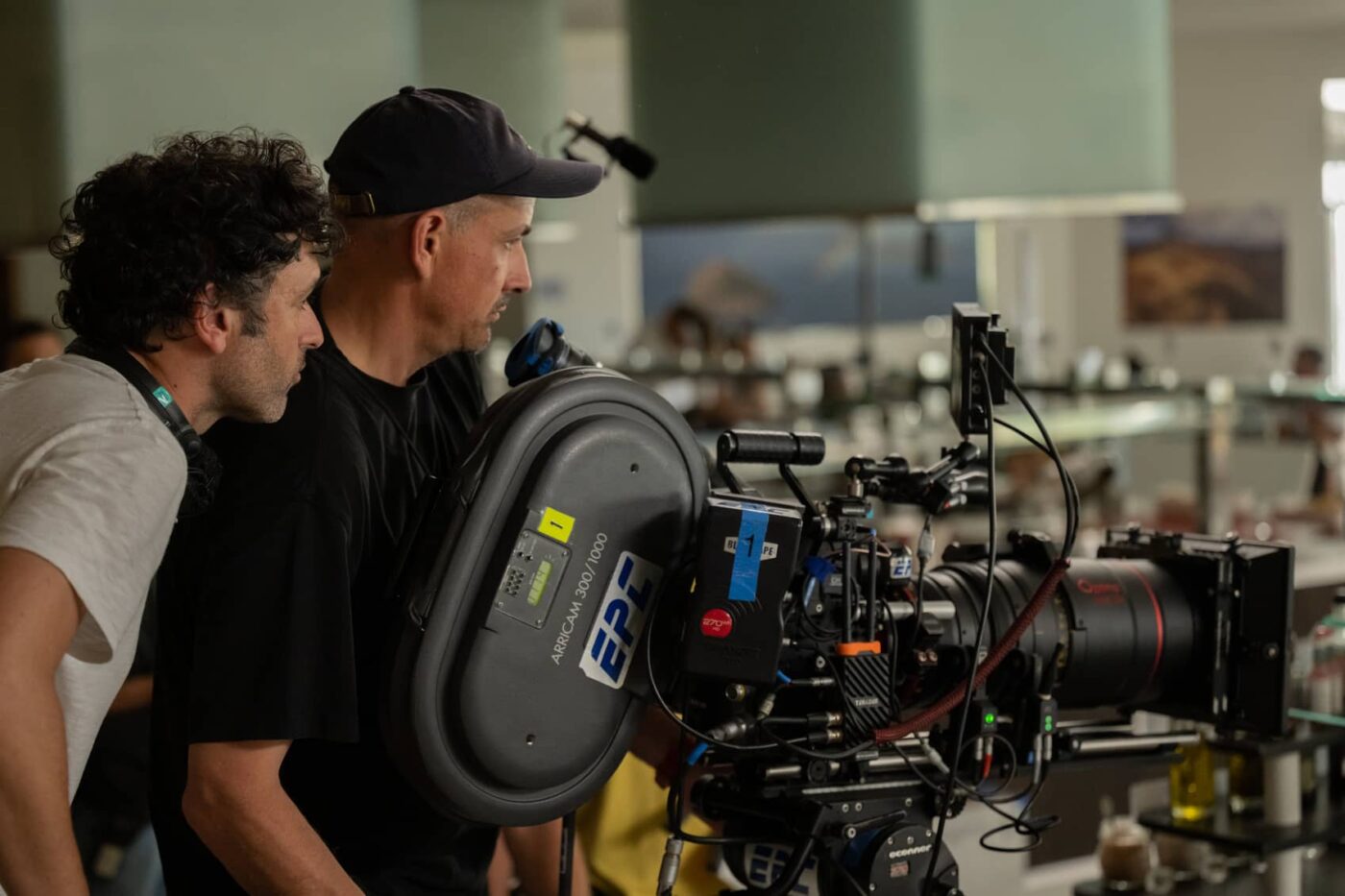
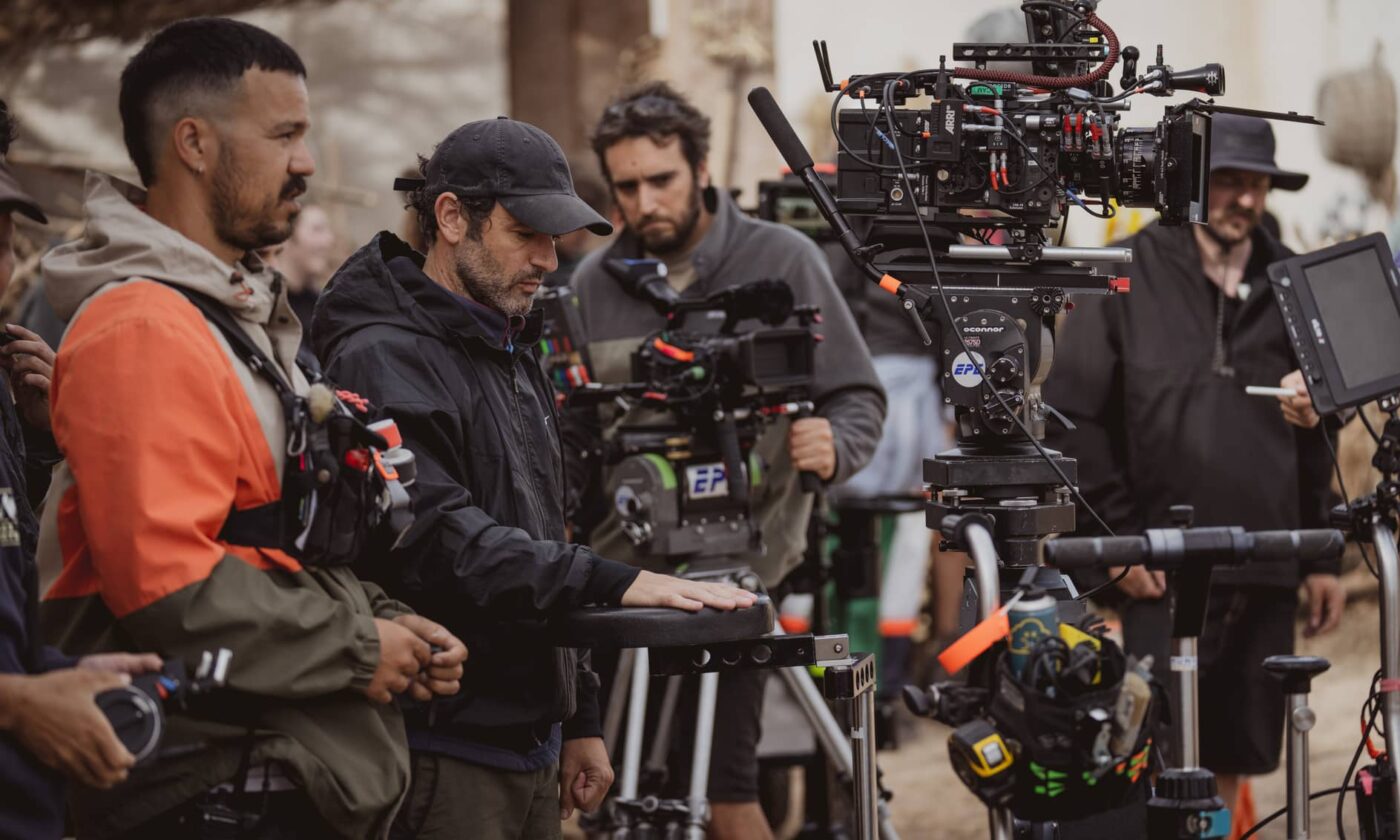
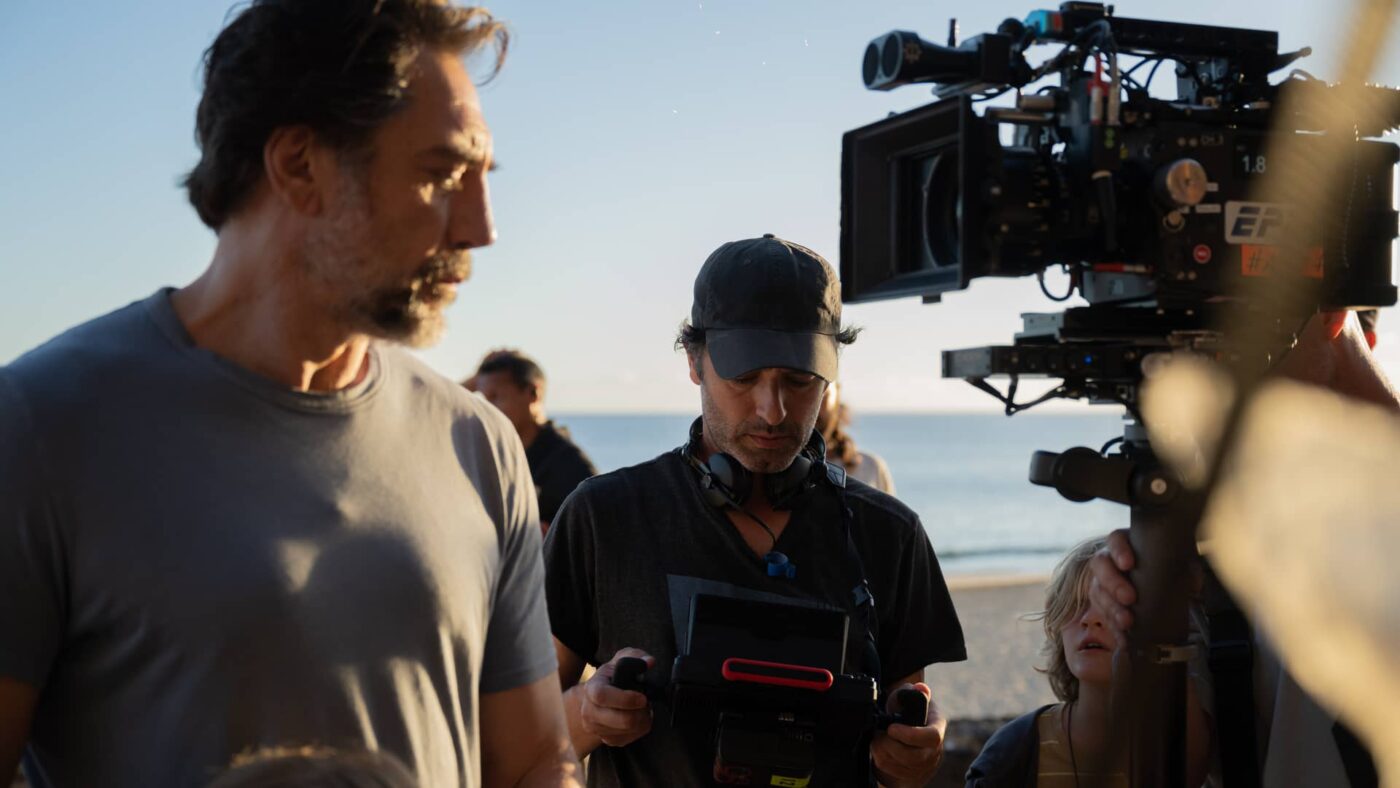
To work that way, we created a very unusual camera setup. I operated A camera, we had an operator handling B camera and Steadicam, and the HDV camera had its own operator, who shot constantly and without supervision.
There was only one rule: none of the other cameras could ever slow down the main camera. If we were shooting on 35mm with the ARRICAM and suddenly felt it might be interesting to bring in the ALEXA 35, someone would run off and get it.
All of that created a certain amount of chaos, although it was fairly controlled chaos. If you came skidding in after they had already called “Action!” and didn’t have time to roll your camera, then you simply didn’t get the shot. You had to accept that some opportunities would be missed. That was part of the system.
It was a very unusual way of shooting. There was no one I could ask for advice, nor could our production manager phone somebody and say, “How did you solve this on that other film?” We were developing the methodology as we went.
It also helped enormously that I work with people who genuinely feel like a team. I will go into battle for my crew and they will go into battle for me.
There were countless situations involving 35mm, Super 16 and digital cameras at the same time. Suddenly, a camera assistant might find themselves operating a camera without a focus puller because we needed to capture something immediately.
At times it was almost circus-like, but it was precisely that collective commitment that allowed us to make the film we wanted to make.
How did you approach the lighting on The Beloved?
My starting point is fairly classical. I arrive at a location and try to observe it at different times of day. I always try to take inspiration from the reality of the space and work from there.
On one hand that can make things much easier because it gives you a very clear direction, but it can also make things harder because maintaining certain natural conditions requires an enormous amount of work.
If I arrive at a location that doesn’t give me much to work with, then I will try to create something which, even if it moves away from the natural reality of that space, works cinematically. At that point, the objective becomes transforming the location.
In general, I try to take light away and add as little as possible. I think spaces often become more interesting when you keep subtracting until only the elements that genuinely work remain.
How did you work with colorist Paulino Ibáñez, and what were you looking for when dealing with the color of so many different formats?
Paulino was involved from the very first camera tests. The idea was that he could begin developing the workflow from the outset while also feeding back his impressions of the material.That was very important because many of the concerns I had gradually disappeared as we progressed through the tests.
In terms of color, we wanted each type of material to retain the characteristics of its original format. If the difference between 35mm and Super 16 was that Super 16 had more grain, we wanted that grain to remain. And if MiniDV appeared with an overtly digital texture full of blocking and artifacts, we wanted to preserve that too.
The intention was never to match the formats to one another. Chromatically, the rule was always to stay within a certain degree of realism.
PEDRO SÁNCHEZ: A METHODICAL GAFFER
Given the scale of the project and the mixture of formats involved, Álex de Pablo sensed that The Beloved was a film to which Pedro Sánchez could contribute a great deal. His ability to work autonomously —anticipating problems, getting ahead of the schedule and resolving issues on his own— was essential on such an unusual shoot.
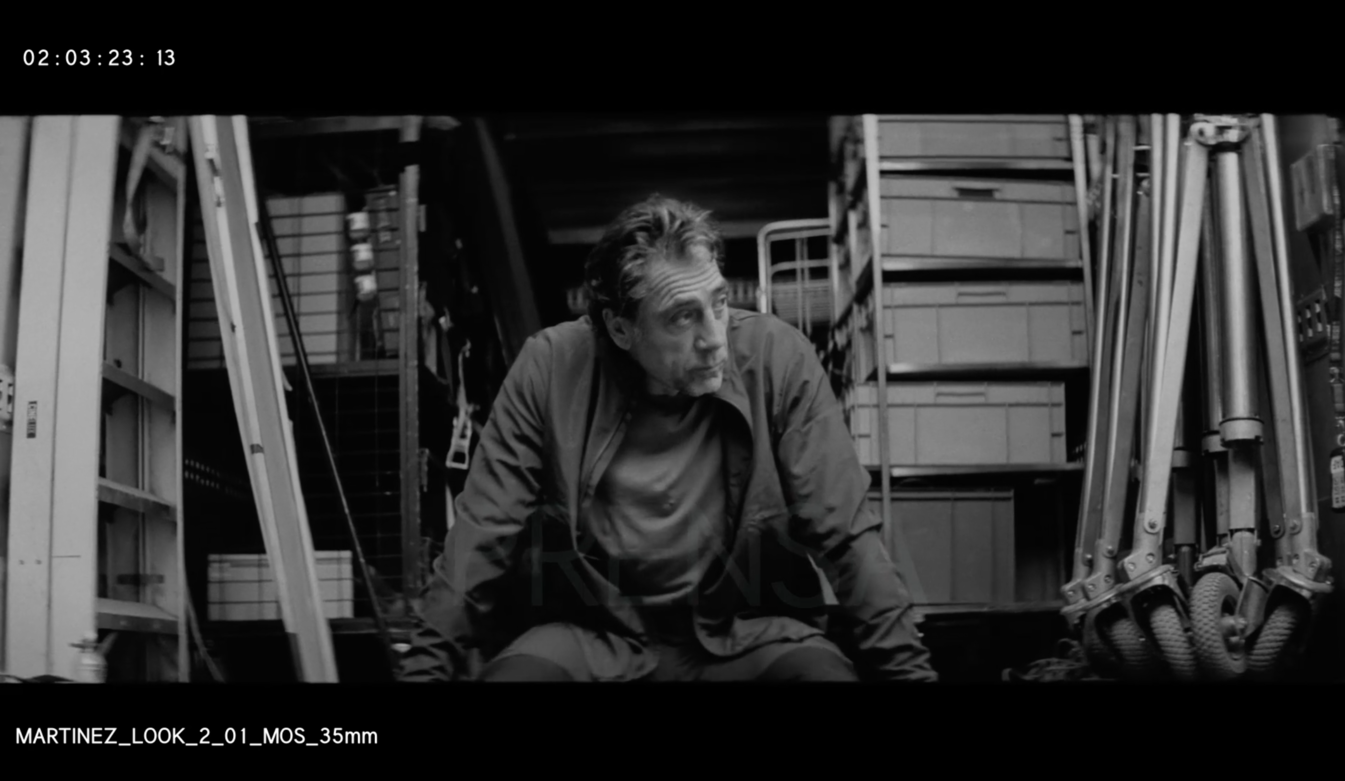
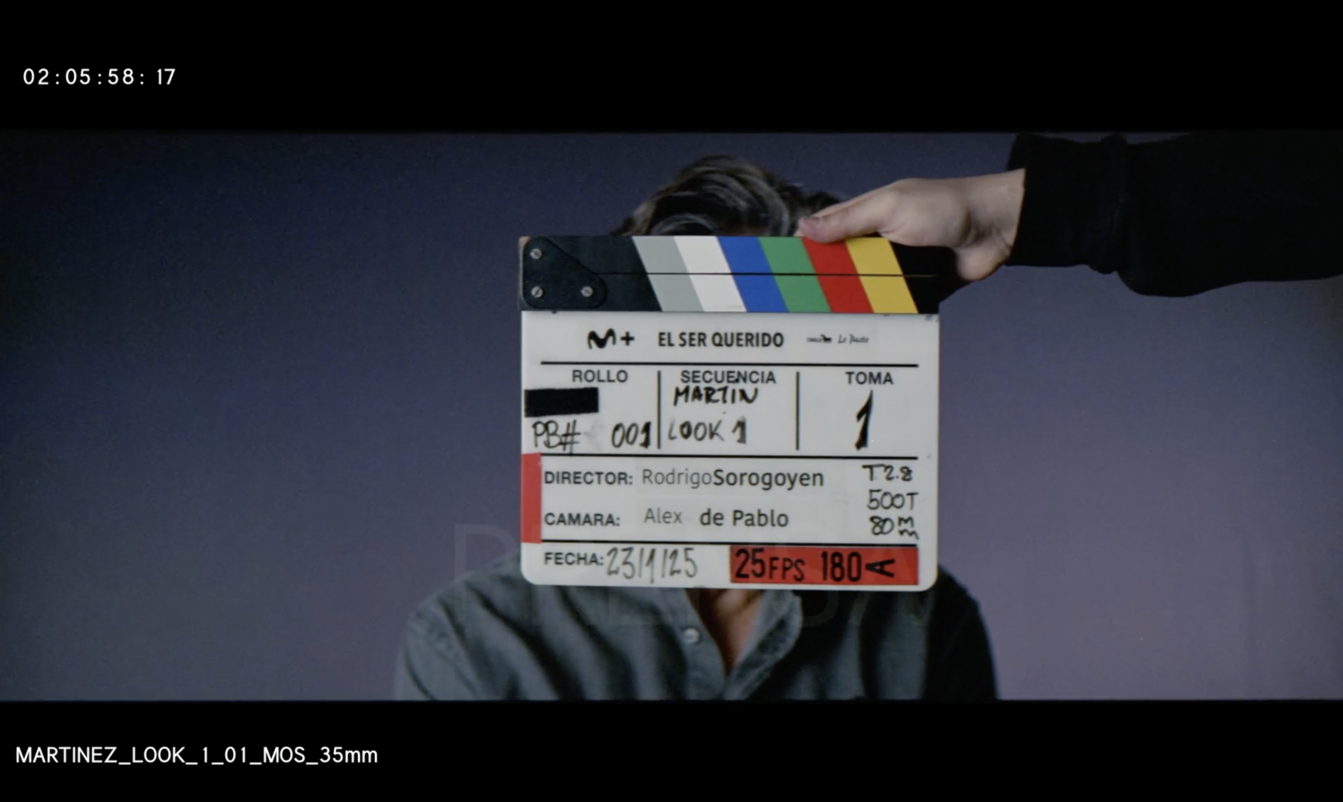
Álex says that during the camera tests you discovered that Vicky Luengo looked better under slightly cooler light than Javier Bardem.
Camera tests are fundamental for us because they show us how each actor’s skin responds to different types of lighting.
We test different light directions, heights, color temperatures… Not every face responds in the same way, just as not every face works with the same angles or the same quality of light, so we look for what works best for each actor.
On The Beloved, we weren’t only carrying out lighting tests; we also needed to understand how the different formats we were going to use would respond.
What do you think the working relationship between a cinematographer and a gaffer should be?
For me, a gaffer isn’t simply there to execute what the cinematographer tells them to do. They need to understand the approach that has already been developed and be capable of taking it forward autonomously.
The cinematographer needs time with the director. Their job is to discuss the scene, look at the framing and work out how it is going to be told. So they shouldn’t have to worry about whether a fixture needs to be raised or whether we need to cut a little more light from camera right. Our job is to take all of that off the DP’s shoulders so they can focus on the film.
When you arrive at a technical scout, what is the process of building the lighting, and how much work do you try to anticipate before the shoot?
Álex explains what the scene is about, where the characters are going to enter, where they are going to sit and, roughly, where the camera positions will be. From there, we start considering how that space needs to be treated with light.
I try to get as far ahead as possible, but without losing sight of one fundamental thing: the camera dictates the lighting.
The lighting depends on where the camera is going to be. So you need a very clear idea of the camera position and its movement before you finish designing the lighting.
Putting lights in place without knowing where the camera is going to be feels like a waste of time to me and, in a way, a mistake. I think you lose the methodology.
If I know where the camera is going to be, I try to have the lighting about 80% ready. Then, once the camera is in position, we make the final adjustments.
I am much more interested in taking light away than adding it. If I arrive at a space with good natural light, I try to work with it and shape it.
I use a tremendous amount of black to block unwanted light, and I will even block the sun when necessary. I gradually close down all the directions that don’t interest me until I am left with a single direction of light.
Then we reconstruct that direction using large fixtures: 18K units, 24K tungsten or Maxi-Brutes, depending on what the situation requires.
I always try to light the space rather than the actor. I look at where the character is going to sit and think about how the light should enter that particular space. If I then need to carry the actor slightly with the light, I will.
My first priority is believing the lighting of the space itself. It can be brightly lit or have almost no light at all, but it has to reflect the atmosphere that sequence requires.
By the time we reach the final rehearsal with camera and actors, I consider the lighting finished. At that point I may see that one or two things need adjusting, but those are just finishing touches. What matters to me is that the space works on its own. I look at the space and think about how it ought to feel.
After so many years working with light, which tools best suit the way you light?
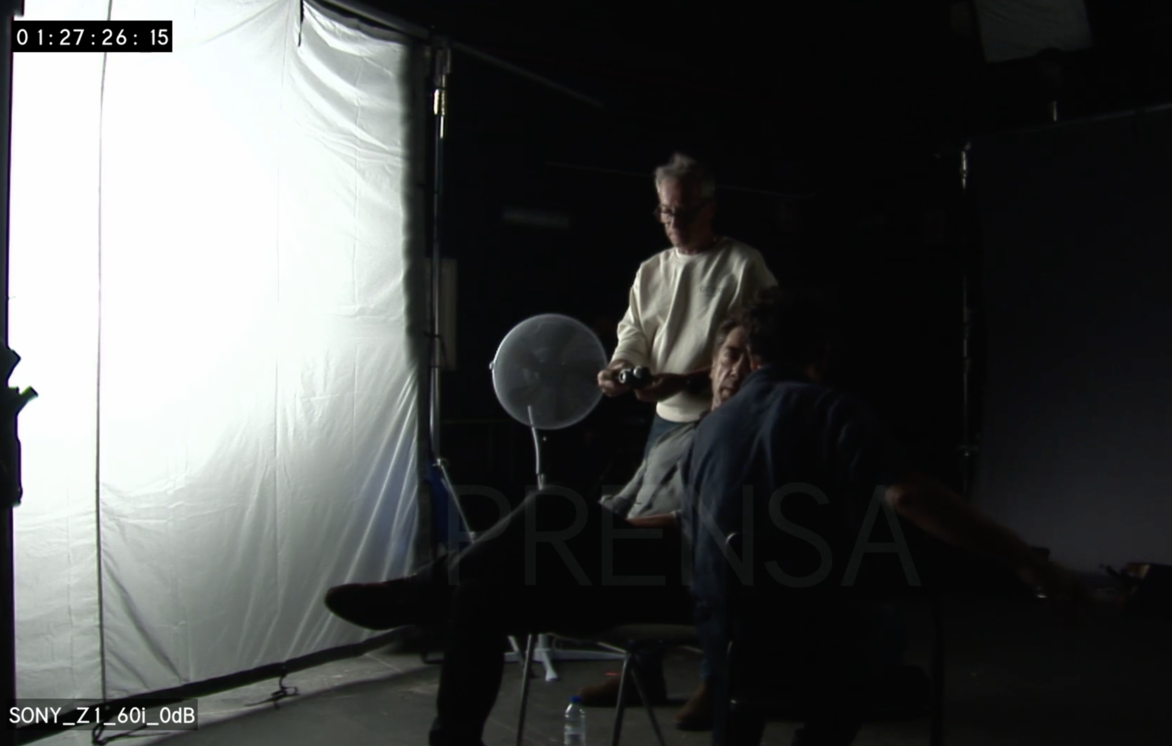
I prefer incandescent sources to HMI. Given the choice, I’ll use 24K tungsten fixtures.
I’m quite obsessive when it comes to diffusion fabrics. I think every fabric is designed for a particular situation. In Spain, most people will cover almost everything with four or five fabrics, but I always try to choose the one that the particular shot genuinely needs.
For example, we don’t use the Grid Cloth family. We use Neutral Grey, which has an 18% grey value. The quality of light is much more natural because you don’t create that huge white surface that ends up generating unwanted highlights.
When I need to break the light up very heavily, I use Magic Frost, which is quite a dense diffusion. I also use a fabric called Charcoal Vintage, which behaves similarly to Neutral Grey but is black. It lets me cut the sun much more aggressively and create a cooler light.
If I want to retain the feeling of direct sunlight while making it kinder to the skin, I normally use Half Frost or Full Frost.And for bouncing light I almost never use white fabric. I prefer unbleached muslin or grey molton.
How did you approach the lighting for the hotel-buffet sequence?
The key light came from three 18K units positioned outside and shooting through the windows. The restaurant’s own curtains provided the diffusion.
What we wanted was to eliminate the sun as the main source so that the light came from the direction we wanted, rather than having two different directions competing with one another.
The three fixtures were positioned very high, and almost none of their direct light actually reached the actors’ faces. The room was principally illuminated by the light bouncing off the floor. From that point onwards, most of the work involved subtracting light.
What size electrical crew did you have for a film with so much exterior work?
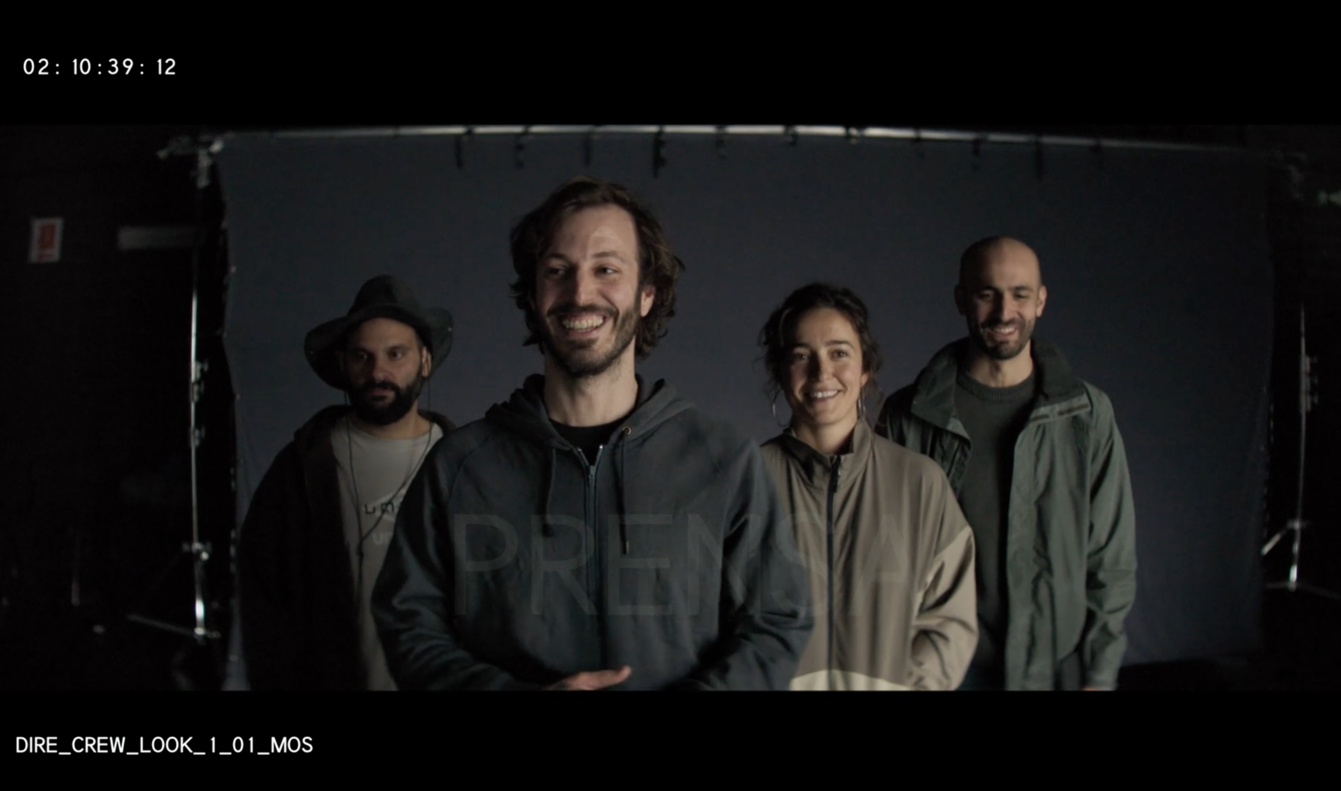
There were six of us in the electrical department: a best boy, four electricians and myself. And, if I remember correctly, we didn’t have any additional crew during the shoot.
On exteriors we always tried to use large overheads to increase the contrast as much as possible.
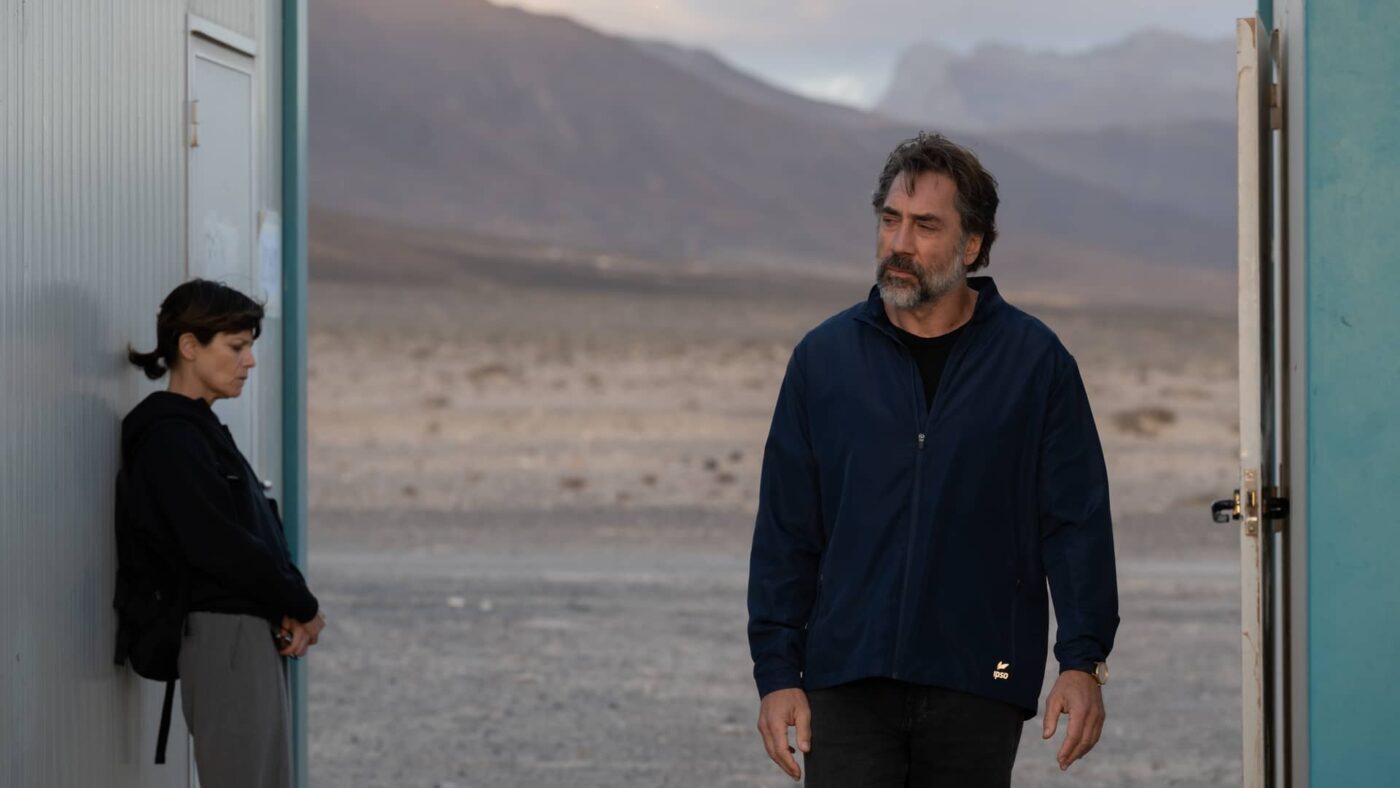
That is very difficult in Fuerteventura because the sun is extremely hard and the ground produces an enormous amount of bounce. As you move closer to the actors, you try to control that bounce, but doing so often requires very large overheads and enough people to hold them.
And Fuerteventura is famous for its wind, which makes everything even more complicated.
How did you deal with the different lighting requirements in sequences where several formats were being used simultaneously?
There were situations where several formats were being used at once, and we had no choice but to find a compromise between them.
In those cases, the format with the least latitude and sensitivity dictated the lighting requirements, because we had to accommodate its limitations.
That might mean, for example, putting ND on the windows to prevent the exterior from blowing out, something that might not have been necessary with another format.
Ultimately, we lit for whichever format gave us the least room to manoeuvre.
FINDING A WAY FOR THE FORMATS TO COEXIST
Colorist Paulino F. Ibáñez of Luciérnaga has a close relationship with the creative circle around Caballo Films and played a key role in giving Álex de Pablo confidence in the multi-format workflow developed for The Beloved.
What did your work during pre-production involve? Did you create any creative LUTs?
Pre-production was very much about testing and understanding what each type of material could bring to the film. Álex and I had already worked together, so we know how each of us approaches the process. In this case, we didn’t set out to create a LUT or lock in a finished look during production.
With a film that mixed such different types of material, we didn’t want to impose an interpretation too early. First we needed to see how each format responded, what its individual character was and how it might coexist with the others within the film.
During that testing stage, my job was to understand what each one offered, not only from a technical perspective but also a narrative one: what feeling it brought to the image and what it could contribute to the story.
The most complex part was imagining how everything would work together. It wasn’t simply a question of texture or color; we also had to think about the effect those shifts would have on the storytelling.
A transition between two types of material might be visually very interesting, but you always had to ask whether it helped the scene or whether it was beginning to draw too much attention to itself.
Álex de Pablo explains that the intention was never to match the different media, but to preserve the character of each one. How did you approach that in the grading suite?
From the outset, Rodrigo and Álex were very clear that they wanted a naturalistic result. The image had to support the story and the characters rather than draw attention to the cinematography itself.
In the grading suite, the challenge was understanding how to relate images that responded in very different ways. There were sequences in which several different formats appeared together, and at first it was easy to find yourself staring at the grain, the texture or the changes in response from one image to another.
As a colorist, you need to understand those differences, but you also need to know when to stop looking at them.
In the early passes, it was very easy to try to solve every transition from a purely technical standpoint. Gradually, I began to understand what each sequence actually needed and which differences were worth preserving.
At certain moments we brought the images closer together so that the transition would feel smoother. At others, we deliberately retained the differences because they were part of the scene.
The way I work in the grading suite helped. I like the grade to grow gradually: I build a general foundation and then return to the sequences several times. I like moving forward, gaining some distance and then checking later whether those decisions still work within the film as a whole.
Could you give us some examples of shots or sequences involving formats such as Super 16 or MiniDV?
The ALEXA 35 is the film’s principal digital format and forms the basis of a large proportion of its sequences.The other formats appear more selectively, with the intention of introducing different sensations and accompanying particular moments in the story.
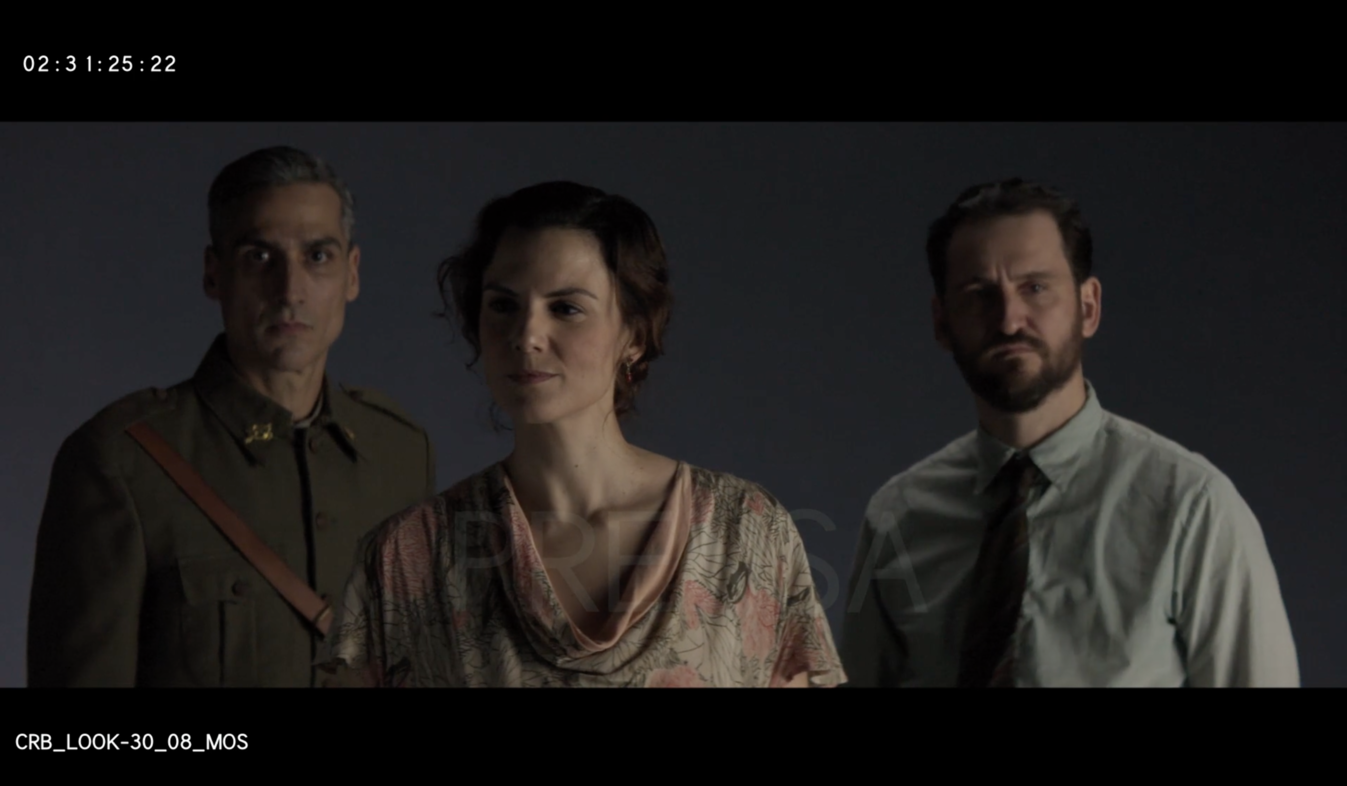
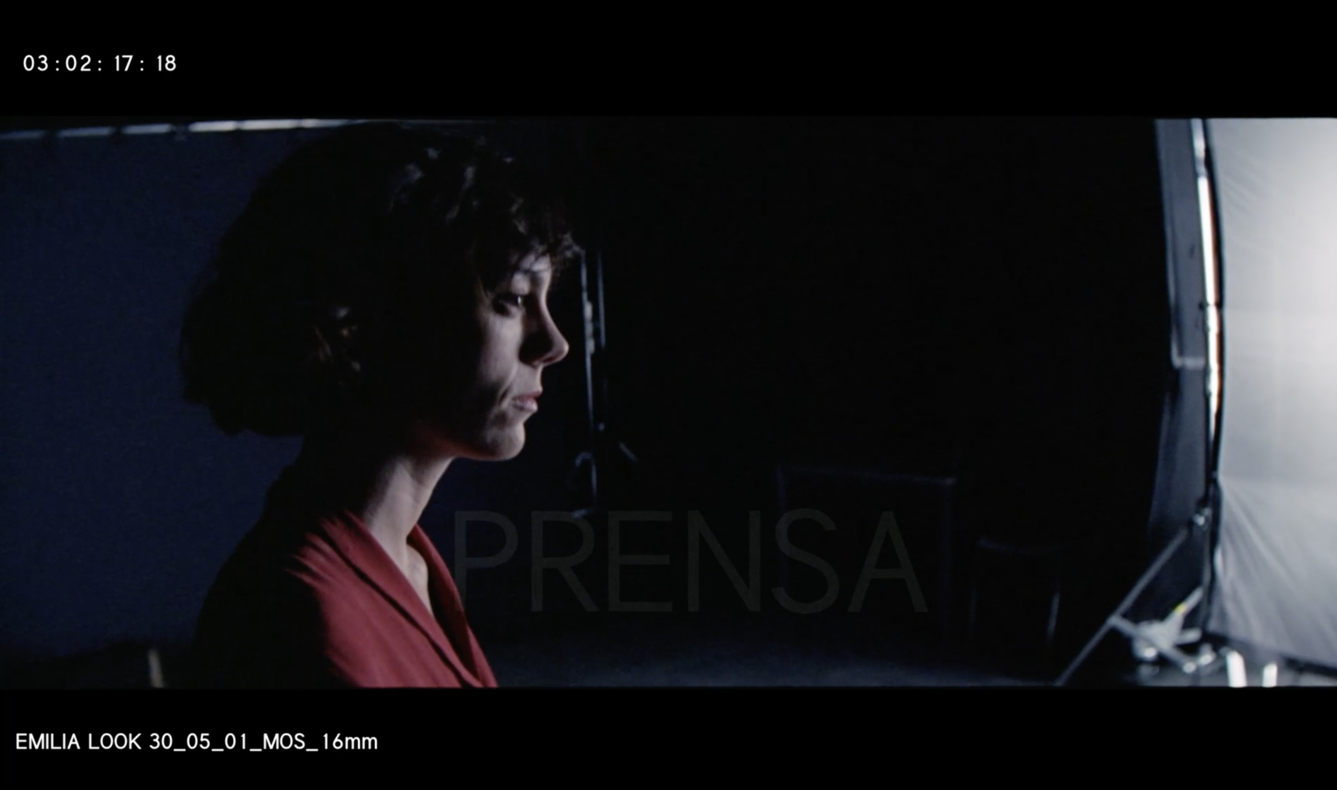
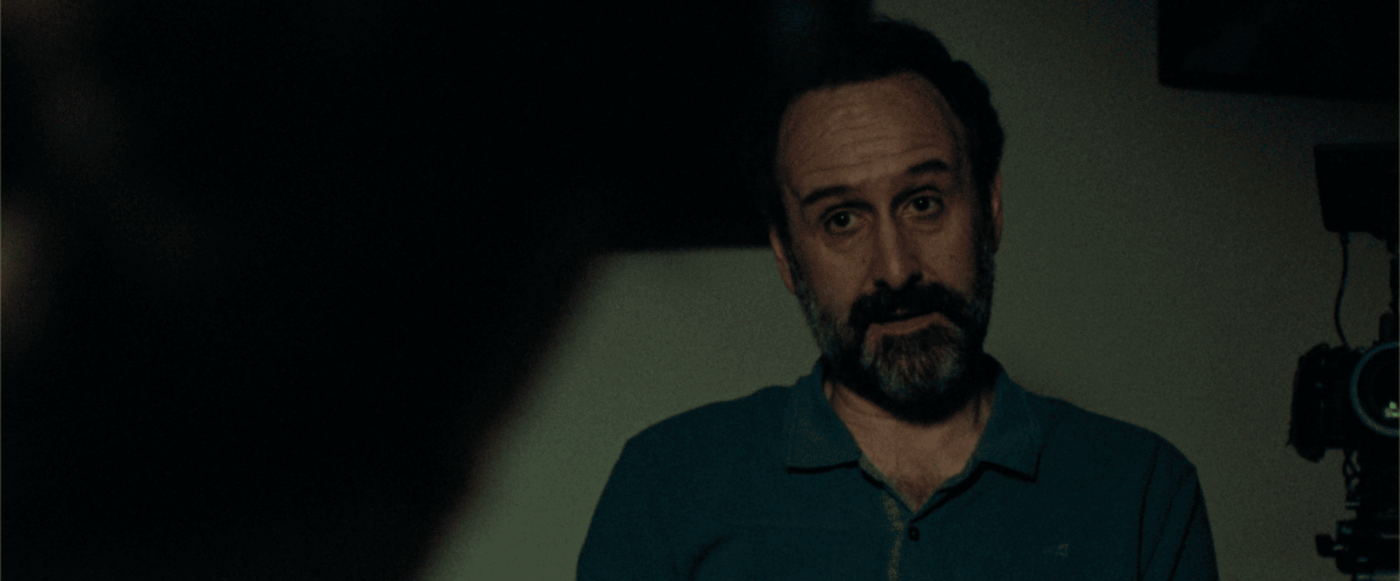
One example is the television-interview sequence [with Esteban], where color ALEXA 35, black-and-white ALEXA 35, Super 16 and MiniDV all coexist.
Each of those materials responds very differently, but the work consisted of finding a balance that allowed them to coexist within the same sequence without the audience focusing exclusively on the change of format. I think that coexistence is precisely what makes the approach interesting.
We weren’t trying to make every format end up looking the same. We wanted each one to retain its own personality while still allowing the film to move forward with a degree of narrative continuity.
Sorogoyen explains that many of the format choices arose intuitively during production and that it was only in the edit that they acquired their final dramatic meaning. To what extent did the color work also evolve through that process?
In our case, we preferred to wait until we had the finished edit in front of us and could understand how everything worked together.
Before we began grading, we held an initial screening at Luciérnaga with Noémie Dulau, whose perspective is extremely useful to me because I can discuss the films with her from a more emotional and narrative standpoint.
Noémie was familiar with the tests and with the materials we had used, but she hadn’t been involved in the day-to-day process and hadn’t seen the finished cut. That gave us a viewpoint that was close to the film but still retained a certain distance. For me, maintaining that critical perspective during the grade is very important. That initial screening also made me realize something: I was looking at the film too technically.
After spending so much time concentrating on all the different materials, it was very easy to become preoccupied with how each image changed and how the different formats sat alongside one another. But that couldn’t be the audience’s experience. I had to stop analysing every transition and start watching the film again, relying on intuition and accumulated experience.
What were your impressions of the dailies and of the material you received from the lab for grading?
We had been in touch with the Augustus Roma laboratory from the earliest tests and first scans so that we could begin fine-tuning the workflow. Initially there were a few minor inconsistencies in the scans and the occasional isolated defect, but communication with the lab was very good and everything was resolved quickly.
After that initial stage, the entire process was very clean. The material arrived correctly and we were able to work with considerable peace of mind. On a film involving so many different materials, it was important for the technical pipeline to be properly integrated so that we could look at the film freely.
Many decisions emerge precisely when you stop thinking about how the image was made and start thinking about what the image needs.
What was the greatest challenge on the project, and what gave you the greatest satisfaction?
I think the greatest challenge was not becoming trapped by the complexity of the concept itself. One of the things I enjoyed most was working with the physical qualities of photochemical film. There is something about the negative that goes beyond texture: a way of receiving light, a presence, a more organic feeling that suited the film extremely well.
It was also interesting to work without too many references. There was no formula we could simply apply, so a lot of things were discovered along the way. There was one particularly beautiful moment: the screening we organized for the entire crew.
For me it was a special experience because, as a colorist, it is difficult to go back to watching a film purely as a member of the audience. That is why I particularly enjoyed listening to the camera crew afterwards. They knew the materials perfectly and knew exactly where the different formats had been mixed, but they hadn’t been involved in the grading process.
When they watched the finished film, they stopped thinking about all of that and simply allowed themselves to be carried along by it. For me, that confirmed that all the work had made sense: all of the complexity behind the film could disappear, and in the end, what remained was simply the film.
Credits
Production companies: Caballo Films, Movistar Plus+, El ser querido AIE and Le Pacte (FR)
Director: Rodrigo Sorogoyen
Screenplay: Isabel Peña, Rodrigo Sorogoyen
Cinematography: Álex de Pablo
Production design: José Tirado
Editing: Alberto del Campo
Colorist: Paulino F. Ibáñez
Gaffer: Pedro Sánchez
Technical specifications
Cameras: ARRICAM LT, ARRIFLEX 416, ARRIFLEX 765, ARRI ALEXA 35, ARRI ALEXA Mini, Sony Z1 HDV and Super 8
Lenses: Hawk V-Lite 2x, Vantage One, ARRI Ultra 16, ZEISS Ultra Prime, Angénieux Optimo Ultra 12x, ARRI / ZEISS Vintage 765
Film stock: Kodak VISION3 500T and 200T, Kodak DOUBLE-X 5222
Laboratory: Augustus Roma