







‘Fiesta Pagäna’: The Dark Fractured Imagery go Heavy Metal

We interview cinematographer David Cortázar about his work on this film
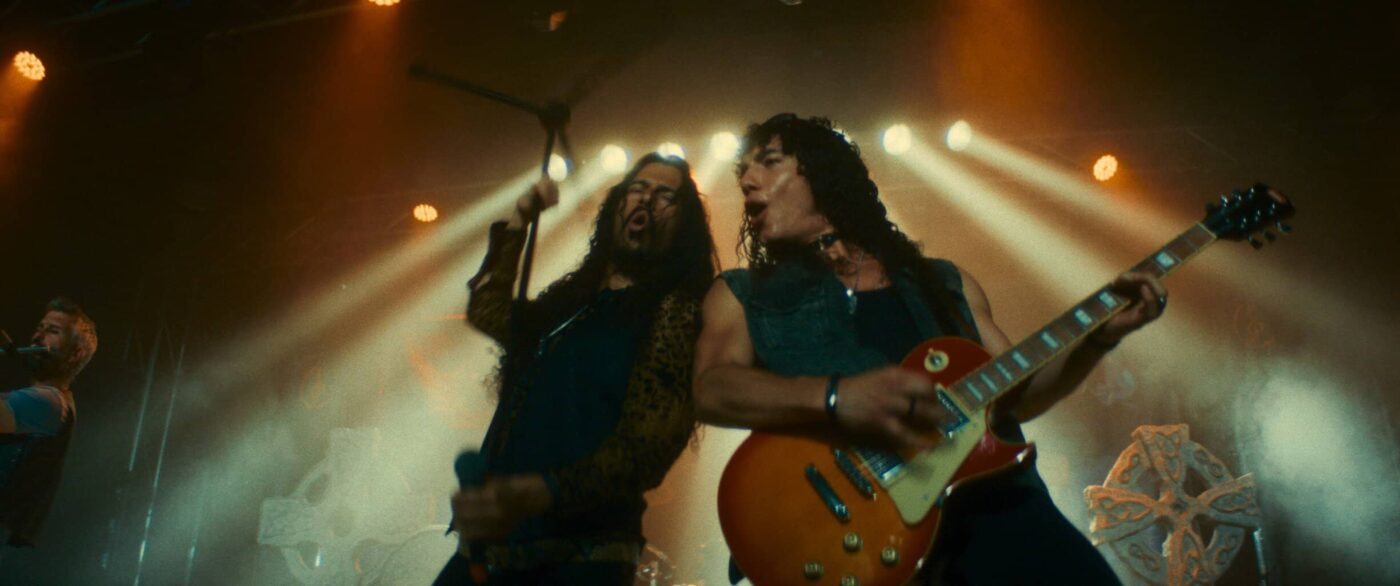
We spoke with cinematographer David Cortázar (‘La Boda’, ‘Solo pienso en ti’) about this hybrid visual approach, which combines period tungsten lighting with contemporary light sources to take audiences from the band’s earliest, smaller and more modest performances to major stages filmed with four cameras. Alongside these large-scale venues, there is also room for more intimate, darker settings—bars, dressing rooms and hotel rooms—where the band’s meetings and clashes unfold, as well as more expressive moments with a music-video aesthetic.
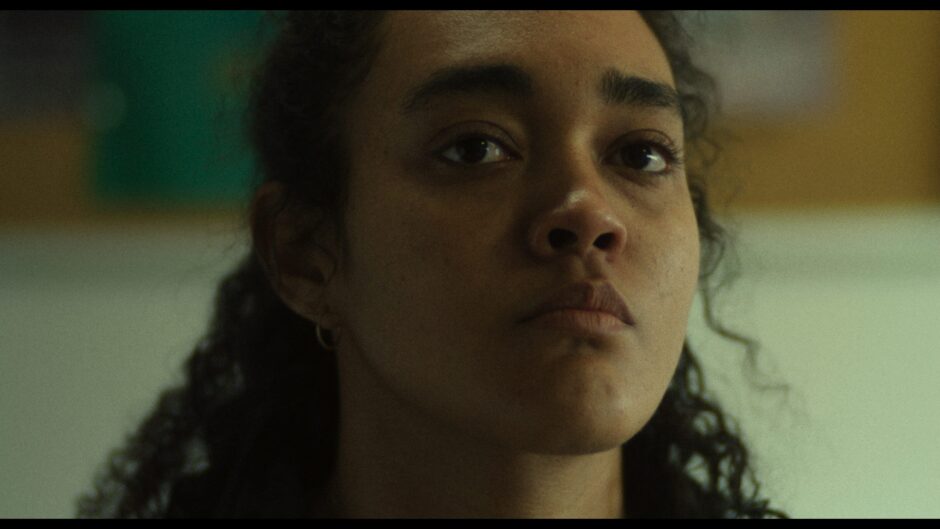
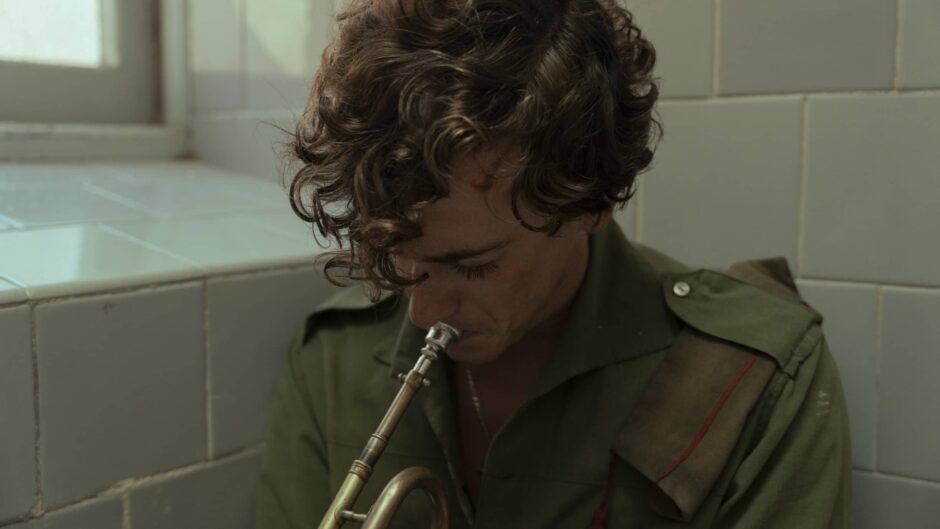
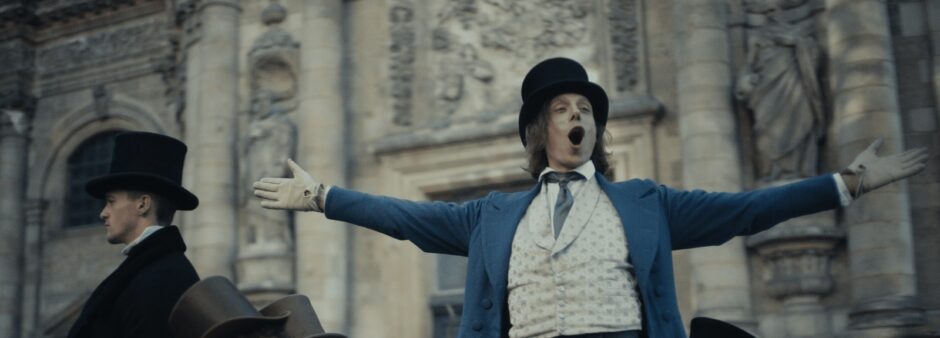
In ‘Fiesta Pagäna’, Goya Award-winning Uruguayan director Álvaro Brechner (‘A Twelve-Year Night’) draws on the conventions of black comedy and the musical biopic to tell the story of Mägo de Oz, the heavy metal band that emerged from a Madrid neighbourhood and became a mass phenomenon in Spain and Latin America in the early 2000s. With an aesthetic inspired by concerts of the period and visual references such as ‘Bohemian Rhapsody’ and ‘The Dirt’, the film finds its identity in Adrián Lastra’s portrayal of the excessive, egocentric Txus di Fellatio, and in its anamorphic format with a fractured texture, diffusion filters, grain, smoke, warm sources and high contrast.
By Juan Esparza
INTERVIEW WITH DAVID CORTÁZAR, CINEMATOGRAPHER
The film recalls band biopics such as ‘Bohemian Rhapsody’, or ‘Almost Famous’ in its humorous portrayal of the rock world. Tell us about your research process and how you immersed yourself in the heavy metal aesthetic of the 1990s and early 2000s.
During preproduction, which I worked on with Álvaro, we looked for a style that would define the film. Alongside the references you’ve mentioned, there were others, including the darker biopic ‘The Dirt’ [Jeff Tremaine, 2019], with its contrasting aesthetic and colours that affect the image, and that sense of grime in the atmosphere. Finding the film’s distinctive tone was quite a laborious process, because it wasn’t easy to get inside that musical world and, above all, make viewers believe that Mägo de Oz were really there on screen.
Although it was complicated, I think we achieved a tone that suits the story very well. Like Álvaro, I’m a big rock fan and I really like the aesthetic of those bands. I listened to Mägo de Oz back in the day, so I had a sense of what was happening at the time, not only in Spain but also in Latin America.
How did you build an image defined by its texture, warm tones, smoke, contrast and the bloom in the highlights?
I placed a great deal of importance on colour—not just its vibrancy, but also a certain broken, dirty quality—and on contrast defined by the lighting intention. I tried to make both depend on whether we were in an interior or exterior. I also wanted the colours of the 1980s and 1990s to be a little more vivid and harder, something that has gradually been lost over time. I wanted to recreate the feeling I had when I watched images from that era, even though we’re now working with different kinds of fixtures.
In that sense, I used colour to create the feeling that we were always at a concert. I chose to work with greens, reds and yellows to convey the idea that they live in a reality separate from the rest of the world.
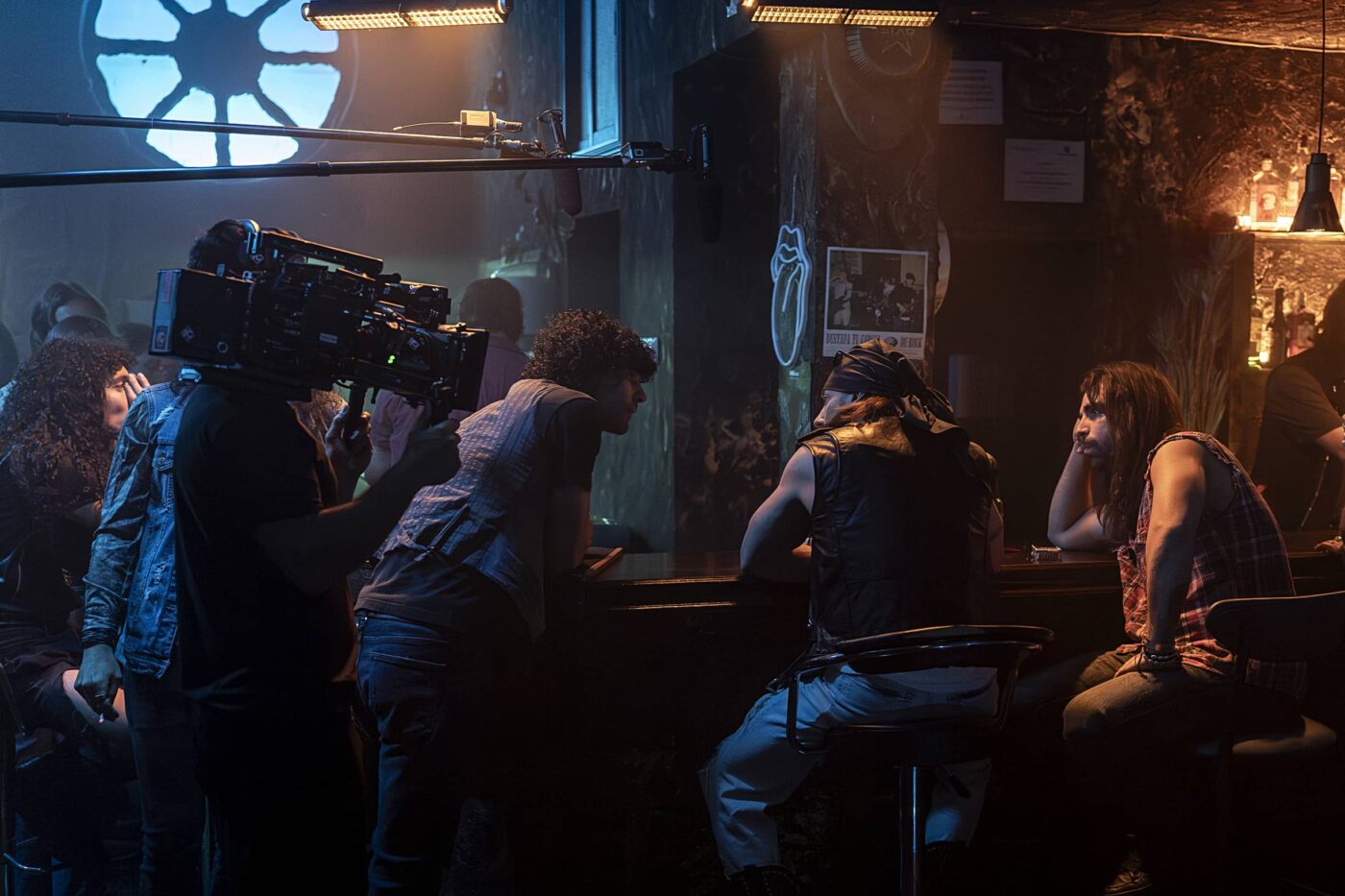
As for contrast, I really like films to have a darker appearance, as though something were hidden. I tried to express that through highly contrasting spaces lit with fairly motivated light. I wanted the environment to illuminate the character, so that the character could move within it. The lighting motivation always came from visible sources, from very hard, contrasting light coming in from outside, which I would supplement only slightly from within. I wanted to preserve the natural character of each location, even in dark spaces such as dressing rooms or the bar.
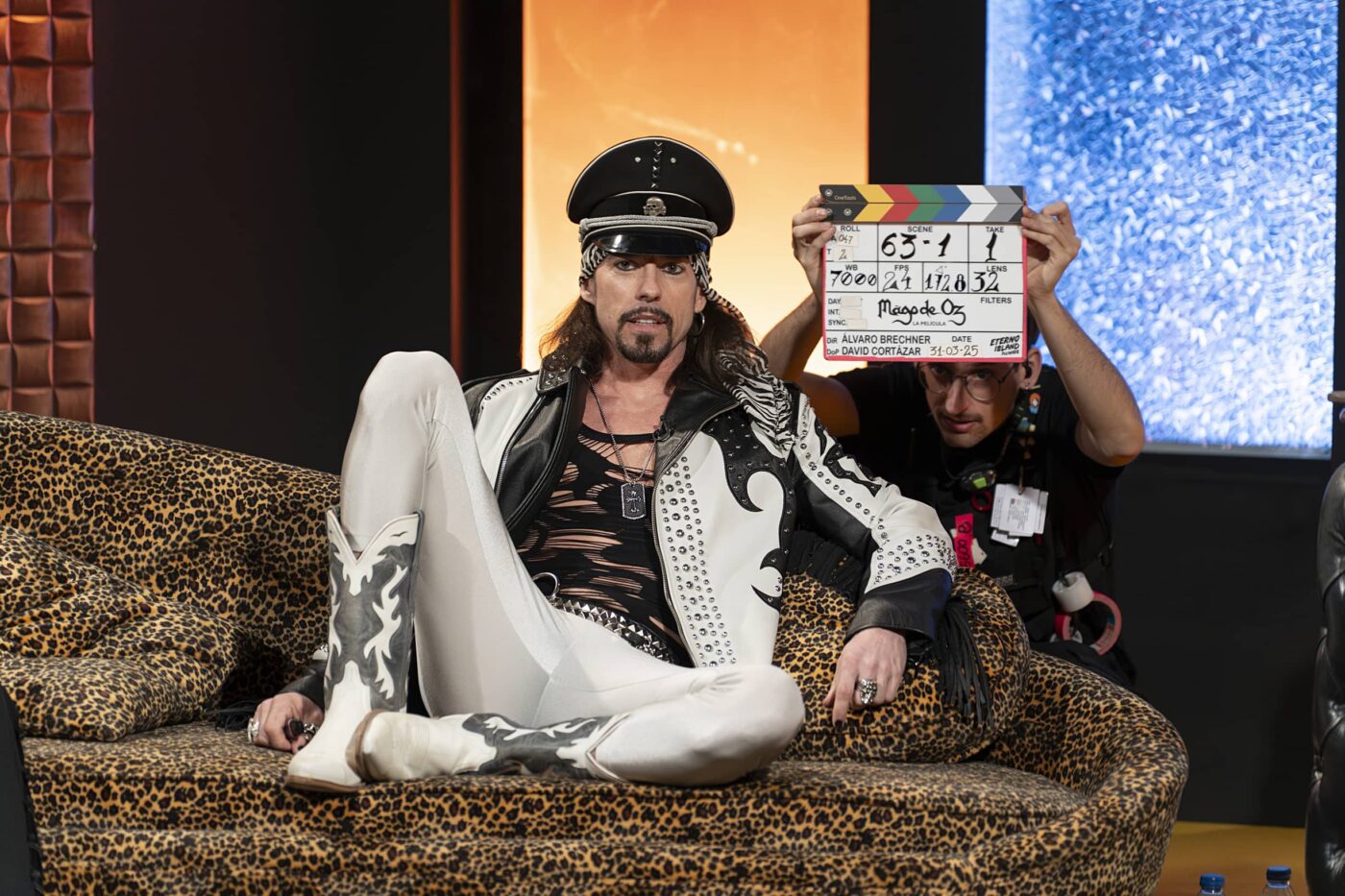
The use of smoke and grain helped create that grime, and I think it also contributes to the story of the band and its environment, because it is all very dense and harsh. How did you achieve those colour tones on set?
Recreating that aesthetic in more controlled settings, such as offices or studios, was easier than achieving it at the concerts, because I wanted the band’s development over time to be noticeable between the first performances and the final ones. Above all, I noticed a difference between older light sources, such as tungsten fixtures with coloured gels, and more contemporary LED fixtures. That’s why we rented old concert lights to try to achieve the look of those shows. I also met with the band’s front-of-house manager from that period, who told me how they used light, what style the lighting had and which fixtures they worked with.
We brought that concert-lighting approach onto the sets as well, where we used a mixture of tungsten and LED to balance the warm light and give faces a more contemporary appearance.
“We developed the colour around the aesthetic of old film negatives, adding grime and grain.” — David Cortázar
There are sequences in ‘Fiesta Pagäna’ set on different stages. How did you design the lighting to create a distinct feeling in each setting?
Fortunately, our gaffer, Jesús Moreno, also loves that kind of music and lighting. Together, we researched the fixtures and lighting positions used at concerts in the 1980s and 1990s so that we could incorporate them. If you look closely, as the band moves forward in its career, the lighting becomes increasingly prominent at the concerts. Initially, we used very direct, static sources; later, as the band progresses, it’s as though the stage moves with them. That’s something that has changed at more recent rock concerts: before, the lights were there so that you could see the musicians, whereas now the lighting is an environment that moves with the group.
We decided to use tungsten fixtures for the early shows, with a period followspot to light the singer, along with other large lights. Although the front-of-house manager told us she had used many more colours, I needed a controlled progression.
How would you describe that evolution in the lighting’s colour palette?
We planned a progression for the concerts and, outside them, tried to create an evolution in the colours and spaces too. At first, the settings are very dark and dirty, and as the story progresses they become brighter, with even stronger reflections entering the lens. We achieved that not only by using lights of different colours, but also through the harshness of the spaces, the highlights and the contrast. In fact, although the first and last dressing rooms both have a yellow tone—because I wanted to suggest that time hadn’t passed for them—there was a certain progression in the harshness of the smaller spaces, the reflections and the highlights.
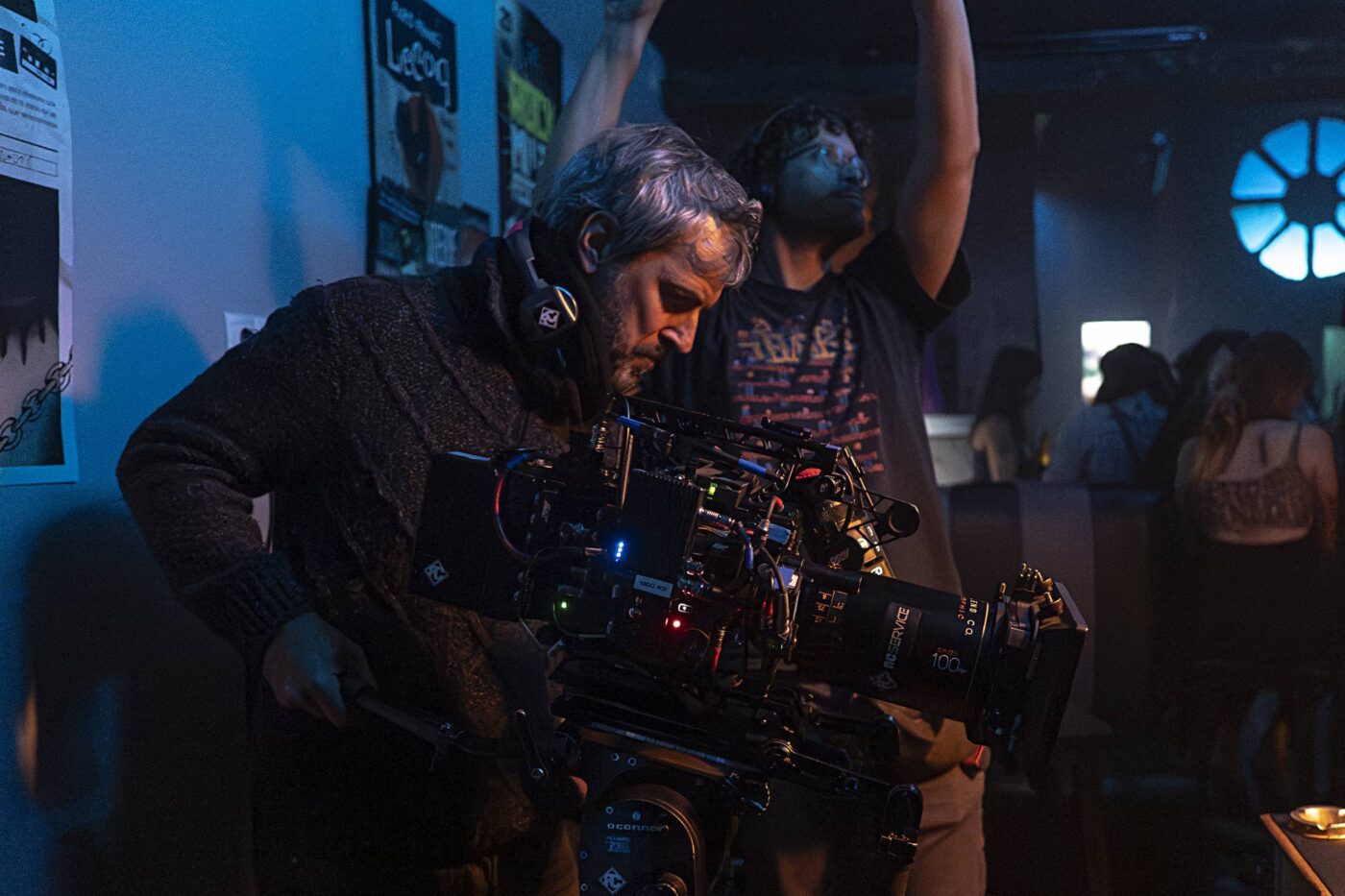
The Lokomotive Records office is a small space with a lot of personality, where your visual approach of harsh, high-contrast environments is particularly evident.
In one scene, Txus is sitting opposite Goyo, who could change his life, but everything also feels very heavy. The place has that old, stale ‘smell’, which gives it a distinctive character. In another scene, Goyo is in his office and his secretary brings him the record; you can see that heavy light coming in, and you can almost feel the heat. Here too, I tried to light the space rather than the character, so the light generally came from outside, apart from the occasional fixture I placed inside to control contrast. When the lighting is motivated from a single direction, the contrast starts to build. For this location, I bounced HMIs and aimed for a lot of light through the windows because I wanted the space to feel harsh. Inside, I used negative fill or LED sources to increase or reduce the contrast if faces became too dark.
What led you to shoot anamorphic with a wide aspect ratio?
Anamorphic lenses allowed me to show the spaces and characters in this ensemble film. I also needed the lenses to help open up the frame within the locations themselves. Anamorphic images have very messy areas towards the edges of the frame, which helped me create that dense aesthetic. We used Atlas Orion lenses on Fiesta Pagäna because I liked the fact that they weren’t so perfect. I pushed them to their limits: at times we shot with the aperture wide open, producing a fractured quality in the backgrounds, which I reinforced with filters such as Black Pro-Mist and Hollywood diffusion filters to soften the blacks and break up the whites. Although my focus puller wasn’t happy about me opening the aperture so far, I think he had a great time.
How did you handle scenes shot with several cameras? What grip equipment did you use for the concerts?
We used more than one camera at almost every concert. Sometimes we even shot with three or four cameras simultaneously. On some sets, such as Goyo’s office, we also occasionally shot with two cameras. When I use two cameras, I always plan the coverage around their respective fields of view and keep the shots very controlled: for instance, I shoot one wider frame and one very tight frame, and I never let their fields of coverage cross, because I want to maintain control. On other sets, though, I like to create a natural environment and let the camera move wherever it wants.
At the concerts we had a crane, but because it revealed the entire space it limited where we could place the other cameras. So we almost always covered the stage area with two cameras and, once the crane was in position, shot the wider shots and general views. We used the other cameras to enter the point of view of a character at the concert, giving those two cameras a little more freedom to capture very specific moments.
Some moments feel like music videos because of the slow motion. Which camera did you use for them? How did shooting at high frame rates affect your lighting approach?
The moments when the band walk along a corridor and there’s a party were shot on the ALEXA 35, but the moments at the beginning were shot on the V-RAPTOR because it allowed us to shoot at higher frame rates. Working in slow motion always creates limitations because you need more light and have to adapt it, but since at certain points we only doubled or tripled the frame rate, it didn’t impose an additional constraint.
It was a narrative decision. We liked giving the band that epic quality when they walk through the corridors on their way to play their first concert, only for the audience to pay them no attention afterwards. We also used it when Txus is feeling particularly full of himself and has an argument with another member of the band.
How did you explore the colour grade with Raúl Lavado Verdú?
Raúl and I have known each other for a long time, and because I had talked to him so much, he already knew the direction I wanted to take before filming began. I knew I wanted a very dense aesthetic, with those colours and that progression over time. Whenever Álvaro shared visual references with me, I could see a similar aesthetic in their treatment of colour.
Raúl worked on his own at first, and by the time I arrived at his studio the grade was already quite advanced. We developed the colour around the aesthetic of old film negatives, adding grime and grain. I liked creating that old-fashioned atmosphere, but I also wanted it to feel very contemporary. I think some viewers may find the colour treatment jarring, because we’re not used to colours that are so vivid and fractured, or to shadows with such pronounced colour casts. I also worked with Raúl on the highlights and their hues, although that intention was already there in-camera.
Did you design any LUTs for monitoring on set?
Yes. Raúl sent me five or six LUTs he’d developed at the studio. I loaded them into the camera and tried them out during the shoot, because the blacks were difficult to manage. I like very dark environments, especially in this film, and I needed a monitoring image that was as close as possible to the intended look so I could work with the blacks and see that they were exactly where they needed to be. The LUTs allowed me to judge them as faithfully as possible.
What stands out about filming scenes with large numbers of extras?
We worked with quite a few extras at the concerts, but we also used VFX to multiply them. We had to map out the camera movements and shots very precisely, which was especially difficult at concerts because sometimes the camera needed to move with a character. If there were no extras in the background, we had to add them with VFX.
Iván López did an outstanding job, although it wasn’t easy: between 70 and 80 percent of the shots involved VFX work.
Which challenge stands out for you on this film?
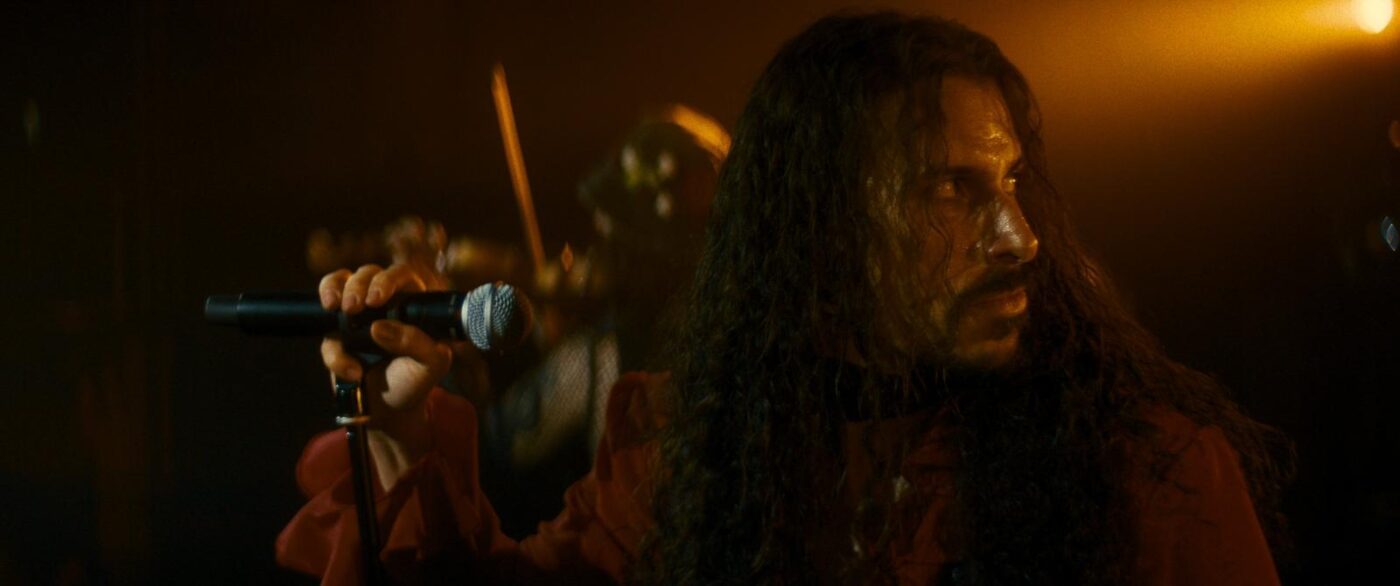
Apart from achieving the colour and contrast I wanted, if I had to choose one scene, the limousine sequence was especially difficult for me. It looks straightforward, but lighting it and handling all that equipment was complex. Although we initially thought about using VFX, in the end we used real smoke. The whole scene was shot on a road with a precision driver. We also filled the limousine with that red light, which coloured the actors’ faces. That was quite fun.
TECHNICAL SPECIFICATIONS
Cameras: ARRI ALEXA 35, RED V-RAPTOR
Lenses: Atlas Orion
Aspect ratio: 2.35:1
CREW CREDITS
Production company: Eterno Island Pictures
Director: Álvaro Brechner
Screenplay: Álvaro Brechner and Sofía Cuenca
Cinematography: David Cortázar
Production manager: Raquel Troyano
Colourist: Raúl Lavado Verdú (Misterio Color Lab