








La Bola Negra: Memory Made Flesh

We explore with cinematographer Gris Jordana AEC this wonderful journey
We bring you the continuation of our exploration of La bola negra, the moving new film by Javier Calvo and Javier Ambrossi. We began that exploration when we first spoke about the film with its cinematographer, Gris Jordana AEC, at this year’s Cannes Film Festival (see Camera & Light 141), where the film won the Best Director award and embarked on a meteoric journey that will undoubtedly take it all the way to the Oscars.
Jordana, who also stands a strong chance of receiving a nomination for her exquisite work, looks back on a journey in which shooting on 35 mm film -a process we also examine in greater depth from the photochemical laboratory’s perspective- the unpredictability inherent in Los Javis’ creative authorship, and the challenges of lighting real locations all came to a successful conclusion thanks to the skill of the entire crew. It is an outstanding camera and lighting team whose work we want to celebrate, alongside the film’s focus pullers, Irene Tomé and Patricia Torres.
By Carmen V. Albert
For Gris Jordana, La bola negra has marked the definitive leap from the limitations of independent cinema to major productions, with everything that entails. Together with her, we explore the epic world-both in front of and behind the camera- of a film that has already made Spanish cinema history.
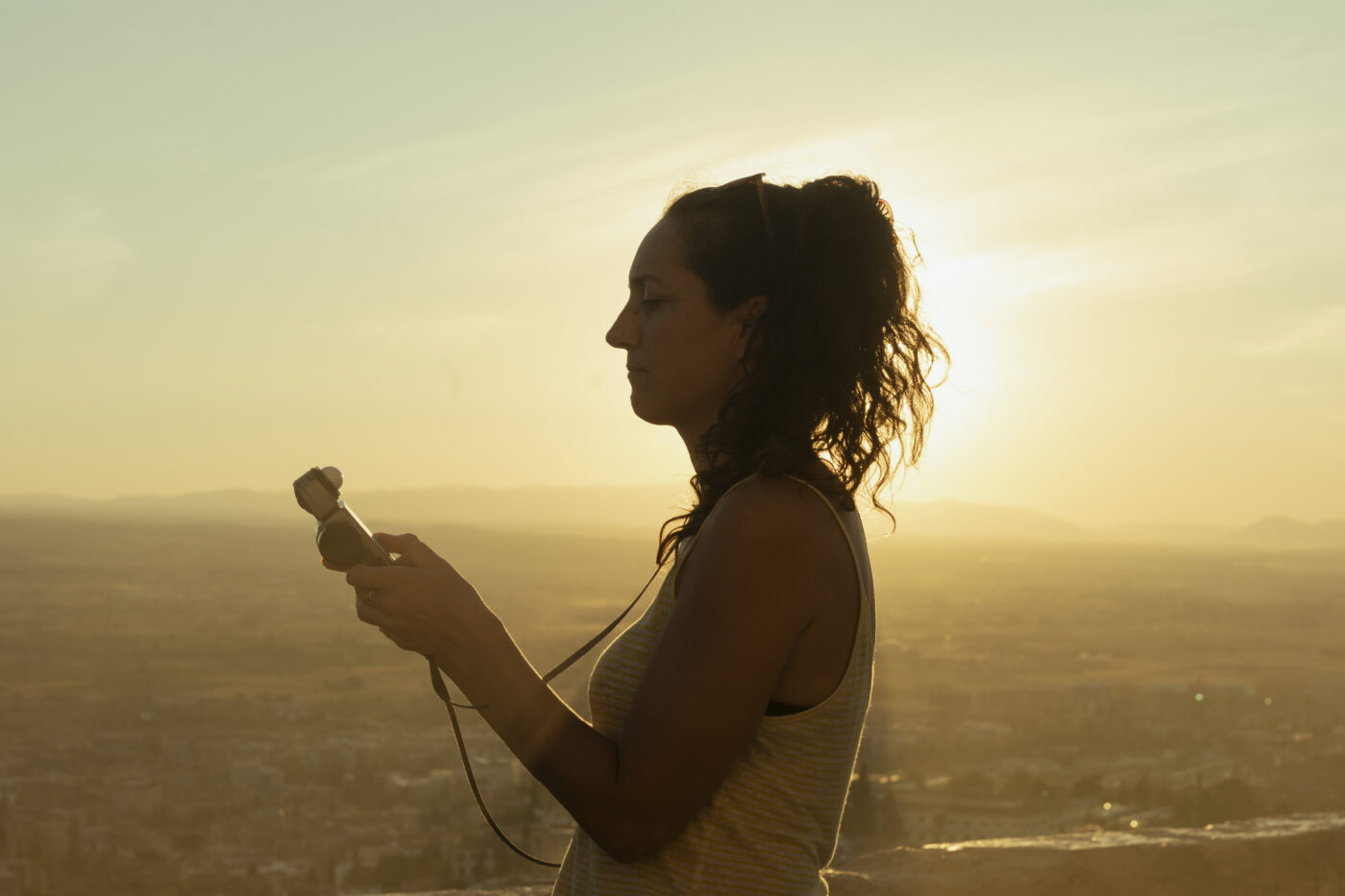
Interview with Gris Jordana AEC, cinematographer
There is a sense of continuity between the three parts of the story told in La bola negra, despite their different historical periods. How did you approach that?
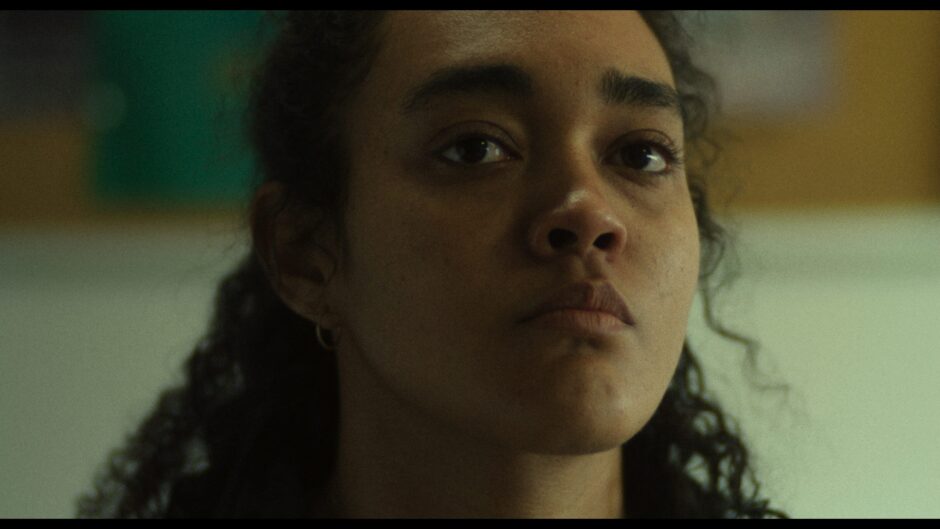
It took us a long time to decide whether we wanted to differentiate them. We didn’t want to suggest a warmer past and a cooler present, as is often done, or shoot the past on 16 mm and the present in another format. We knew the three timelines would be intercut frequently, because the script had already been written that way. So, if the lighting and colour were going to be very similar, the difference -without being too obvious- had to lie in the visual language. We had our reasons for doing this, because the three parts are essentially telling a somewhat similar story, but at three very different moments in Spanish history and society. We thought that, even if most people didn’t consciously notice it, they would still feel the difference, because each story would be told in a very different way.
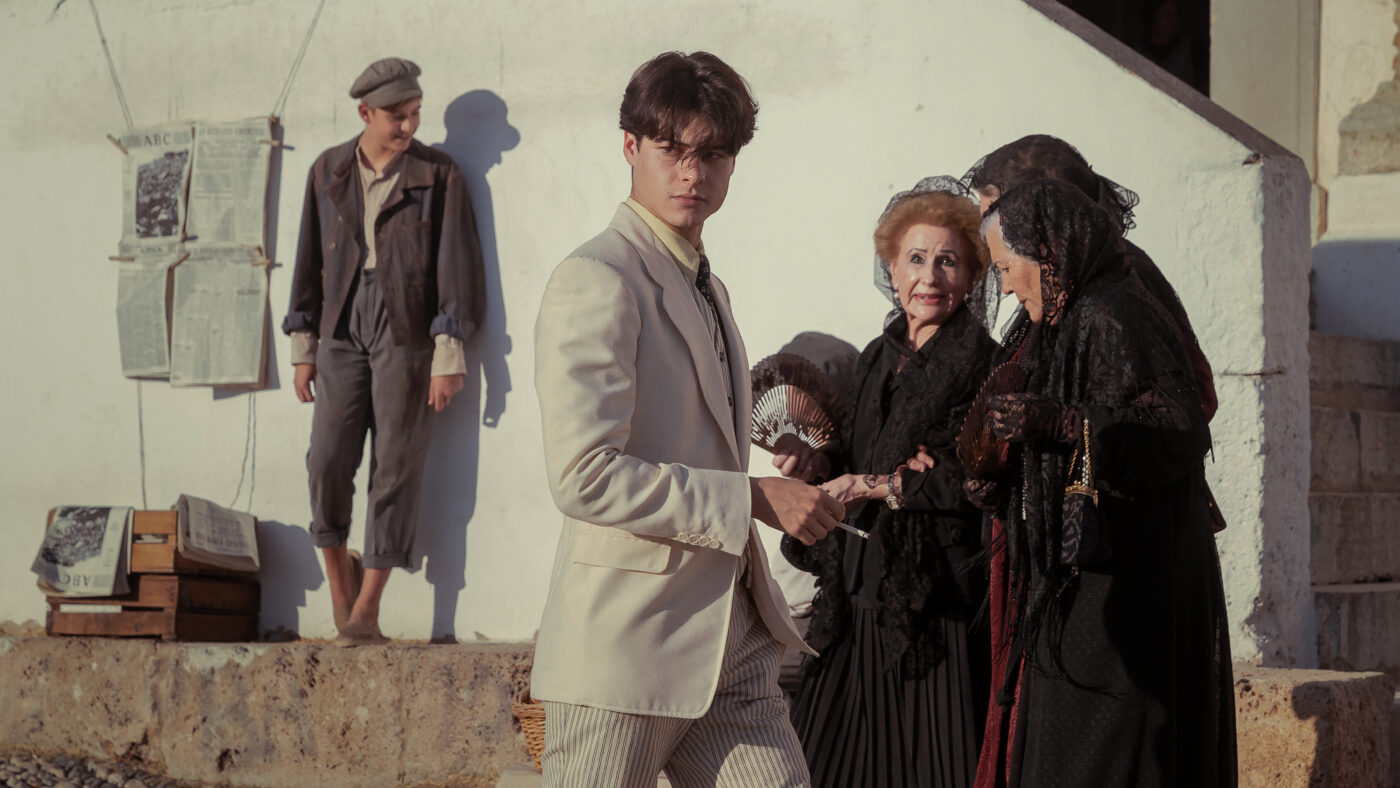
What led you to choose Panavision Primo lenses?
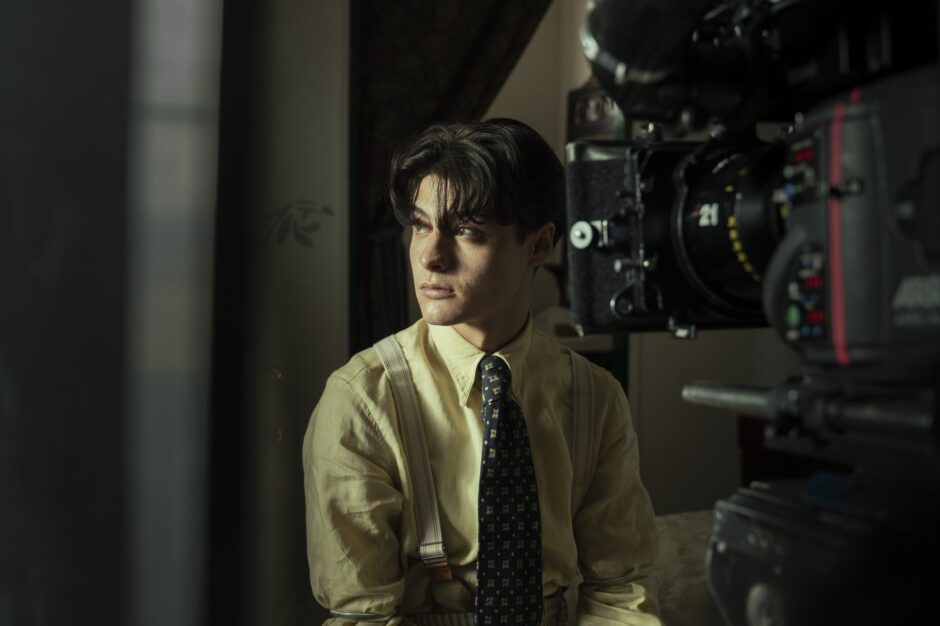
My favourite lenses are Baltars, Kowas and Cooke S2s, and when I’ve tried others, such as Leicas, there’s something about them that doesn’t quite convince me. I don’t normally do tests: I look at the nature of the film and decide on one set of lenses or another. In this case, because we were shooting on 35 mm, I did test other lenses, both beforehand at ESCAC and during the film’s camera and look tests.
For the Granada storyline, we needed a set with plenty of wide-angle focal lengths. One of the differences we considered was using the same lenses, but with very different focal-length ranges for each story. I’ve shot entire films on a 35 mm lens, with the occasional shot on a 50 mm, but here part of the change in language came from using the lenses differently. I liked the Panavision Primo set very much, although it also surprised me, because Cooke S2 lenses are warmer. In this case, though, the negative compensated for that and brought warmth to the image. The Primos have a beautiful out-of-focus texture and a very broad range of wide-angle focal lengths, which suited Granada very well.
How did you arrive at the film’s aspect ratio?
At first, we wanted to make the film in 4:3, and we were still wavering almost until the day before shooting. We loved the tests, but felt it was a little too much. The boys [Javi Calvo and Javi Ambrossi] wanted the film to reach everyone, and felt that 4:3 might come across as slightly snobbish.
After the tests, something of the 4:3 framing stayed with us. I’d insisted to Peke [Griffin] and Gon [R. Nión], the camera operators, that we should change the way we framed shots. When we ultimately didn’t use that ratio, certain choices remained, such as leaving headroom above the characters.
Also, since we were shooting three-perf, the native frame wasn’t 4:3, so we would have had to crop the sides. The four-perf 4:3 tests were beautiful, but it wasn’t right for this film.
At one point, I considered shooting Granada in black and white and pushed the directors quite hard on it; we even tested 4:3. I wanted it to be a little like Fallen Angels [Wong Kar-wai, 1995], handheld with wide-angle lenses, but in 4:3 and black and white, so it wouldn’t look like a period film and we could avoid that feeling of actors dressed in costumes on sets.
The visual language evolved of its own accord once we got into the story. The Granada shooting plan in our production dossier was more exaggerated, with more pronounced camera movements. But whenever we did something too extreme, we felt it wasn’t working. In the end, it was almost as though the film itself chose its visual language.
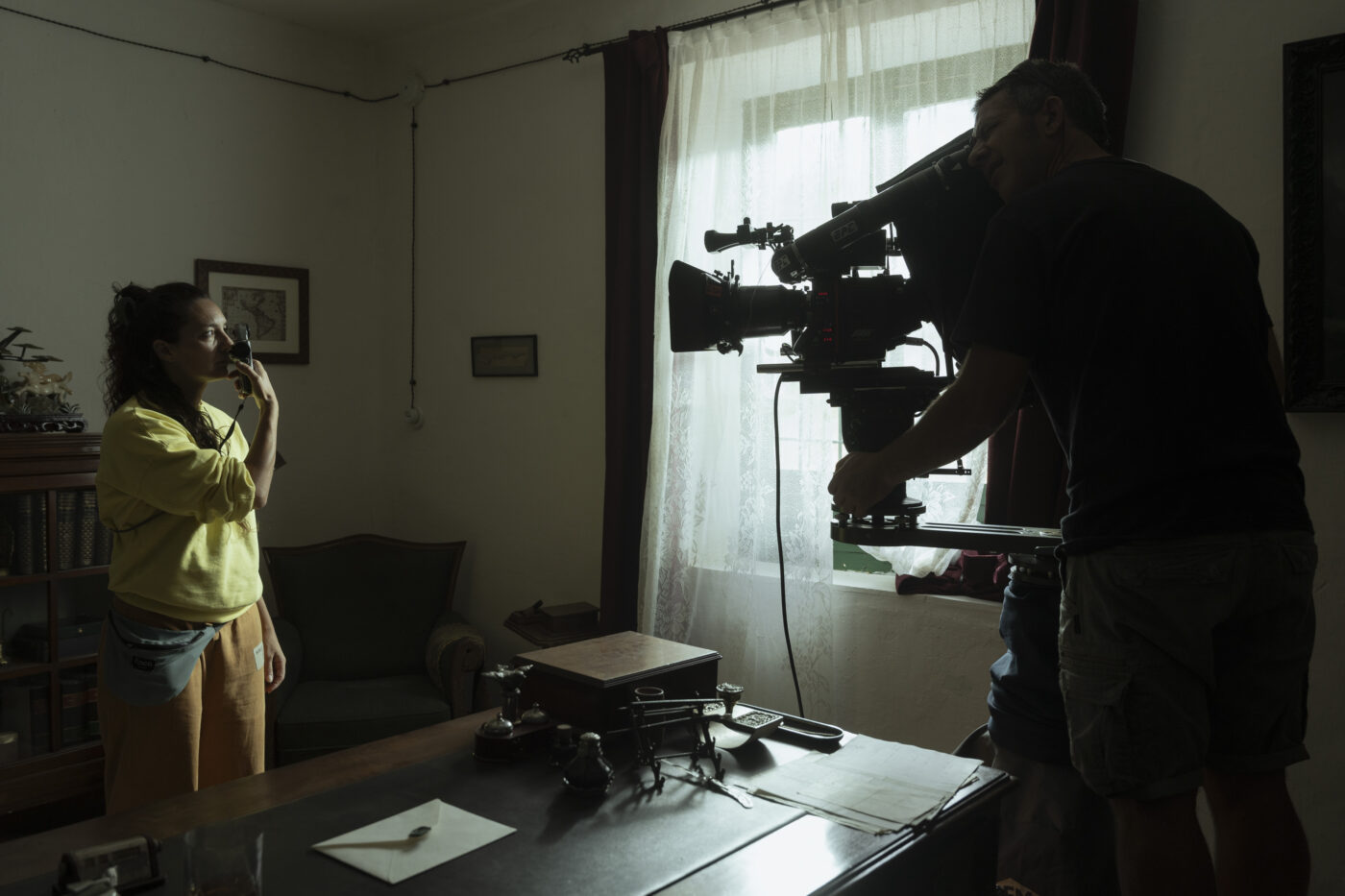
The visual language of that section certainly stands out.
These were the decisions I struggled with most, because they weren’t about where to place a light on set, but about the very heart of the film. The language had to allow you to glimpse the fact that what you were watching was a fiction. At one point, we suggested setting the entire Granada story on a stage, like a play, then pulling back to reveal that space. They were crazy ideas that never came to fruition, but they emerged while the whole team was together in preproduction, trying to make a limited budget work. The boys were adamant that we had to go to Granada, so we went.
If you chose wide-angle lenses for Granada, what focal lengths did you use for the other two parts?
For Sebastián’s story, we used medium focal lengths such as 35 or 32 mm. In the present-day story, we worked much more with telephoto lenses, apart from certain small spaces such as the grandfather’s house or La Copita Asturiana. The idea there was to let Carlos and Lola act, because they’re both brilliant, and have the camera intervene as little as possible, almost spying on them.
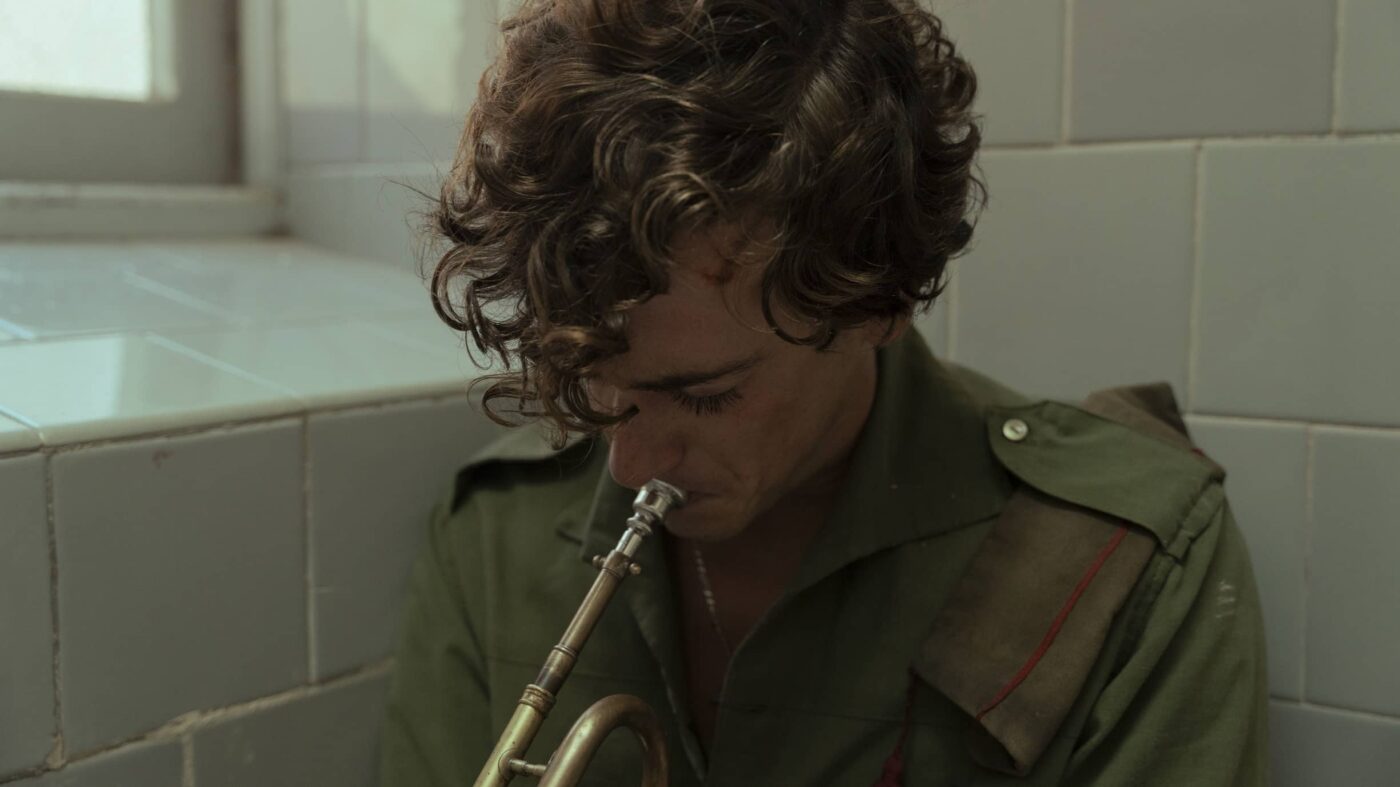
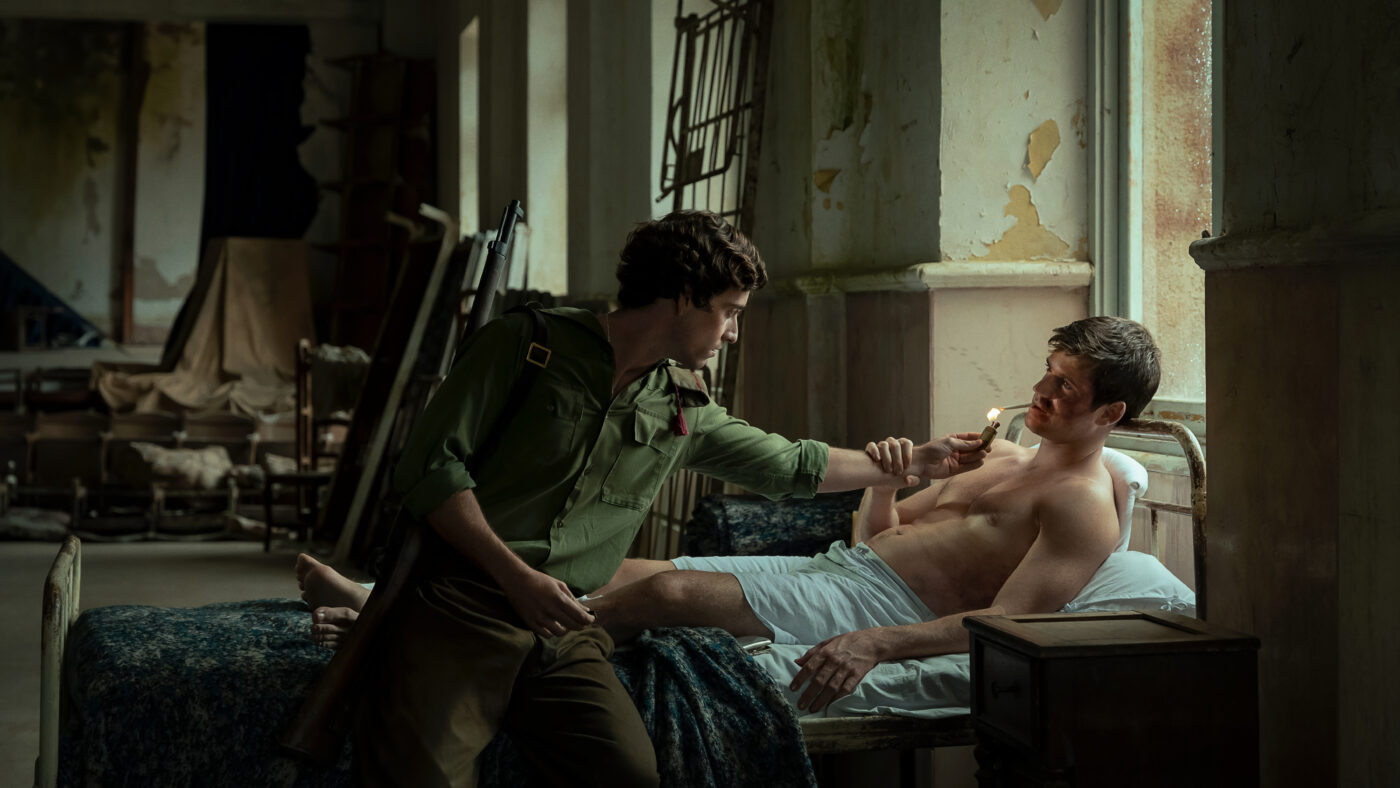
In Sebastián’s story, moreover, the camera only moves when the actors move. It isn’t part of the staging; instead, it takes up an observational position, focusing, among other things, on the male body. We were inspired by Claire Denis’s films, which portray men in a very sensual way.
In Granada, the wide-angle lenses brought another layer of fiction within the fiction, although we didn’t want that to be clearly perceptible from the outset. Its language evolves and is somewhat blurred, because we’d imagined it one way and the story itself ended up demanding something else. We shot low-angle shots, wide-angle shots and tracking shots that move towards the actors or away from them, but not everything is told that way. With Sebastián, the language is more precise and consistent.
How did you plan the long take of Carlos (Milo Quifes) dancing in the Granada tavern?
That sequence came about on set thanks to the mastery of Milo, Peke and the people who were there. The script simply said: “Milo gets up and goes to the bar.” Suddenly Javi said we needed an entire day to shoot it. He wanted to devise choreography with Belén [Martí, choreographer], bring in Refree and have a child recite a poem. We watched the choreography and planned the sequence with Béla Tarr’s long takes and the dance scene in Cold War [Paweł Pawlikowski, 2018] in mind.
They rehearsed the choreography separately, although some people were missing, so they finished putting it together on location. Peke Griffin operated the handheld camera during the sequence. We shot the first take without a rehearsal, and it was already the shot we wanted, though it improved with subsequent takes. We also shot other angles in case we needed to cut. We did several takes, but the one we used was close to the first.
I suggested trying one take following the character, but it’s not simply a matter of following him: you have to make the right decisions every second, and those came from Peke. They also came from Belén, with that incredible choreography; from Milo, who is fantastic; from the child; and from the song [“Seguiriya de los valientes”]. So many good decisions came together to make the sequence work, including lighting that worked in every corner and had its own personality. It rarely happens on a shoot, but when everything going on comes together like that, it’s magical.
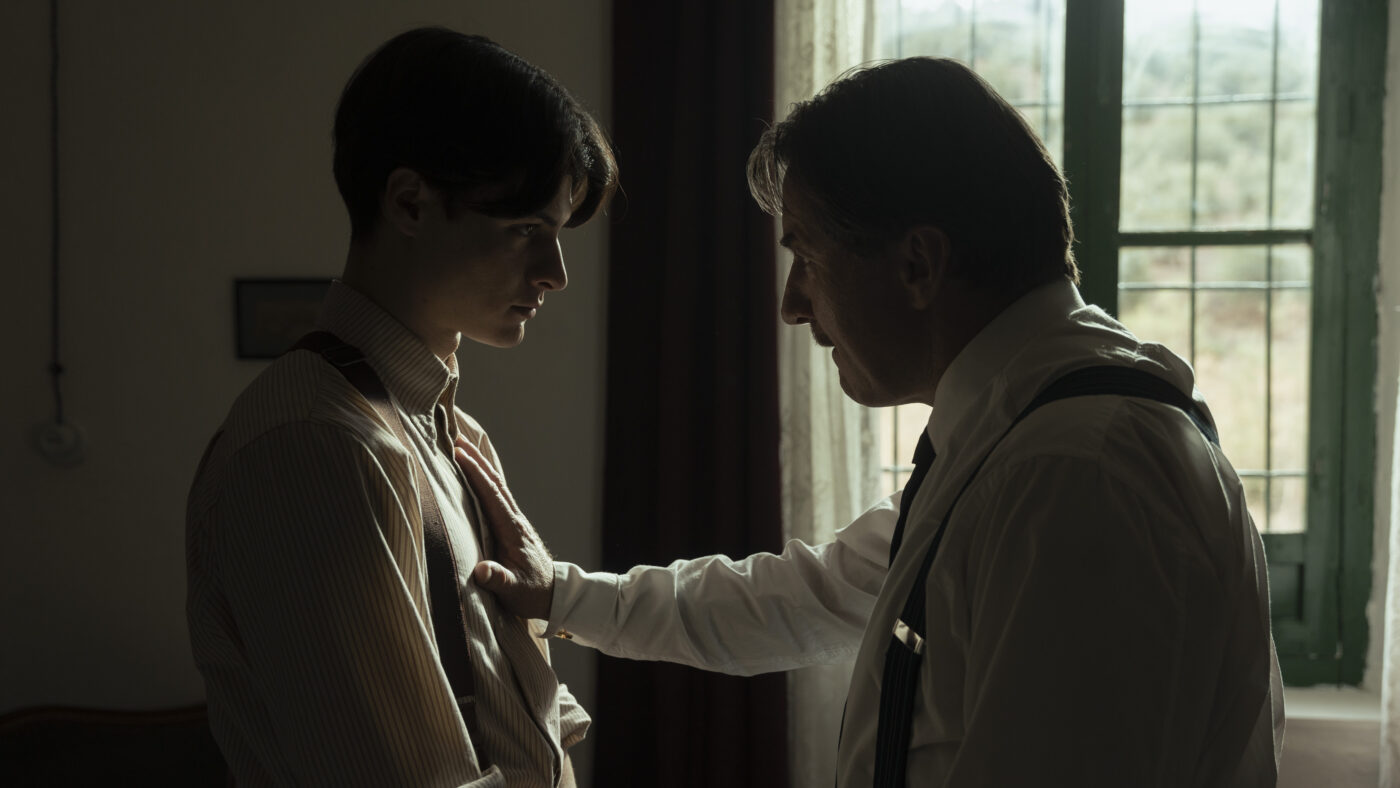
The directors have said they removed scenes and lines of dialogue in the edit to heighten the characters’ inability to communicate. That reinforces the looks between characters and gives more weight to the focus pulling, which has a language of its own without becoming too obvious. How was that defined?
It’s a question of having very good focus pullers who are receptive to what’s happening in the scene. Irene Tomé and Patri Torres, who was later replaced by Patri Charlín, are among the best focus pullers in this country. I barely gave them any instructions about focus. If they asked what to do, I’d tell them: “I don’t know what you did in that take, but I liked it.” If either of the boys or I saw something that didn’t feel right, we could talk to them, because they listen, they’re present and they understand the story.
For Irene, it was her first film on 35 mm. Patri had shot on 16 mm with Dussuel, but this was also among her first jobs on 35 mm. Both had worked on La Mesías. We had practically no technical problems. Once, we rotated the camera for a shot and got a film jam (bourrage). That was the only problem we had in eleven weeks of a crazy shoot, which was far from easy. People don’t know them, and they should be recognised as among the very best. They maintain a genuinely collaborative spirit on set.
The beginning of La bola negra reminds me of Berlanga’s cinema and Italian neorealism, of films set during and after the war. Later, Sebastián’s section sometimes evokes a 1950s western, or even The Brutalist [Corbet, 2024], perhaps because of the colour grading of the negative. What photographic references did you use?
My world of references is very eclectic. When I read a script, I see shots, but I don’t see lighting. For me, light is something very abstract that doesn’t emerge until I’ve thought about the staging.
That’s why I insist on working with directors who want me to be involved in the storytelling and staging, because if they give me a storyboard and ask me to light it, I get bored, and that’s not what I do best. I’m much better at thinking about the story as a whole before lighting individual shots.
Los Javis’ references are eclectic in the extreme. At the beginning, they unload a truckload of references on me, and I’m not entirely sure where to start. I have my own, which draw on some of the same things, but they might range from an Instagram photograph to a frame from a short film—things that inspire me in terms of lighting.
I try to give the film coherence through the way it’s told. No shot is gratuitous: there’s always a reason and a connection to the script. With the lighting, on the other hand, I allow myself to be open to different things, because if I feel a sequence calls for more dramatic lighting, or lighting that’s more or less realistic, that’s what I do.
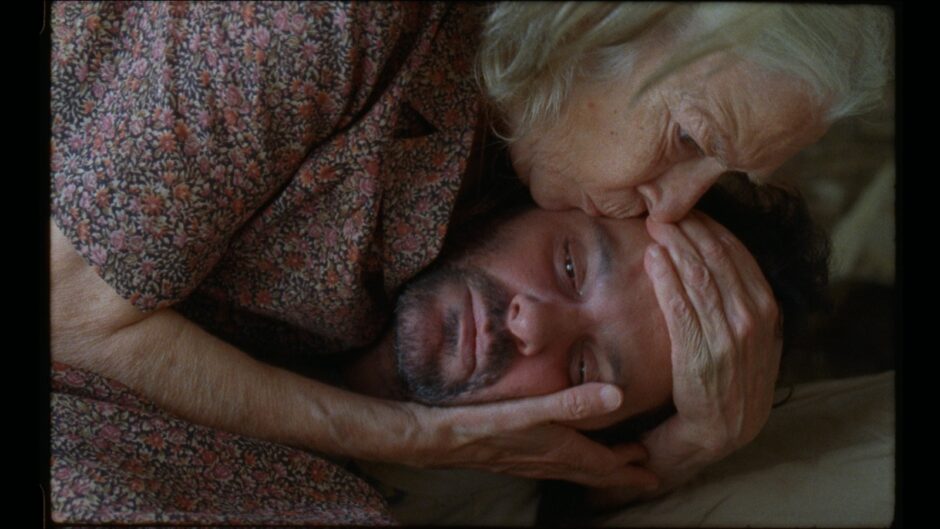
For example, some shots in La bola negra have hyperrealistic lighting, and others are anything but realistic. The shot in which Sebastián and Rafael embrace before the execution, with everything black except for a small area of light, was an idea we fell in love with during the tests. We absolutely loved it. But at the real location I said to Los Javis: “This lighting makes no sense here. How do we justify it?” They replied: “It doesn’t matter. Do it like the tests. That shot was incredible.”
During preproduction we also went to the Prado and chose several paintings for each storyline. We even have frames that relate directly to particular paintings.
I never want a lighting decision to force us to undo something we’ve decided about the staging or the visual language. I start thinking about the lighting about three weeks before the shoot, whereas I’ve been thinking about the story for a year. I had sixteen weeks of preparation on this film, between soft prep and preproduction. The first weeks were spent planning; then we went on creative location visits, and from that point onwards we began thinking about the lighting.
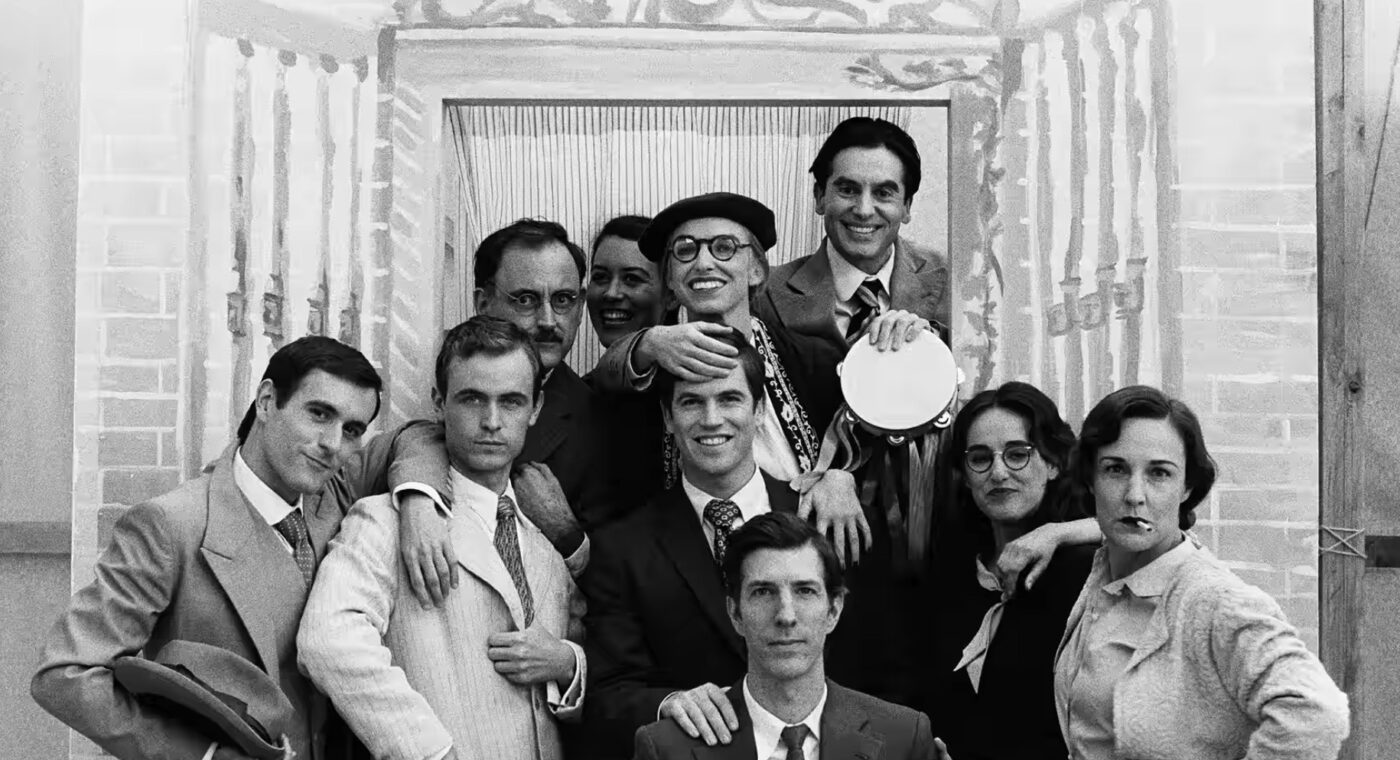
Did shooting on film influence your lighting decisions?
What I’ve found with negative is much greater freedom in lighting. When I’m shooting digital, I spend all day trying to conceal the direction of the light so it doesn’t look obvious and feels more natural. I’m happy with negative because I can play with hard light, use soft light in another sequence and keep varying things. If you look at the scan as it comes back, it could become almost anything, because it looks a little like a log image. But between the LUT that Jorge [Ortiz, colourist at Moonlight] found and all the work we’ve done in postproduction, I think we’ve managed to bring out the best in the format.
Were there differences between the three parts in terms of lighting quality or lighting choices?
Although the lighting changed a great deal from one part of La Mesías to another, here we wanted it to feel like the same story, even as the actors and the way we showed them changed. We wanted the variation to be more subconscious, something people couldn’t identify so easily but could nevertheless feel.
In terms of exposure, the execution scene stands out for being quite dark…
It’s underexposed because night fell on us. We started the sequence in daylight, with beautiful light, and the plan was to shoot it in the afternoon. Then it became increasingly overcast, and there was an enormous storm in Santander, out on that cliff.
We’d planned many more shots for that sequence. We’re a team that tries to shoot everything we’ve planned, but it was impossible there, and we ended up with fewer than half the shots. It was a very difficult moment to coordinate, with lots of soldiers, effects and every department involved.
Then darkness fell and I was shouting from one end of the set to the other: “I’ve got no exposure!” Javi asked for one more take, and I told him nothing would show up. In the end, we shot it on the understanding that if nothing came out, we’d do it again. Afterwards, we reshot the moment following the gunshot, which we hadn’t managed to film. For the execution itself, we shot with the available light and then graded it.
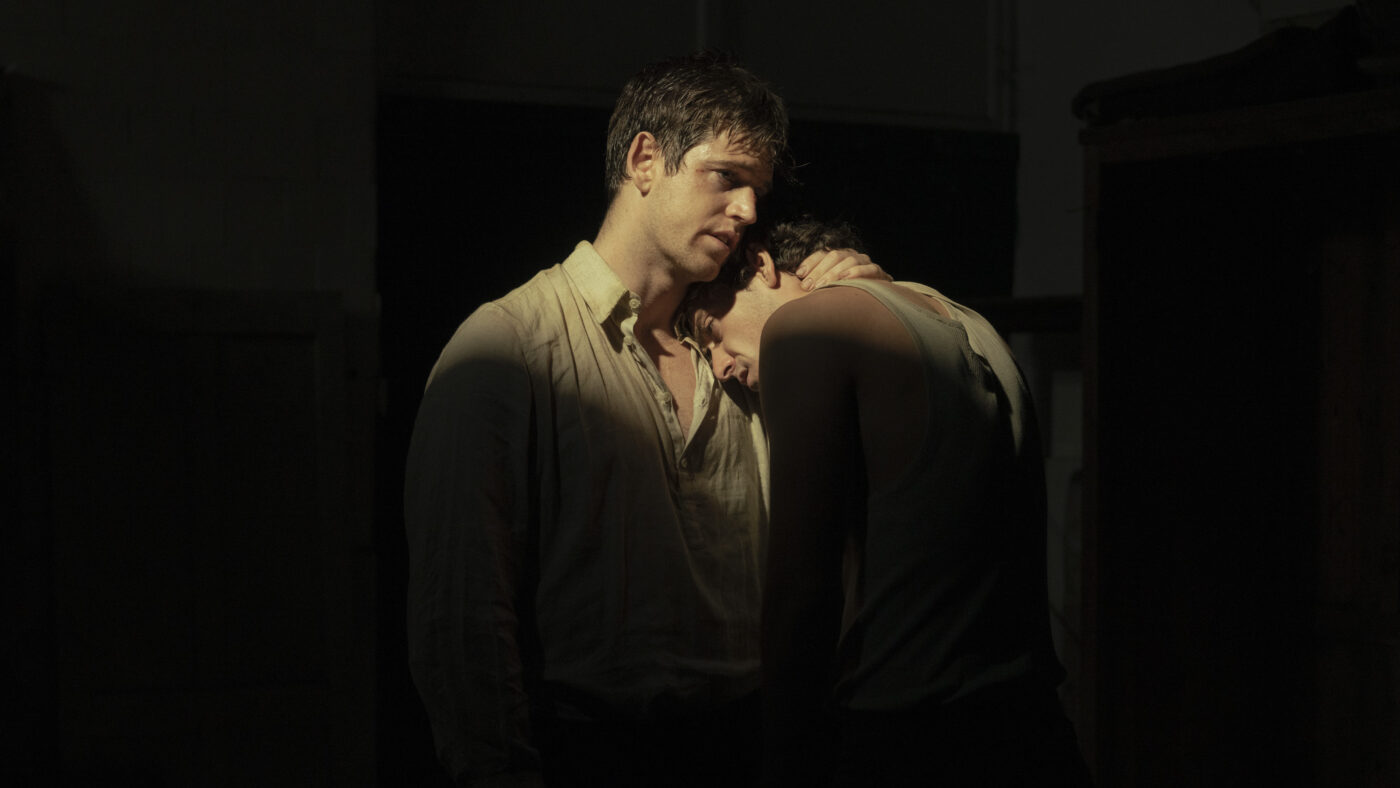
You also told us that you tended to overexpose on La bola negra.
I overexposed on this film because I hadn’t done so on La Mesías, and I regretted it later in the grade. When everything was right, it was perfect, but whenever you needed to adjust things for continuity or match shots, it became very complicated, especially shooting on 16 mm.
I didn’t want to take that risk on a film of this scale. I spoke to the laboratory and asked them to send all the dailies one stop darker. I wanted the rushes to come back darker, so I could see what the final result would look like, knowing I had that extra latitude. That gave us a great deal of freedom in the grade.
The underexposed shots are that one and another in a room, where we also lost the daylight. On that occasion, they asked us for a take, so we did it, and that’s the one they edited into the film. In those two shots, the difference is very noticeable, and we had quite a struggle to bring them more or less into line with everything else.
There’s a beautiful consistency to the tone of the skies and, above all, to the skin tones, such as Sebastián’s. Did you carry out any camera tests specifically for the actors’ skin tones, including Penélope?
I felt very confident about skin tones in general after La Mesías: if there’s one thing that distinguishes negative from digital, it’s this. You’d have to make a serious mistake with a malfunctioning HMI or something similar to get skin tones badly wrong when shooting on negative.
I did particularly want to get Penélope’s sequences right, and they were difficult to light. It wasn’t a conventional beauty setup, like in advertising, or a scene where she’s sitting and talking and you can place a specific light on her. She had to look absolutely beautiful, and not just because she was Penélope Cruz. We had to find light that flattered her without making it look as though she’d wandered in from a different film, while she was constantly moving. It was very complicated because the sequence was somewhat chaotic, with so many extras and the camera right among them.
Alcaine, who has photographed Penélope many times, gave me some advice. In the end, it was a matter of using a very large, soft source positioned a long way away, trying to keep it shaped on her as she moved without affecting the audience.
We also did a lot of switching lights on and off as we moved. Some of the extras even helped us, as did Pablo [Abad, gaffer]’s entire team. He was on the walkie-talkie, knew the choreography and instructed his crew which lights to switch off or on. We also had a more focused lighting source on the camera.
Other sequences, however, proved more difficult. For example, the scenes where Sebastián and Rafael talk in the room were shot in a real location, an upper-floor apartment in Cantabria, with the sun and clouds changing every second. The sequences were so long that they were shot over three separate days, from nine in the morning to six in the evening, with sunlight entering through the windows and constantly shifting. It took an enormous amount of planning with the assistant-directing department to decide what to shoot at different times and where to split the sequence. And when the sun disappeared, we had to bring in lights, which was much harder than the other sequences.
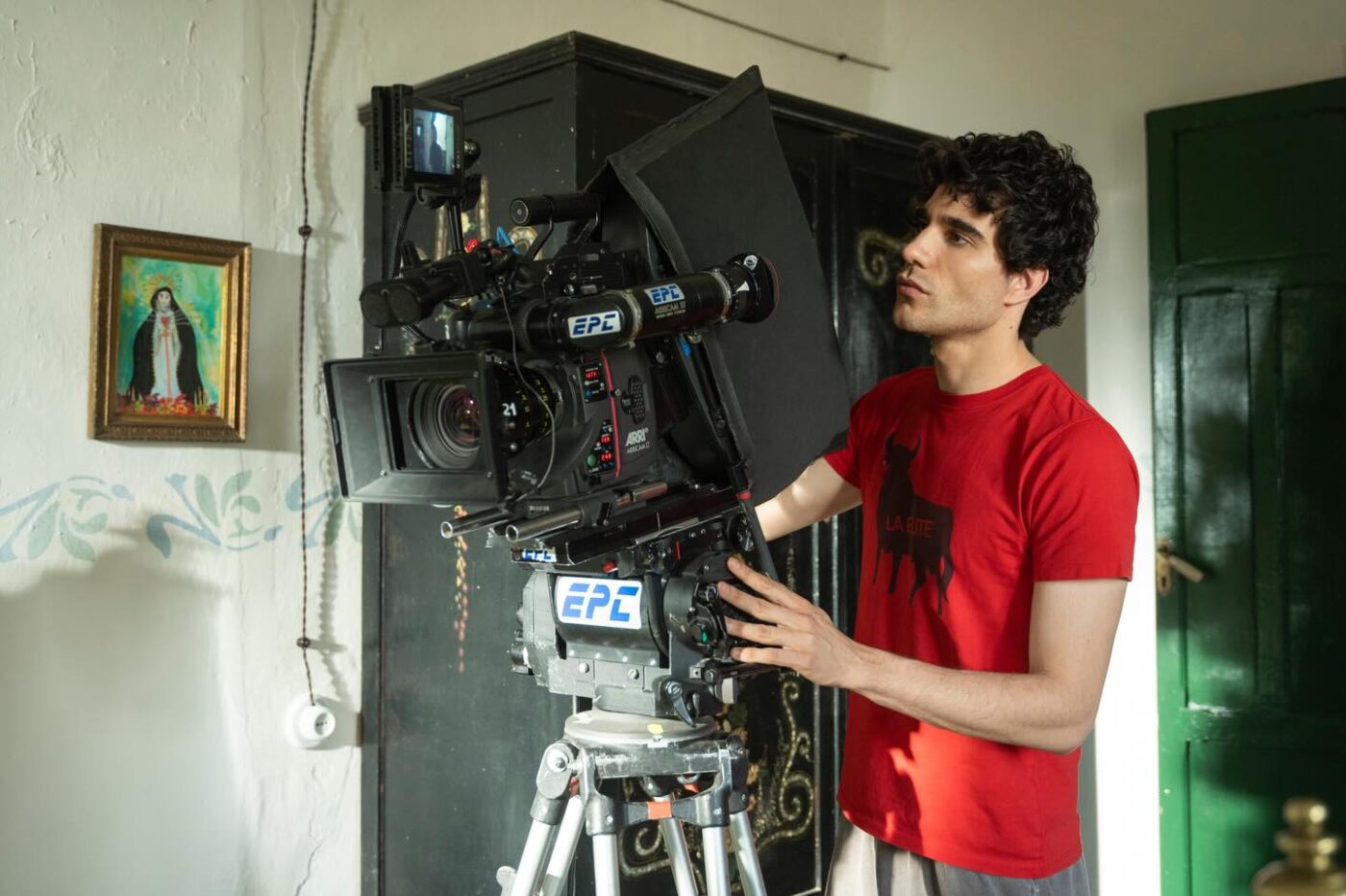
Interestingly, the lighting in that location is beautiful.
I think that’s also down to the inherent texture of the space. We arrived at the location and realised how much it had to offer, even though it turned out to be so difficult.
It’s also easier to manage the colour palette when everyone is wearing uniforms than in the present-day Madrid story, with its palette of many different colours.
Can you describe how you lit one of the scenes in that location? For example, when Sebastián reads the poem for the first time, while it’s raining outside and the wounded are being brought in, their bodies naked and bloodied.
That sequence was one of the hardest. We shot it over three days, and there was a progression in the lighting: at first the interior was sunnier, and then, when they started talking, it began to rain. There was also a relationship with what was happening outside, and the scene gradually grew darker. It’s a simple progression, but in a real location it was difficult to maintain continuity. Even more so on negative, because you can’t look at the previous shot and make adjustments: you have to keep it all in your head.
We had three cranes outside, which we used in different ways depending on the sequence. Sometimes they provided direct light; at other times we replaced the HMIs with Maxi Brutos. At a certain point, we stopped bringing in direct light and worked with natural and bounced light to create that overcast feeling alongside the rain effect. We shot the reverse angle on a different day so that the cranes wouldn’t be visible.
We worked almost entirely from outside, with small CLRS bounce boards inside. There was no overhead lighting, and we made almost the whole film using light coming from outside and bounced light.
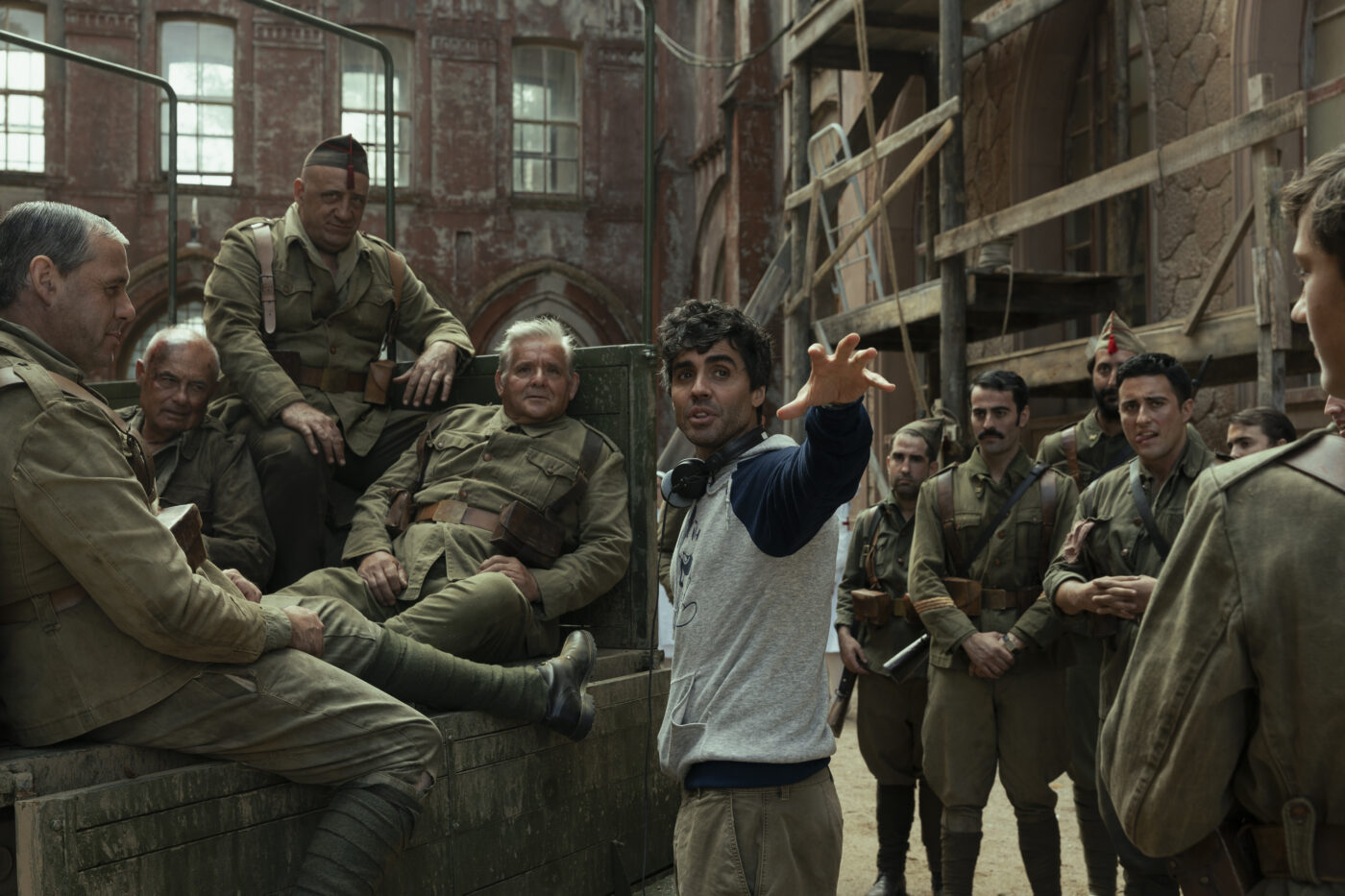
As for the image grain, it’s visible but subtle, apart from the Lorca sequence. Did you shoot that in black and white?
Yes, on Kodak Double-X film. That sequence matches our references exactly, with very high-contrast black and white and a great deal of overexposure. I’d done tests, and they hadn’t shown that much grain, but we had a processing problem with some takes and they came back extremely grainy. Nevertheless, the directors chose those takes for the film because they looked more distressed.
I remember that right up until the last day, I kept telling them Lorca shouldn’t appear. They’re the directors, and they were absolutely certain he should be there. So I thought: “Since this has to be distinguished from the three time periods, let’s make it very different so there’s no confusion.”
The film is full of challenges. Was it difficult to expose the fireworks sequence on the beach?
Not the exposure, because we’d done tests. First, we tested Pau [Costa]’s special-effects fireworks, and then we contacted specialists in real fireworks, which were much bigger.
I was certain they had to be real because I’d failed before when trying to simulate fireworks. Also, the reference they gave me was Les Amants du Pont-Neuf [Leos Carax, 1991], which uses real fireworks.
We used a base light that was an enormous distance away, and it looked beautiful. We’d marked its position during the technical scouts in daylight, but when I arrived and saw those three tiny points of light so far away, which had to illuminate an entire beach, I panicked. Pablo reminded me, however, that we’d already tested at that distance, using the same fixtures and the same arrangement as at the actual location, and it had worked. At night, you also have the reflection off the sea, which can help. When we switched on the lights, the exposure was perfect.
I think there were three or four Arrimax M90 units and Maxi Brutos. They were all in the same position, fanning out like a single source. We mixed the colours by aiming the fixtures in different directions rather than using gels. We’d tested that too, and it gave us a base light that worked very well—almost a backlight, or three-quarter lighting. Then we launched the real fireworks, and it looked great.
In the first tests, the special-effects fireworks provided exposure, but lacked that moment when the fire overexposes the image, lights everything up and then goes out. When I returned to the Cantabrian beach at night with the specialists who set off the fireworks and measured the light again, it worked.
It’s taken La bola negra for me to be allowed to do this sort of testing. Usually there’s never any money, and they tell you that you can’t test the fireworks. For example, there was a fire scene in La Mesías where I couldn’t do tests, and I suggested shooting it digitally to avoid the risk. Los Javis would say: “Chicken!”
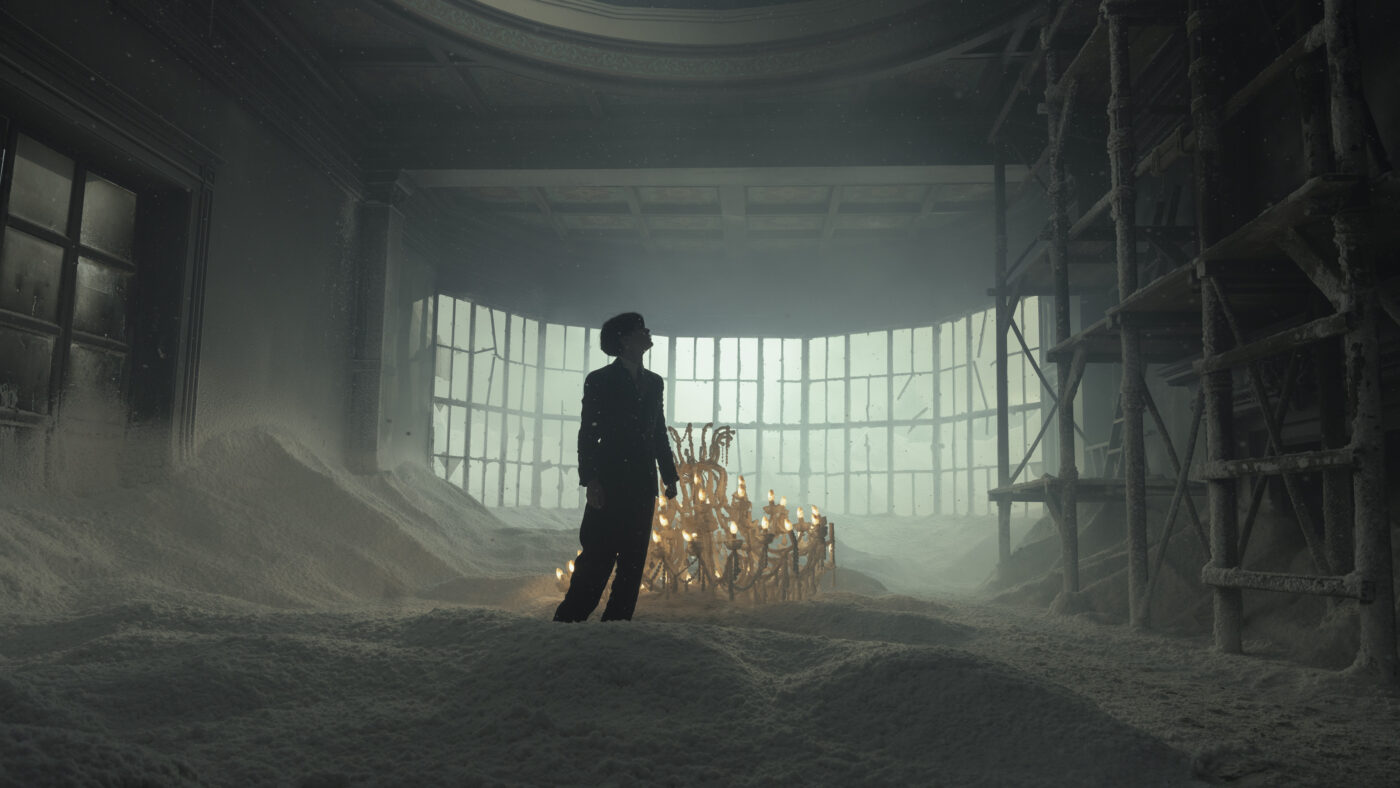
What was shooting in the snow in Sierra Nevada like?
I wasn’t there for that day’s shooting because I was working on another film. The shoot had been delayed because there was no snow.
The Granada casino was the only thing we shot on a set, and we built it outdoors for several reasons. It had a dome, and I wanted to bring light in through it without using chroma key. I also wanted to see the real world through the windows. In a film where we’d used so many real spaces, it seemed very fake to suddenly have green screens in every window and in the ceiling. And because the casino was supposed to burn down—the fire was left out of the final cut—for safety reasons we couldn’t build it inside a soundstage either. So we constructed it in a field outside Madrid. We had a huge opening in the roof with an Arrimax, and the snow effect was created almost entirely there, without a single green screen.
The scenes in the snow were shot with natural light. I asked Uri Barcelona to do them because he had considerable experience in those environments and had worked with the directors before. Peke, who was already familiar with the film’s visual language, accompanied him, and they did an incredible job given the weather conditions they faced.
What was your relationship with the laboratory like? Did you work closely together from the outset?
I didn’t have much direct contact with them, because we lacked the budget during preproduction and there was also a language barrier.
I’m very happy with the laboratory, apart from what happened with the black-and-white footage, which was a problem with the processing line. I got on very well with the colourist who did the dailies, and I’d work with them again. Now, during postproduction, they’re collaborating on the entire scanning process, and they’ve worked very well with Moonlight. Tomorrow I’m going to see the 35 mm print for screenings in that format…
Synopsis
La bola negra tells the story of three men whose lives are intimately bound together by desire, pain and inheritance across three different periods: 1932, 1937 and 2017.
Main crew
Production companies: Suma Content Films; Los Esquiadores A.I.E.; Movistar Plus+; El Deseo; Le Pacte.
Directors: Javier Calvo and Javier Ambrossi.
Screenplay: Javier Calvo, Javier Ambrossi and Alberto Conejero.
Cinematography: Gris Jordana.
Production design: Roger Bellés.
Gaffer: Pablo Abad.
Technical specifications
Cameras: ARRICAM LT (3-perf), Moviecam.
Lenses: Panavision Primo.
Film stocks: Kodak VISION3 250D 5207; Kodak VISION3 500T 5219; Eastman Double-X 5222.
Aspect ratio: 1.85:1.
Laboratory: Augustus Roma.