







AEC Focus: Lucía Cantoira Pan AEC

Cinematographer Lara Vilanova interviews cinematographer Lucía C. Pan AEC.
By Lara Vilanova Sentís AEC
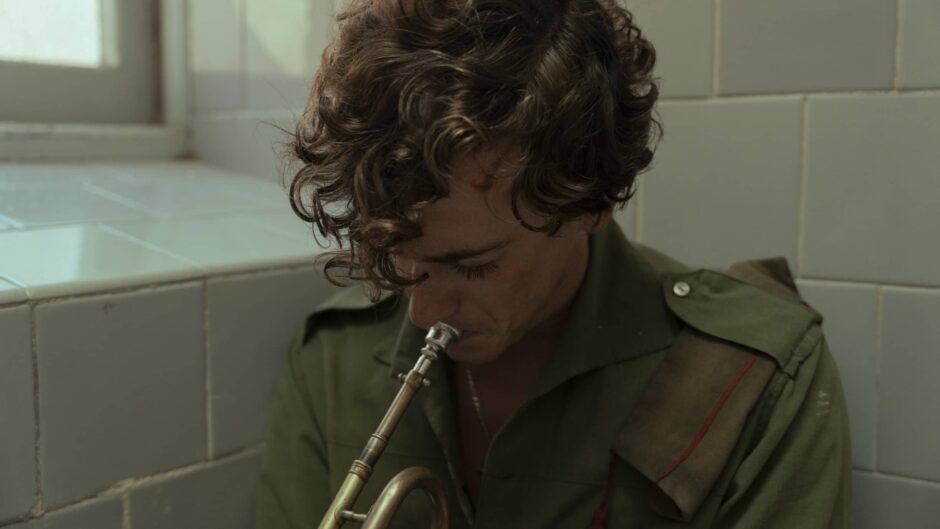
Lucía Cantoira Pan has spent years developing a distinctive eye behind the camera, the kind you can recognise when you look closely at the cinematography. Trained in Fine Arts and at ESCAC, and closely connected to documentary filmmaking since her time at Play-Doc, Lucía has left her mark on films such as ‘Dhogs’, ‘Matria’, ‘Mamífera’ and, more recently, ‘Antes de nós’. Her work has earned her several Mestre Mateo Awards for Best Cinematography, but beyond the awards, what stands out is the path she has taken, her way of seeing and her approach to each project. As a cinematographer and fellow member of the AEC, she reveals what lies behind her images.
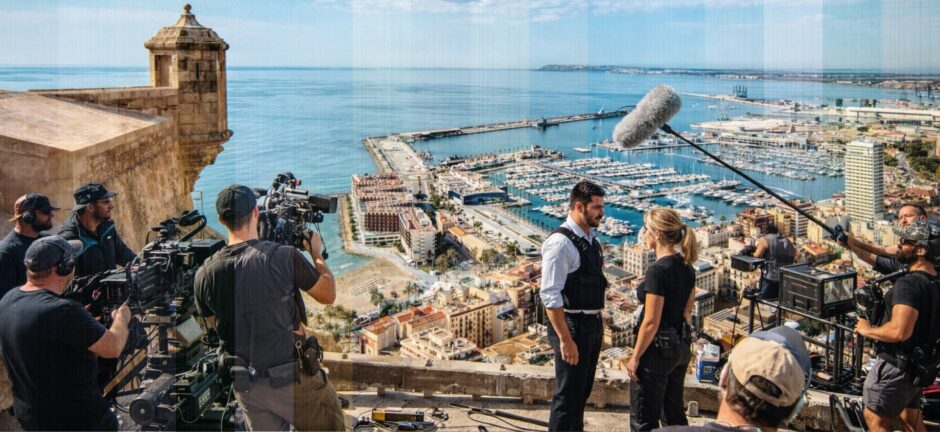
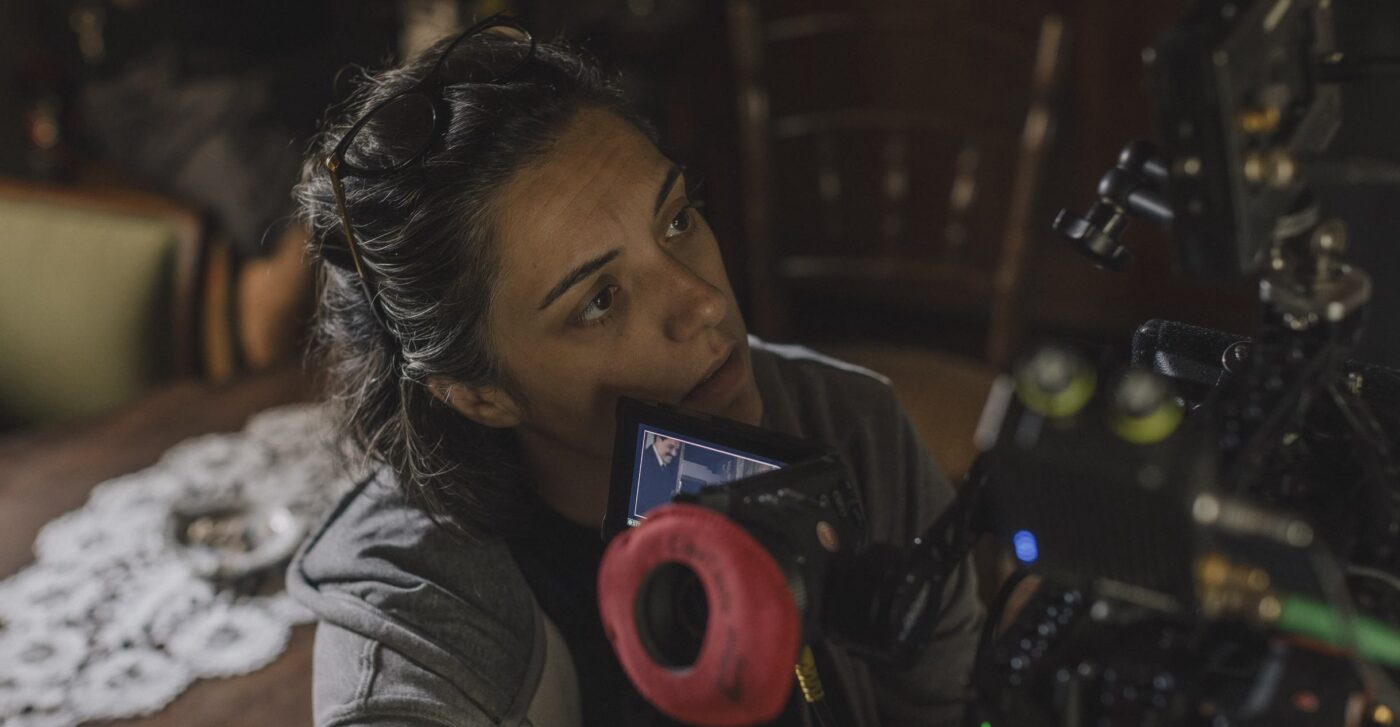
Photo: On the set of Antes de Nós. Photograph by Mario Llorca, 2024.
What was the first moment that made you think, “I want to make films”?
I don’t remember. I’ve been fascinated by cinema for as long as I can remember, but I do remember the first time I thought specifically that I wanted to be a cinematographer. I was about eleven years old and had just seen Alfonso Cuarón’s ‘A Little Princess’ (1995), and I felt a connection with, and fascination for, the film’s cinematography.
What does it mean to you to make films from Galicia in an industry as centralised as filmmaking?
The first time I stepped onto a set, I felt I was exactly where I was supposed to be. I feel the same when I work at home, and that is one of the reasons I try not to venture too far from Galicia. I know we don’t have the biggest budgets and that in Madrid or Barcelona I would have certain advantages we don’t have here, but there are also other difficulties there that I don’t face here, and nobody ever promised me it would be easy. I want to shoot in my own language, create new ways of imagining my homeland, feel what we do and how we do it in my bones. I think things are done differently from here, and diversity is good for all of us.
How did ESCAC influence your career?
It gave me a very solid technical foundation to fall in love with. That’s where I learnt to understand the craft as a craft. For years, what I was taught there was my roadmap.
Which would you prefer: a good location with poor light, or a poor location with photographic potential?
That’s a difficult one. I’d love to say it depends, but I think I’d prefer a poor location with photographic potential. That said, we’re talking about what I prefer, not necessarily what I do.
What has been the biggest challenge you have faced behind a camera?
Any of the documentaries I’ve made, because using real life as raw material is overwhelming. Sometimes I feel I’m not doing enough, that too much is slipping away from me; at other times, I feel that what we’ve managed to capture is so immense that the poetry within it will tear my soul apart.
Does AI worry you or fascinate you?
I think both. Obviously, any technological advance fascinates me. I’m a curious person, but I worry that instead of moving forward to simplify things and make our lives easier, we’ll make everything far too complicated, become increasingly disconnected from the processes themselves, and those processes will cease to be human experiences in their own right. Instead, we’ll simply be swept along by this cycle of endless, meaningless growth.
Do awards give you freedom, or do they create even greater expectations?
In general, I think they create more expectations, but that doesn’t necessarily have to be a problem. I don’t think anyone has higher expectations of me than I have of myself, although perhaps they aren’t the same expectations.
What was it like working on second unit with Hélène Louvart on Romería?
I only got to spend one shooting day with her, but for me it was a joy, even though we encountered the worst weather you could possibly have on a shoot at sea. What stood out to me was her eagerness to discover things, to keep filming through play and a fascination with the craft. I had the feeling she had left her baggage of preconceptions at home, and I loved that.
What does being part of the AEC mean to you, and why would you recommend joining to other cinematographers?
For me, being part of the AEC is a way of building support networks. I think professional associations are essential in such an individualistic society. Heading a department can be very lonely, and within the association you have the chance to travel those same paths accompanied by others who understand the difficulties you face.
If you had to recommend three films for a cinematographer to watch, which would they be, and why?
That’s a difficult question. Tomorrow I’ll probably come up with three better choices, but right now I’d say In the ‘Mood for Love’ (Wong Kar-wai, 2000), because it’s almost a meditation on cinematography: you simply flow along with the film and everything else in the world around you ceases to matter. ‘No Country for Old Men’ (the Coen brothers, 2017), because it’s a joy to see how beautifully made it is; there’s everything in that film. And ‘A Ghost Story’ (David Lowery, 2017), because it achieves so much with so little, draws you into the story and makes you want to go out and shoot as soon as it’s over.