







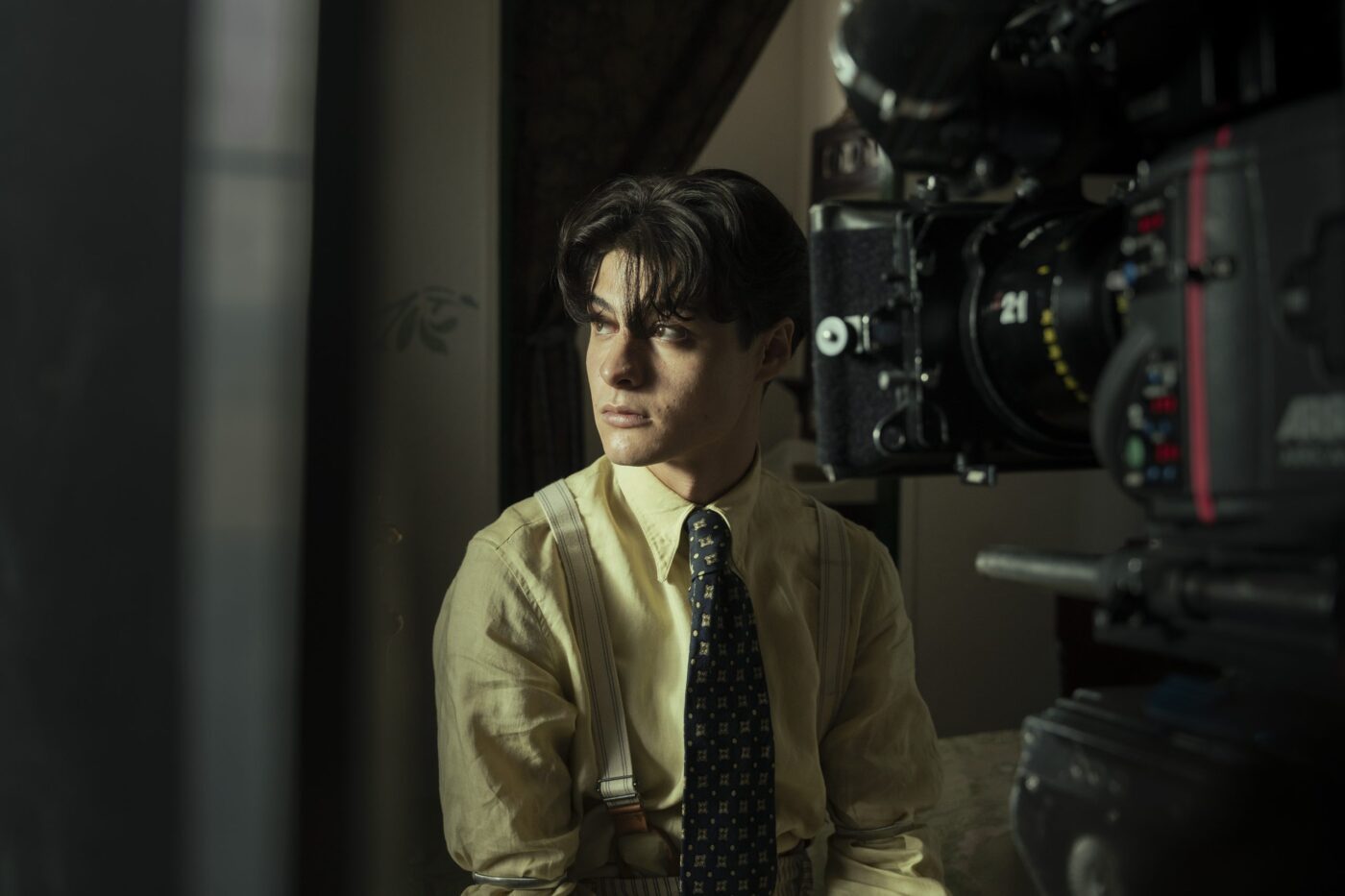
THE CREATIVE CRAFT OF FOCUS PULLING ON ‘LA BOLA NEGRA’

Focus pullers Irene Tomé and Patricia Torres explore the technical challenges of shooting La bola negra on 35 mm and the storytelling power of focus.
The work of camera technicians often goes unnoticed, despite the fact that a film like La bola negra, which used 120,000 metres of motion-picture film, could never have been made without their expertise and effort. Camera checks, techniques for pulling focus on film negative and the narrative power of focus are some of the subjects discussed in this interview with focus pullers Irene Tomé and Patricia Torres.
Author: Carmen V. Albert
How did you organise the camera teams on La bola negra?
Irene Tomé: Camera operator Peke Griffin and I were on A camera. He is excellent with the Steadicam, at organising the set and at contributing to the storytelling. His understanding of cinema goes beyond camera operating, and I think that really shows. The other operator was Gon R. Nión, who had also worked with Gris [Jordana] on La Mesías and is very good at handheld camerawork.
How did you start working with Los Javis?
Irene: The first thing I shot with them was a couple of days on Veneno. Then they called me for La Mesías, which was a statement of intent from the outset: I had never shot on film negative before, and on the first day, shooting on 16 mm, they called “Roll camera!” without even rehearsing.
Is improvisation common when working with them?
Irene: Gris has a clear plan, but if you shoot with Los Javis, you have to be open to change. They have the film in their heads, but they also go with the flow, and you have to go with them. You never know where the next wave is going to come from.
I remember the initial order of negative stock was very small. At first we had 30,000 metres for half the film, and the total estimate was 60,000. We ended up using 120,000 metres.
Patricia Torres: I remember that early on they sent B camera to shoot cutaways of the local villagers, and they went through an entire roll in one go, because these weren’t actors and they were improvising.
Irene: On the first day we had three cameras. We were going through practically one can of film per take, and with the truck about a hundred metres away, magazines had to be carried back and forth constantly. By the time our loader, Miriam [Gómez], got back to the truck, we’d already used another can.
How did the camera tests and equipment checks go?
Irene: They were lengthy processes. I asked for plenty of time as a precaution because I was worried about arriving unprepared.
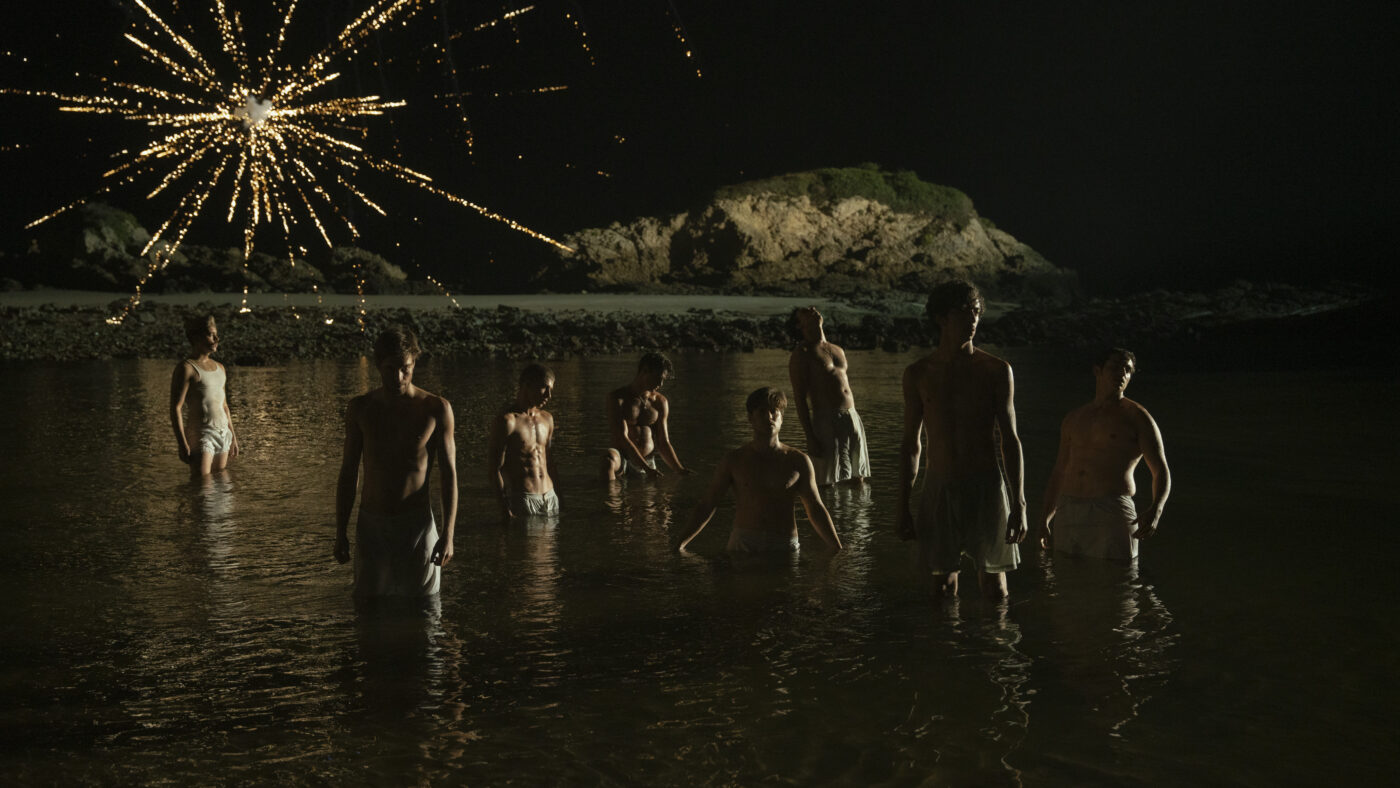
First we spent three days testing with Gris to choose the film stocks, lenses, number of perforations and film format. We also shot lighting tests on a stage with the different film stocks and lenses. We even tested elements of the bombing sequence to see how the lighting effects would work. Gris wanted to test the fireworks because she wanted to shoot them using their actual light and find out whether the ISO 500 stock would be fast enough.
At first, having a whole month before the shoot seemed like a lot of time, but between sending the negative off, processing it, scanning it in 4K, watching the footage and making decisions, time quickly became tight. Until they had decided on the format and the number of perforations, EPC couldn’t finalise the camera search. Then, once the lenses and format had been chosen, we carried out focus, mounting and framing tests with Gonzalo [Martín Robledo], my camera assistant.
Gris told us how difficult it was to choose the format.
Irene: At one point they told me they liked the texture and imperfections of the negative and wanted to shoot full aperture. We were shooting three-perf, and the resulting frame was very close to 1.85:1, although it wasn’t quite that conventional frame.
On the other hand, Jesús at EPC warned us that using the entire gate was risky, because dirt or a microphone could creep into frame. We had to check that and carry out framing tests using the triangles on the frame leader. That meant part of the image fell within the shaded area of the viewfinder, and it wasn’t displayed in exactly the same way on all the cameras. The operators kept asking where the frame edges were, because the shading on one camera didn’t show the same thing as on another. It took a lot of work to resolve.
I went to Burgos for rehearsals for the first few shooting days, while Patri stayed behind with B camera to continue the tests. In addition to the initial three days spent deciding on lenses and format, there were roughly another two weeks of tests to rig the camera on the Steadicam, try it on a Ronin and check many other configurations.
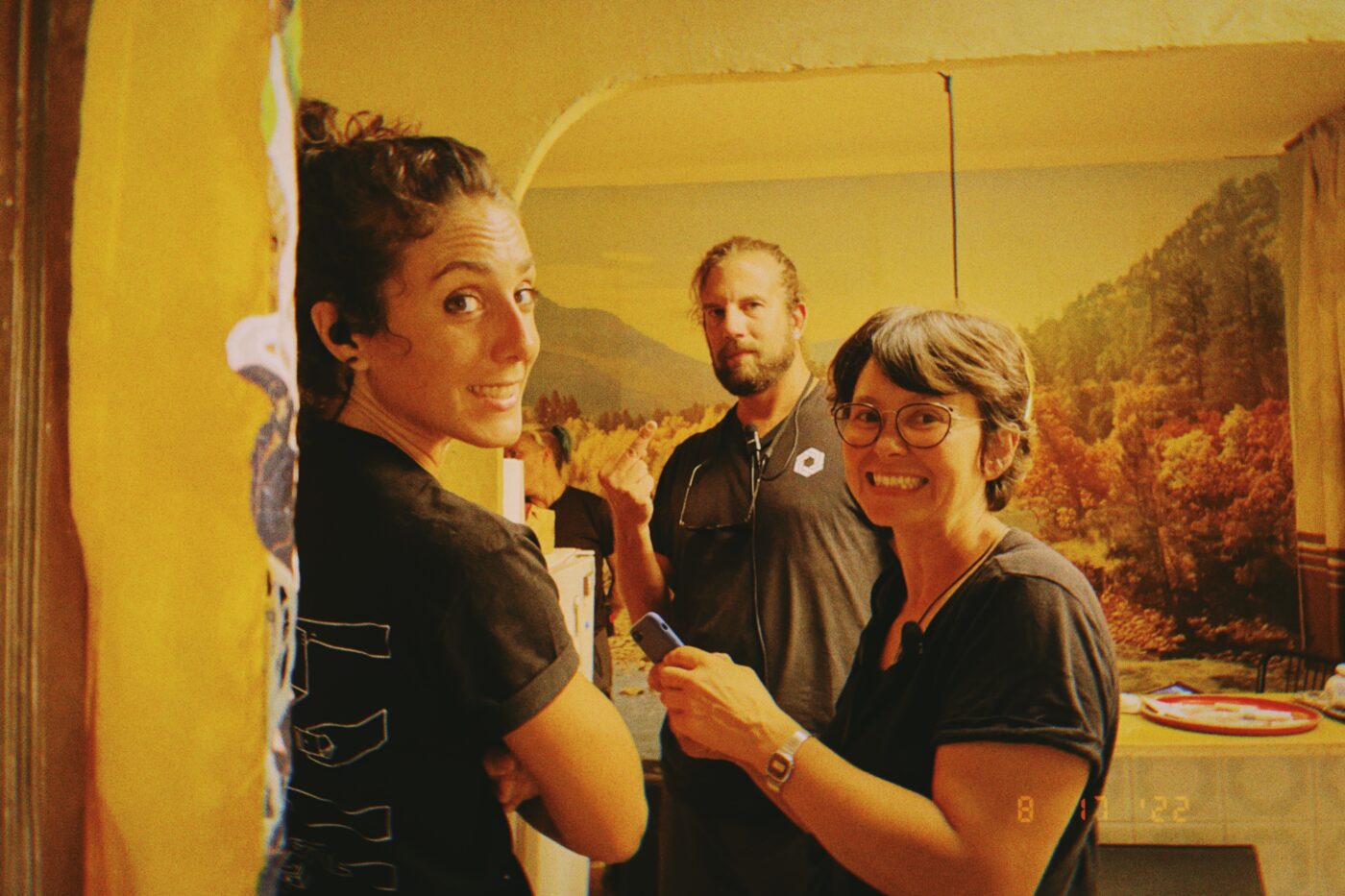
Original magazine p. 19: From left to right, Irene Tomé and Patricia Torres on the set of La Mesías.
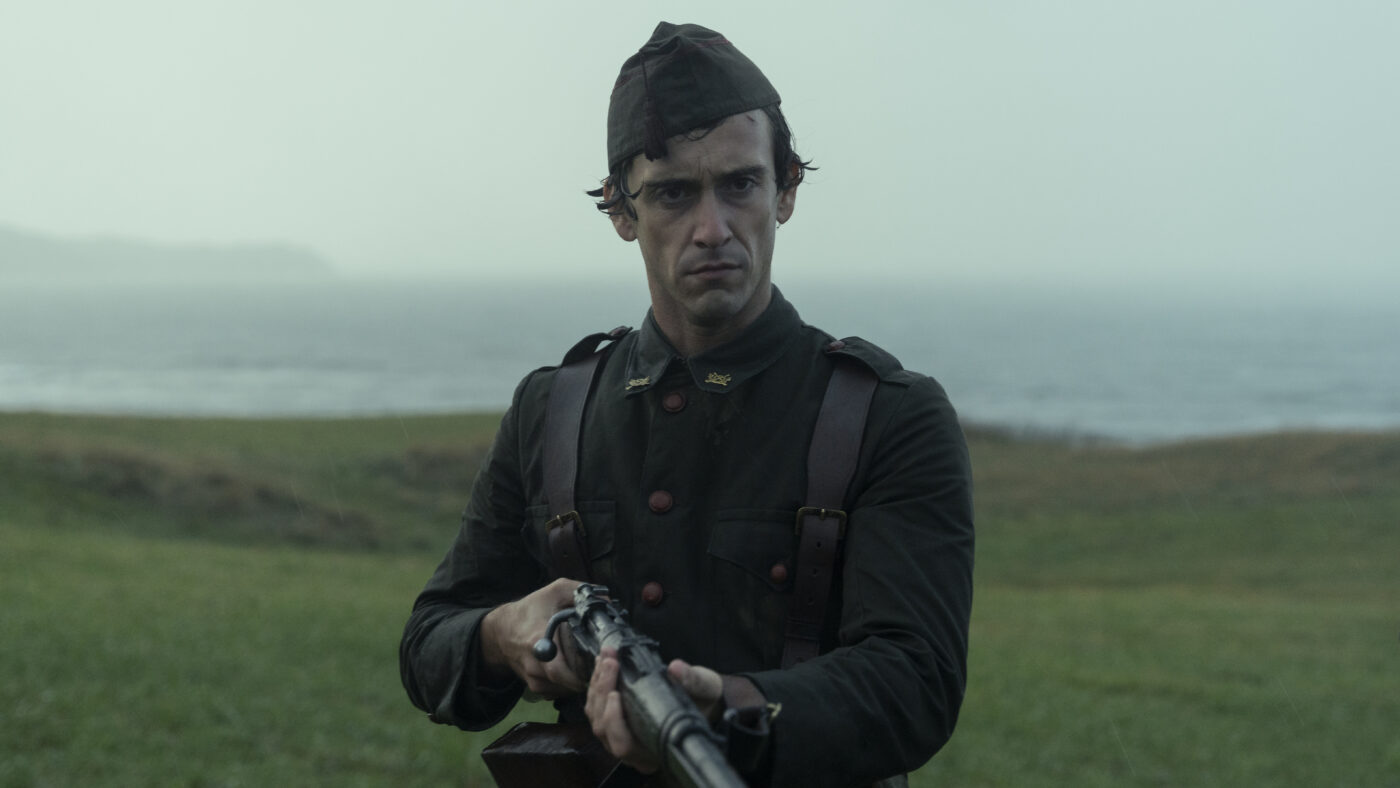
What particular challenges did the Panavision Primo lenses present for focus pulling? Were any focal lengths especially difficult?
Irene: The lenses had distance markings in feet and two index marks for reading the distance scale, depending on the iris aperture. But with the Panavision lenses, opening the iris changes the collimation, and therefore the index mark you need to use. We had to map the lenses using both marks, but if the iris needed to change significantly during a take, you would move from one mark to the other, our reference would change and the mapping on the hand unit would no longer behave in the same way. I remember sometimes putting two arrows on it because it was so complicated.
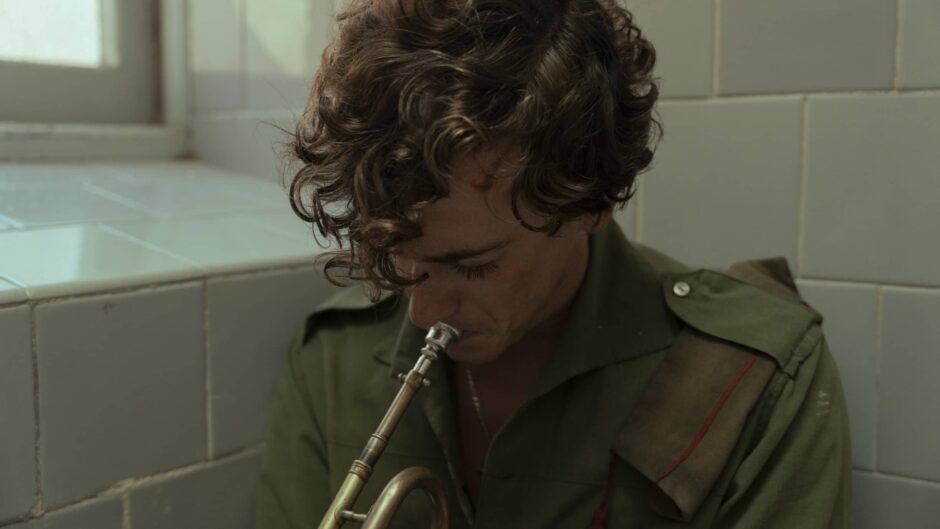
Patricia: In the shot where Sebastián goes up the stairs and along the corridors to the bathroom where he plays the trumpet, there was enough light to shoot at T2.8 or stop down further, but the aperture changed during the shot and Gris wanted to end up wide open. So I had to choose one of the index marks for the mapping and then compensate mentally, by eye.
I know the execution sequence was difficult. What was it like for you?
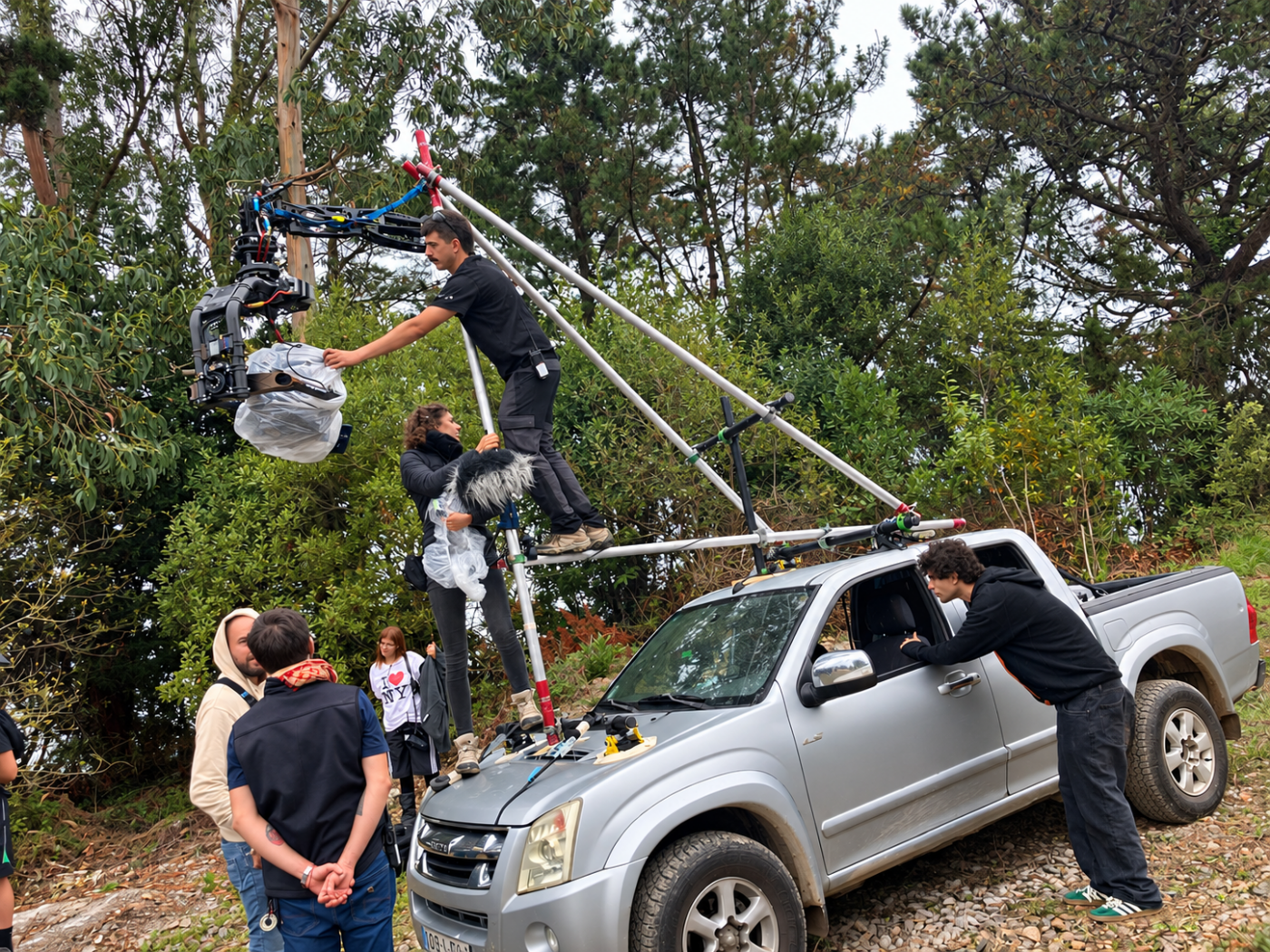
Irene: We were caught in a downpour that day. I arrived the next morning not knowing whether the equipment would still work. I was wondering whether a drop of water might have got onto the negative during a magazine change, or whether a monitor or hand unit had got wet. There was a lot of tension on set because the shoot had been so difficult. Even the production pick-up trucks were slipping on the slope where we were filming. My camera was mounted on a Ronin in a pick-up, and whenever we had to change magazines, we had to lower the camera, unwrap it and get it out of there. When my camera finished, Patri stayed on filming into the night.
Patricia: I think it was one of the worst shooting days of my life. We were filming a very important sequence, under pressure because we were losing the light, and on top of that it was raining.
How does your relationship with focus change when shooting on 35 mm rather than digitally?
Patricia: You have to measure much more, and with wide-angle lenses you can’t rely on the monitor. Today’s video assist can give you an image that helps you judge focus with a 100 mm lens, but with a wide angle, or even a 50 mm, you have to measure very carefully and lay down marks. Marks give you a lot of confidence, as does the Cine RT distance-measuring system, which displays its readings on the hand unit, although sometimes those readings aren’t accurate.
At first I kept insisting to Irene, who was on A camera, that we needed to see the dailies, which we couldn’t access for privacy reasons. We explained that it was a technical necessity: we might spot a problem with a lens and prevent mistakes. That happened on La Mesías. By watching the dailies, we realised one lens wasn’t right. We were able to stop using it, run tests and ask for it to be collimated. On La bola negra, it took us a while to gain access, although when we finally saw the footage, everything was fine.
On a digital shoot you can check immediately whether the take worked, but on film negative someone asks you how it went and you answer on instinct, without having seen the result.
Irene: With a telephoto lens, the monitor can help, especially when the subject is closer, but at other times I look at the video assist and, because everything looks blurry, I feel it can’t possibly be in focus. It makes me more uncertain rather than helping.
Even when we shot without rehearsals, we took measurements and established reference points. I make lots of distance marks on the floor, which then help me follow the actor’s movement, and I also use the distance-measuring system. If there’s a tracking shot or something more specific, I make other kinds of marks.
In the end, part of it comes down to a feeling: sometimes you think you’ve got the focus right, but there’s a lot of tension until the dailies arrive. With the pace of the shoot, it was impossible to watch all of them, because after work you had to organise the following days. But between the two of us, Gris and Los Javis watching the dailies, we trusted that somebody would spot it if there was a problem.
Patricia: What I like, and still do on digital shoots, is to stay beside the camera with the monitor and focus hand unit. When I can see the actor, I can anticipate their movements. If I only watch the monitor, I feel I’m always a step behind. Continuing to work that way in digital also helps me when I’m shooting on film negative.
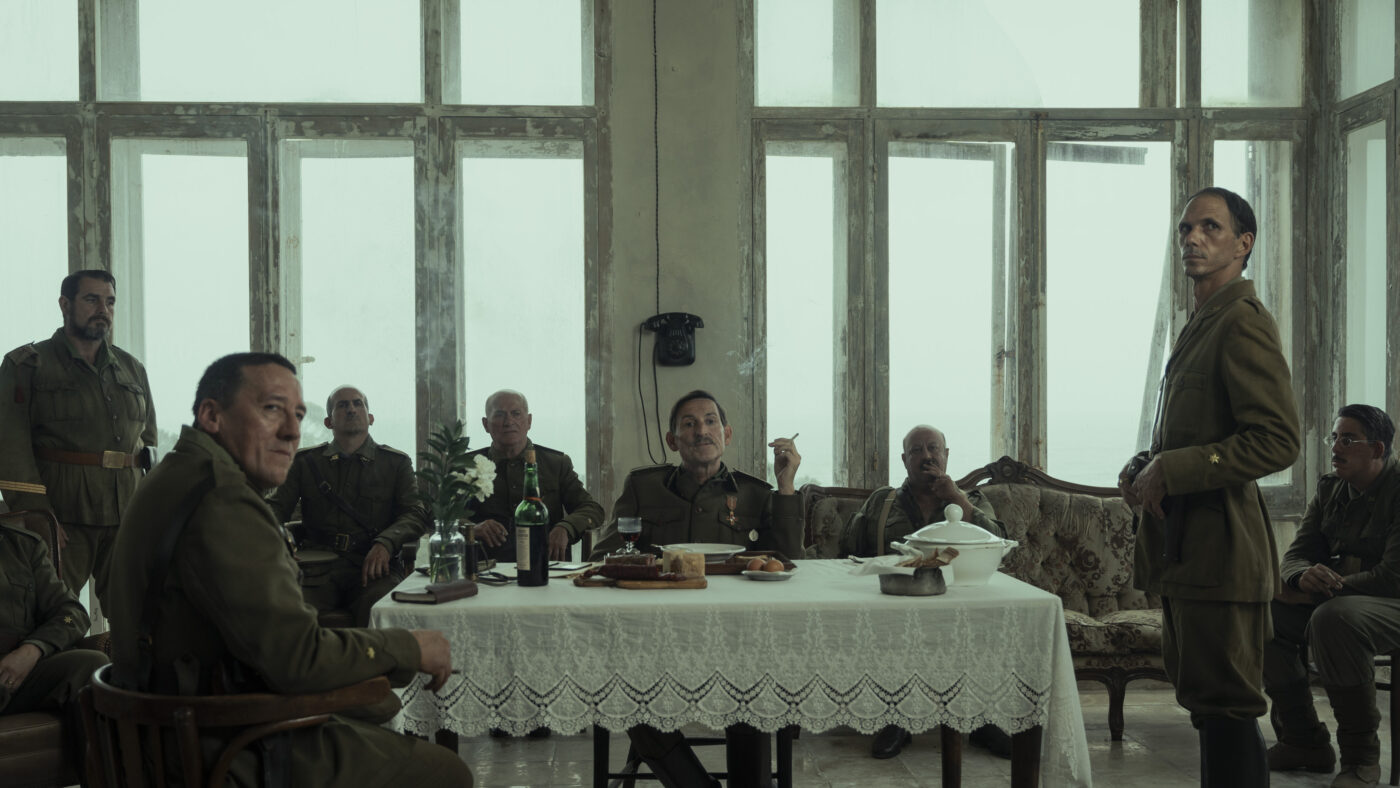
What determines how you work? Can you decide which tools you need?
Patricia: You have to judge it shot by shot. I always try to get close, but if the camera and actor are in a very small space with no room to move, I use the monitor. When shooting on film negative, I insist much more on needing to be there to see what’s happening.
For the staircase shot we mentioned earlier, I had to stay behind and cross my fingers. Sometimes I use the subject’s size within the frame as a reference for distance, because if I know how they look from a metre and a half away, I can work it out as they get smaller or larger. Those are the kinds of things I do when I can’t stay beside the camera.
I also struggled with the shot of Sebastián playing the trumpet in the bathroom. I couldn’t get close, and it was a delicate dramatic situation. I couldn’t measure very much because it was entirely improvised. In the end, I stayed further back and trusted my instincts.
Irene: There’s another difficulty with Los Javis, because they are very protective of the actors’ space and eyelines. That’s a good thing: there’s quiet, respect and concentration on set, especially during emotional scenes. But sometimes you want to be close so you can see, and they ask you to stand somewhere else. You explain that, because you’re shooting on negative, you need to be there, and they tell you that you can stay as long as you crouch down. You can end up pulling focus practically at the height of the tripod legs, and the logistics can sometimes be complicated.
On digital shoots I usually use a seven-inch monitor, which lets me move around and get closer. On film negative it’s different, because you don’t use it to assess focus. On La bola negra, we didn’t request a Hi-5; we used the WCU-4, which was a little cheaper and did everything we needed. In some of the Granada shots, I don’t even remember whether I had a monitor, because without it I could move more quickly. And sometimes, when you already know the framing, you can stand beside the operator without one.
I really like the way focus is used to indicate what matters in a scene. For example, when Carlos walks through the streets of Granada at night and meets some men who start harassing him, we see them out of focus from his point of view. The film cuts to a scene inside the wartime hospital in Cantabria, where we are with Sebastián and see Rafael out of focus. How did those decisions come about?
Irene: I remember the Granada moment very well. The Steadicam shots were difficult that day because there were lots of stairs and they were slippery. We did several takes with more conventional focus, but just before the last one I told Peke I thought it would be interesting to stay with Milo [Carlos], because he was being harassed, and in that way we would connect with his anxiety. We suggested it to Los Javis and Gris, and they told us to shoot it that way. Focus has real storytelling value, and when you are allowed to contribute, you become more immersed in the story. That’s why I enjoy working as a camera assistant so much, and contributing on that level.
And cutting those shots together, one after the other, strengthens that connection.
Patricia: They have a very clear idea of what they want, but they give you quite a lot of freedom with focus. I often asked them what they preferred, because there were two options. They would frequently tell me, “Do it however you feel it should be done.” You’re very grateful for that, but you also realise it’s a responsibility.
Irene: The difficulty with film negative is that many of those changes don’t show up clearly on the video assist. If a rack focus is very pronounced, you can see it, but you can’t judge it in the same way as with digital, and you have to imagine what the result will look like. It also requires trust from everyone involved.
Finally, apart from the execution sequence, which shot from this film will you remember most?
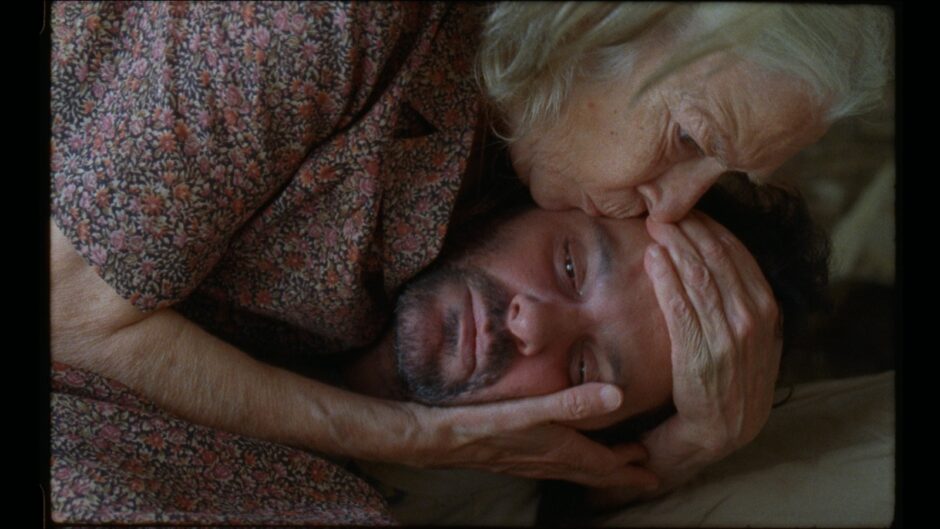
Patricia: For me, the shot of Sebastián playing the trumpet in the bathroom, or when he touches the wounds and gradually discovers Miguel’s body. I also remember the Italian soldiers bathing in the sea beside a dead man.
Irene: I’ll never forget the first shot we did with Penélope, and the choreography. What they had put together, with all the extras, was incredible. I was standing on a ladder because I couldn’t get next to Peke, and when Los Javis and Gris asked us whether we wanted to rehearse or shoot, we decided to shoot. I had some idea of the movement because we’d rehearsed it without her, and somebody had to hold my ladder because I tend to move as I follow the action. I’ll also remember Milo’s choreography in Granada. There are some incredible shots.