







‘Chopin’: In Search of a Genius’s Light

Interview with DOP Michał Sobociński on his work on ‘Chopin’
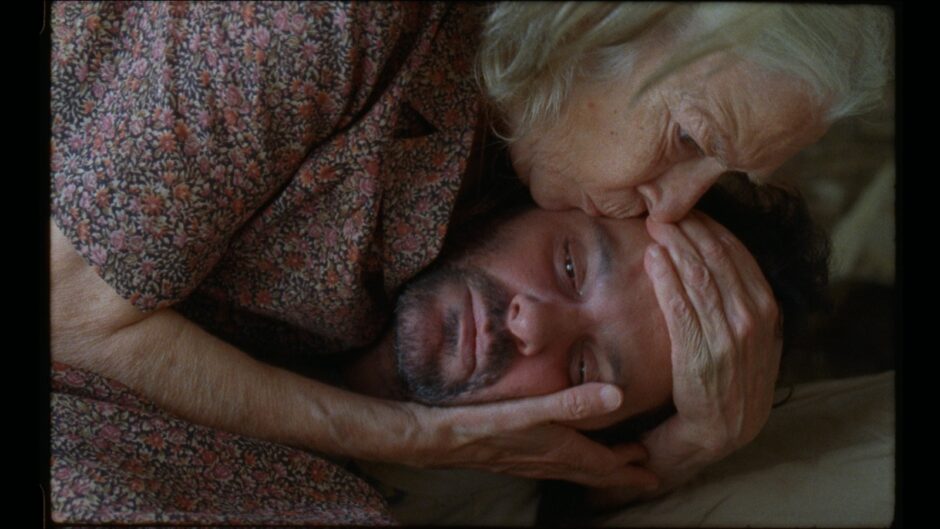
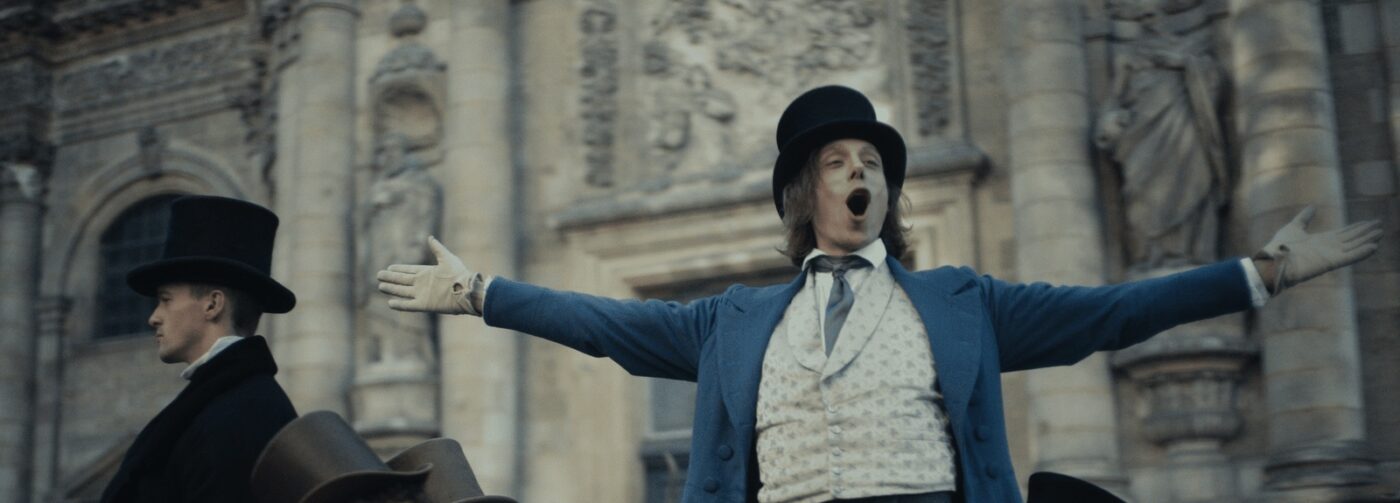
In ‘Chopin’, director Michał Kwieciński (‘Filip’) paints a psychological portrait of the Polish genius, whose life was marked by illness and a unique talent. “We tried to draw a psychological portrait of a genius, to delve into his psyche,” says the director. With this premise in mind, Polish cinematographer Michał Sobociński recreated the atmosphere and light of a cloudy, melancholy Paris, where the musician experienced both his greatest triumphs and his decline, with a camera approach whose movement draws inspiration from the rhythm of the music. Against this backdrop, Marcel Sławiński and Katarzyna Sobańska’s production design provides the setting for Erik Kulm’s performance. His presence conveys both humour and nostalgia in his portrayal of Chopin: “The Chopin we were trying to portray is an incredibly sensitive figure, sometimes almost childlike in his honesty and fragility,” says the actor.
We interviewed cinematographer Michał Sobociński at the Camerimage Film Festival, where he won the Bronze Frog in the main competition. In ‘Chopin’—one of Poland’s largest productions in recent years—he creates painterly imagery through period-appropriate light sources, coloured shadows shaped by the lighting, and the texture and bokeh of Leica Hugo wide-angle lenses, chosen for this period biopic about the Polish composer’s illness and sensitivity.
By Juan Esparza
INTERVIEW WITH MICHAŁ SOBOCIŃSKI, CINEMATOGRAPHER
The film has a cool, desaturated colour palette. How did you achieve such a distinctive look?
We did a lot of tests to find the look, and I searched for different references because there is no archival moving-image material—cinema hadn’t been invented yet. There are only two or three images of him, because photography was in its infancy. So, in a sense, what I had in front of me was a completely open canvas. I turned to painting, literature and music, and everything was grounded in candlelight.
I did a huge amount of lighting work and shot many master shots. The camera moved through almost 360 degrees most of the time, and we filmed almost everything as single shots, even though it was subsequently edited differently. In that context, I had to maintain the luminance levels characteristic of candlelight.
A week before shooting, I was in Catania, Sicily. My flight was delayed, so I went into the city with my children and happened upon a huge Caravaggio exhibition right next to a Banksy exhibition. I found that juxtaposition very interesting. I love Caravaggio precisely because of the strong contrast, the depth and the darkness within his images. His scenes are brutal, but filled with beautiful light, usually coming from one side.
Banksy, on the other hand, is very modern, direct and upfront in the way he approaches art. I thought that perhaps this could be an approach for the film, because you cannot make a 48-hour film about Frédéric Chopin. It has to run for two hours and be condensed, like Banksy’s art.
At the same time, I felt Caravaggio’s mastery was an excellent reference because the film is quite dark. It isn’t the beautiful Paris we know today. Although Frédéric Chopin is successful, this is a story about illness and death. I always say that it is a story about his wife, music, and his lover, tuberculosis.
The production design, image texture, bokeh and colour palette combine to create a very painterly impression. How did you develop that visual quality, so close to painting?
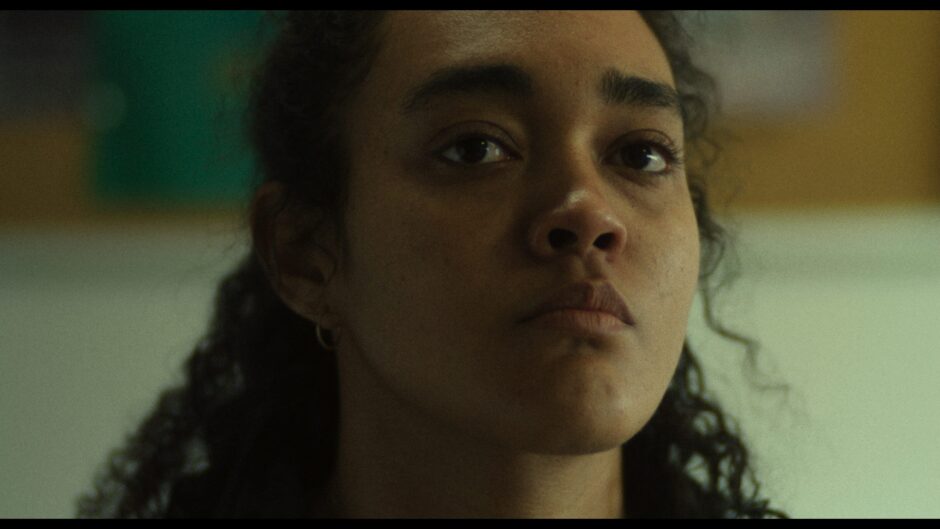
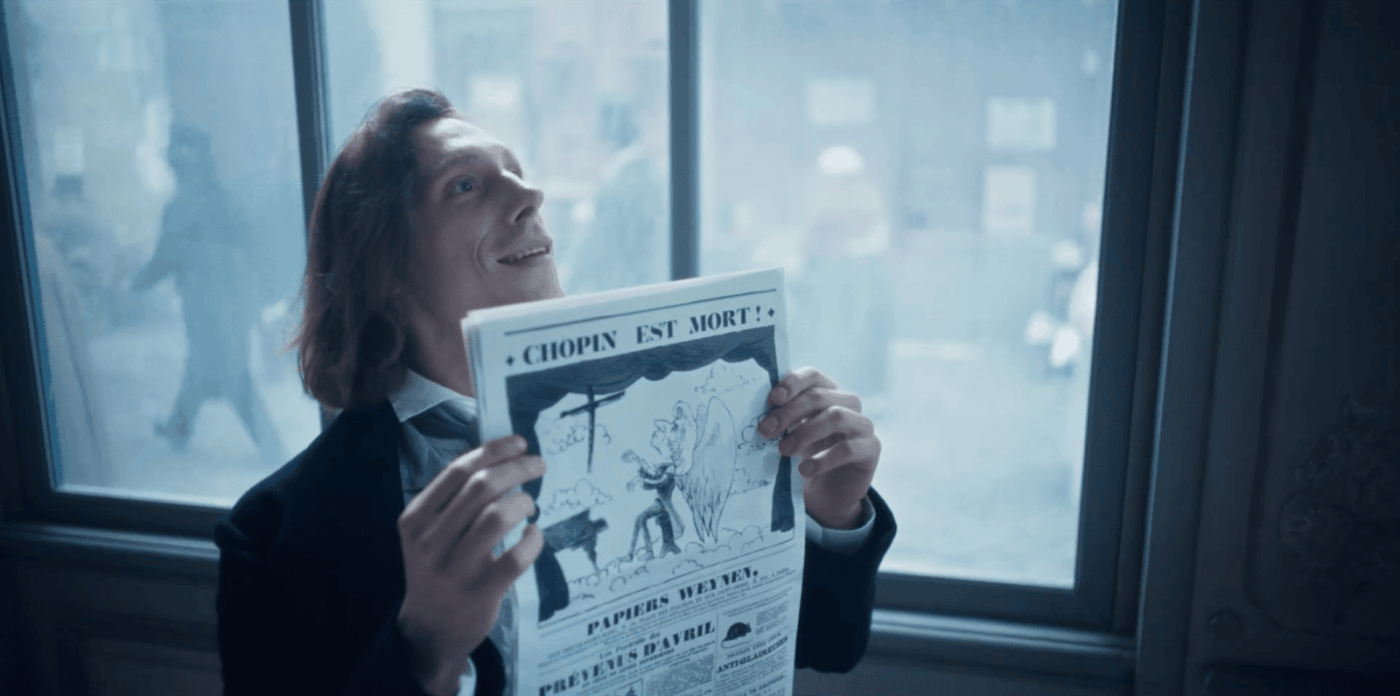
It was a very instinctive process. I shot everything at 3200 ASA, with the Leica Hugo lenses wide open, to create that beautiful, natural vignetting. Frédéric Chopin is always at the centre, brought out by the light, while everything else is slightly out of focus and somewhat desaturated. There is a certain coolness in the shadows, but warmth in the faces and a touch of purple in the blacks, because we used a lot of cherry pickers and rim lighting. We always arranged three kinds of light.
We had a large HMI to simulate moonlight, giving us those cool tones, heavily diffused through a large frame of Magic Cloth. Then we had a Dino nine-light bank to extend the candlelight. Finally, we had a SkyPanel 360 with a particular colour setting to create those purple tones in the shadows.
This was quite a revolutionary way of working, because we were shooting master shots with moving lights. My gaffer and I adjusted them during the shot, and members of the lighting crew walked with fixtures that we switched on or off to make every angle interesting. For example, sometimes a character would look great in backlight, but when we turned around, they would suddenly be front-lit.
The main challenge was ensuring that every shot, from the first to the last, had a consistent, coherent appearance, because we shot the film in France, Mallorca and Poland. The interiors were shot in Poland, but the camera moves out of a window and suddenly you’re in France. We travelled throughout the shoot and had to bear all these things in mind, as well as the weather and continuity.
“I didn’t want you to be able to tell whether it was Steadicam, a crane, a gimbal or handheld. I wanted it to be weightless, just like Chopin’s music.” — Michał Sobociński
One of the film’s central themes is music and its relationship to Chopin’s illness. How did Chopin’s music influence your approach to cinematography?
It influenced me enormously because music is my favourite art form. For me, cinematography is closer to music than to painting or even photography, because it exists in time and has a sense of rhythm.
I studied at a music school and play the guitar, but I never became a musician. I wasn’t good enough, although I’m very happy to have become a cinematographer because, in a way, it’s something similar.
What happens if you stop the music? There is nothing. If you stop a film, you’re left with a blurred frame. In other words, they only exist in time, and we experience them in time. A painting or photograph, on the other hand, can be looked at for an hour, for two days, forever.
For me, the greatest challenge was showing the rhythm of Chopin’s music within the film. And it isn’t something obvious. I’ve listened to all kinds of music, but Chopin has an extraordinarily subtle sense of rhythm. In fact, the film begins with him being afraid to perform in front of a crowd because he doesn’t play loudly.
On the other hand, his music can be tremendously frenetic. When Chopin discovers he is not going to get married, he plays a piece called Winter Wind, and the camera breaks with that incredible virtuoso solo, drawing him into a frenetic world in which he starts losing control with his friends, spending money and, in a sense, wasting himself.
My idea was for the camera to move within the rhythm of Chopin’s music. That is why it is sometimes very slow, it stops, it is subtle, but then suddenly it breaks away, accelerates and seems to go completely beyond its limits. I didn’t want you to be able to tell whether it was Steadicam, a crane, a gimbal or handheld. I wanted it to be weightless, just like Chopin’s music.
The film also stands out for its period settings: large-scale sets and a meticulously recreated Paris. What was your creative collaboration with production designers Marcel Sławiński and Katarzyna Sobańska like?
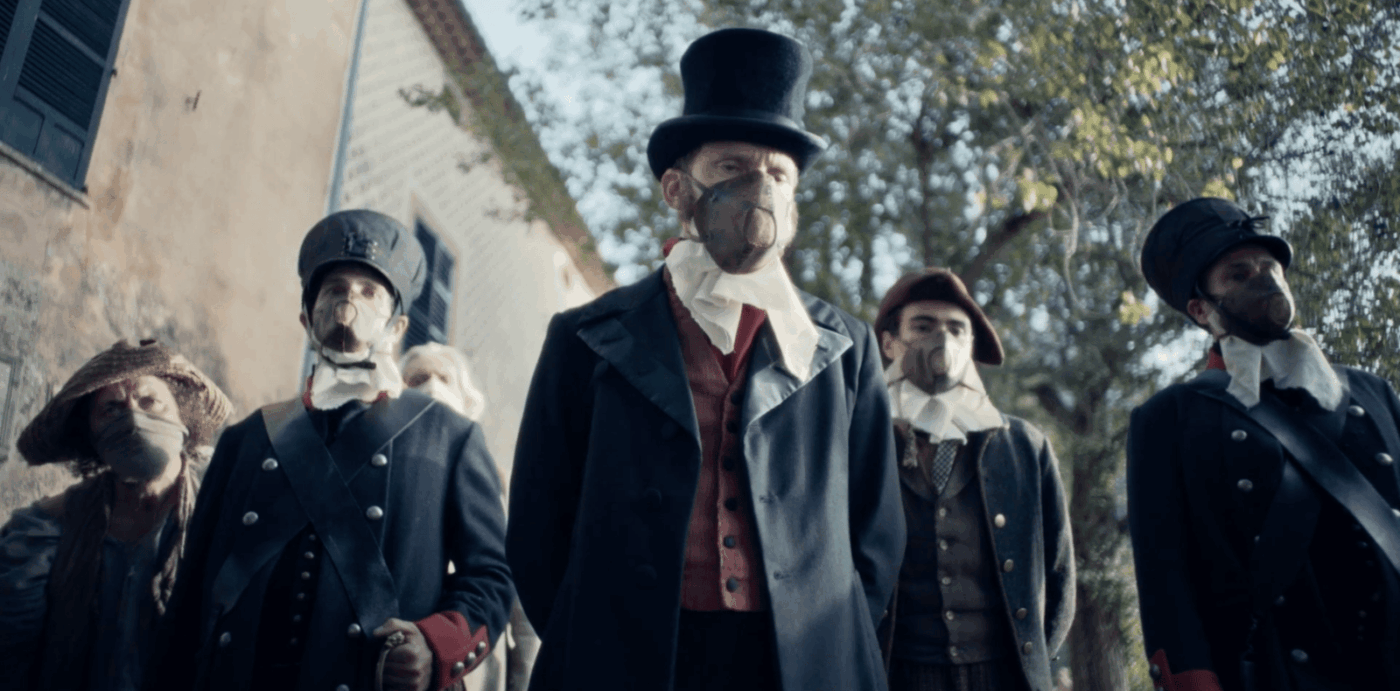
They are incredible artists. This is the second film we have made together, having previously worked on ‘Filip’. There is also enormous trust that they will deliver, even if it is at the very last moment. They don’t just build incredible sets: you don’t have to supervise them constantly, because you know the ageing will be right, the patina will be perfect. We know one another inside out, and this film would never have looked the way it does without them.
There is a certain nonchalance in the cinematography of ‘Chopin’, because they built the most beautiful extended sets you could imagine, as we were going to shoot through 360 degrees. Nevertheless, the director and I decided to spend most of the time in medium shots of Chopin, with the background out of focus. We didn’t want it to look like a costume drama or a conventional period film. We wanted a film set in another time but approached in a modern way, with a Chopin who wasn’t placed on a pedestal, who wasn’t simply a historical figure but a genius and, at the same time, a living, fragile, sick human being who, like everyone else, struggles with love, emotions and loneliness.
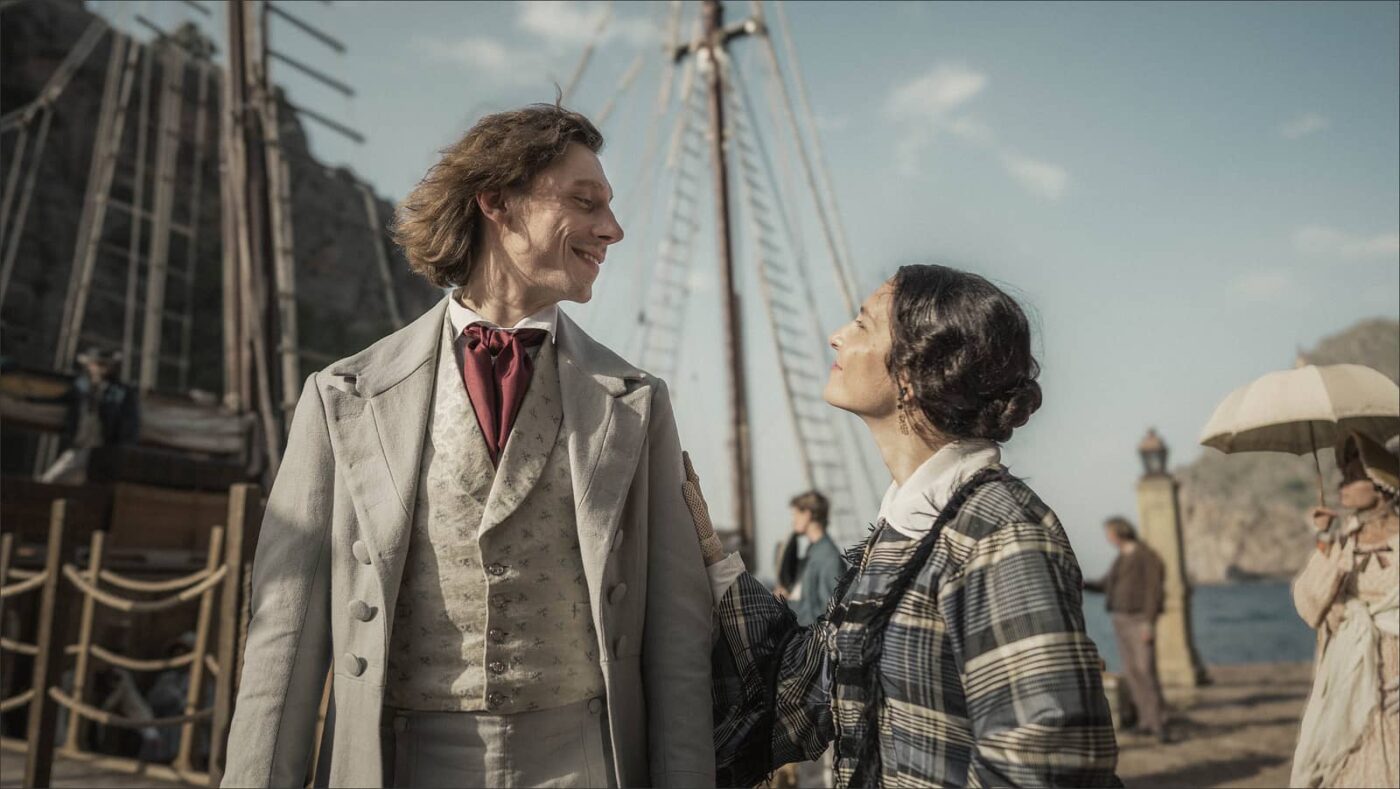
There is a scene in which Chopin returns from Mallorca by boat with some pigs. The entire set was built and designed in 3D. I sail myself, so I didn’t want it to look like a set, because the lower part of the boat was beautiful. We planned to film it in one continuous shot, starting there after his tuberculosis attack, moving out into the exterior and finally revealing the Mediterranean.
So we designed it around a small lipstick-type camera, allowing us to see the waves and the storm we had created from the back of the boat, so it wouldn’t look like a set. I was very precise about the measurements and, although I was filming in the United States at the time, we worked on everything online to make sure it matched exactly what was described in the screenplay.
The director and I decided from the outset that it would be a single shot, and he gave me responsibility for planning it. Challenges like that keep you engaged as a cinematographer. I’m very happy with the way it turned out.
“I love the sfumato Leonardo da Vinci used in the Mona Lisa because it creates so much depth.” — Michał Sobociński
Although the film uses period light sources such as candles, chandeliers and fire, the overall tone, both by day and by night, is predominantly cool. What were the main conceptual ideas behind the lighting design?
The luminance levels had to be established in relation to candlelight and the light also had to be as soft as possible so the camera could move around while we maintained a good look.
As I mentioned, we had moving lights, lots of helium balloons, cherry pickers with three different light sources to achieve different colours and different parts of the palette. That was essentially the approach.
The idea was simply to maintain a particular palette throughout the whole film, drawn from painting. I’m very happy that, from the first shot to the last, the film maintains more or less the same visual level. That was the hardest part: keeping it consistent despite the changes of season and all the countries we travelled through.
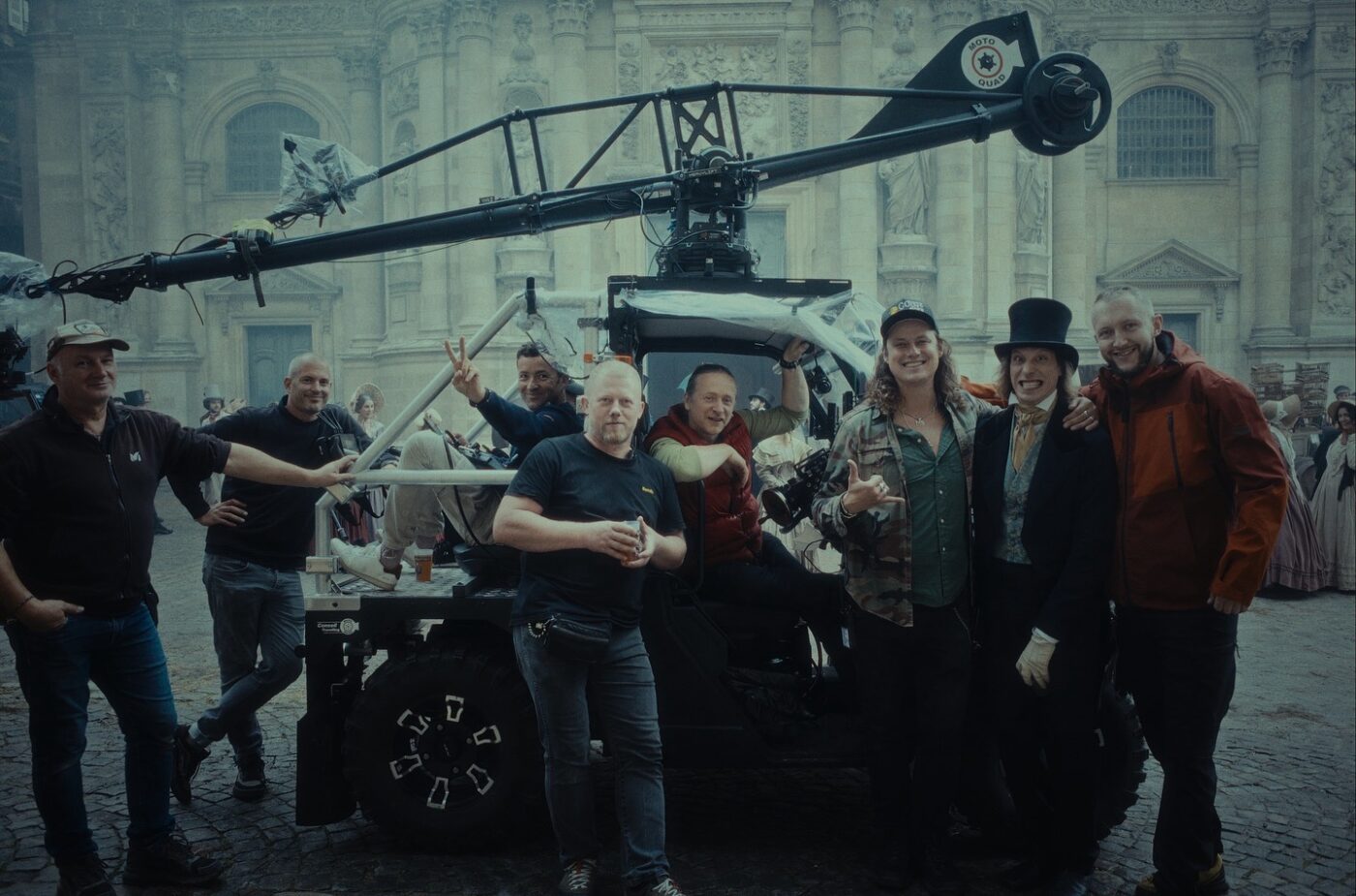
Movement is a very important narrative and expressive element in the film. The camera is stable and dynamic at first, while, as Chopin’s health deteriorates, the camerawork becomes more unstable. How did you conceive this narrative device, and what technical tools did you use to achieve it?
When Chopin is younger and healthier, the camera moves around him a great deal and is very fluid. That was our approach: we didn’t want the audience to be aware of Steadicam or a crane, nor did we want to make a conventional wide shot to establish a street. Instead, we tried to stay close to our protagonist. As his health deteriorates and everything grows darker, we use more handheld camerawork and begin to dissect the tuberculosis.
The film is an approach to a legend, but our intention was to remain with the character, get inside his head, feel his emotions and try to become part of them. That is extremely difficult for ordinary people like us to convey, because this man had an extraordinary talent.
In fact, the film also raises questions about what it means to be human, to be ill and to live, for example, with cancer today. That approach also informed the lighting. At one point the doctor tells him: “The sun could save you, a quiet life. You should leave, go to Mallorca and rest.” In one of the books about Chopin, I found a line saying that he had suffered a fate worse than death.
So my approach wasn’t to add light, but to take sunlight away. We used large rigs to block the sun because Paris is a fairly rainy city and, in a sense, he lives in these small apartments, moving from one to another in search of more sunlight. Even Mallorca, which seems like a dream for a while, ends up becoming a nightmare. So we used rain towers for those moments.
At the end, Chopin moves to Place Vendôme, his last apartment, with its enormous windows, which we lit with Molebeams to create the effect of sunlight. He says he finally has an apartment with sunshine, but by then it’s too late.
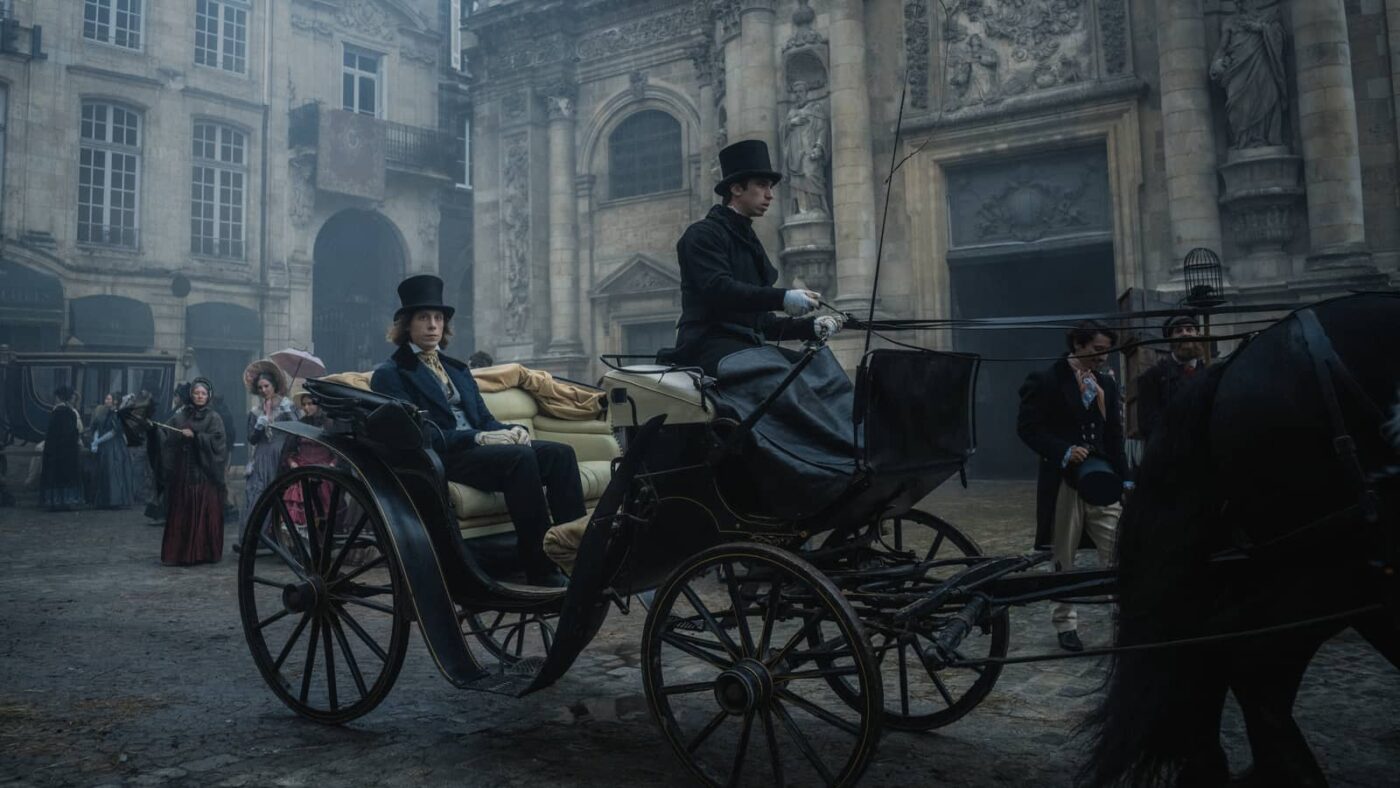
“For me, cinematography is closer to music than to painting or even photography, because it exists in time and has a sense of rhythm.” — Michał Sobociński
Although wide-angle lenses help convey the space of the sets, they are less common in a portrait-oriented approach so closely centred on the character. Could you explain this decision?
We shot with wide-angle lenses because Chopin appears in almost every shot of the film, and the director wanted to stay very close to him. So my approach was to shoot those master shots and move around him, telling the story through the background as well and creating an atmosphere that would allow us to feel the emotions of each scene. And you can only achieve that with wide-angle lenses working with a very shallow depth of field.
That way we could stay really close to the character, which also created a real relationship between camera and actor, because the camera was right in front of his face. I had an incredible camera operator, Adam Lenart, who executed all those beautiful long takes, some of them seven minutes long.
The composition simply allows you to see more of the background, but there is also a certain casualness because it is out of focus. For example, at the King’s party there is a ballet, a kind of Egyptian performance in the background, but we never bring it into focus. The director was getting a little anxious because it had been his idea, and there were so many extras and a real orchestra. I kept saying, “Don’t worry about it. This film is made for the big screen. You’ll feel it. You don’t need to bring it into focus. It will still add production value.”
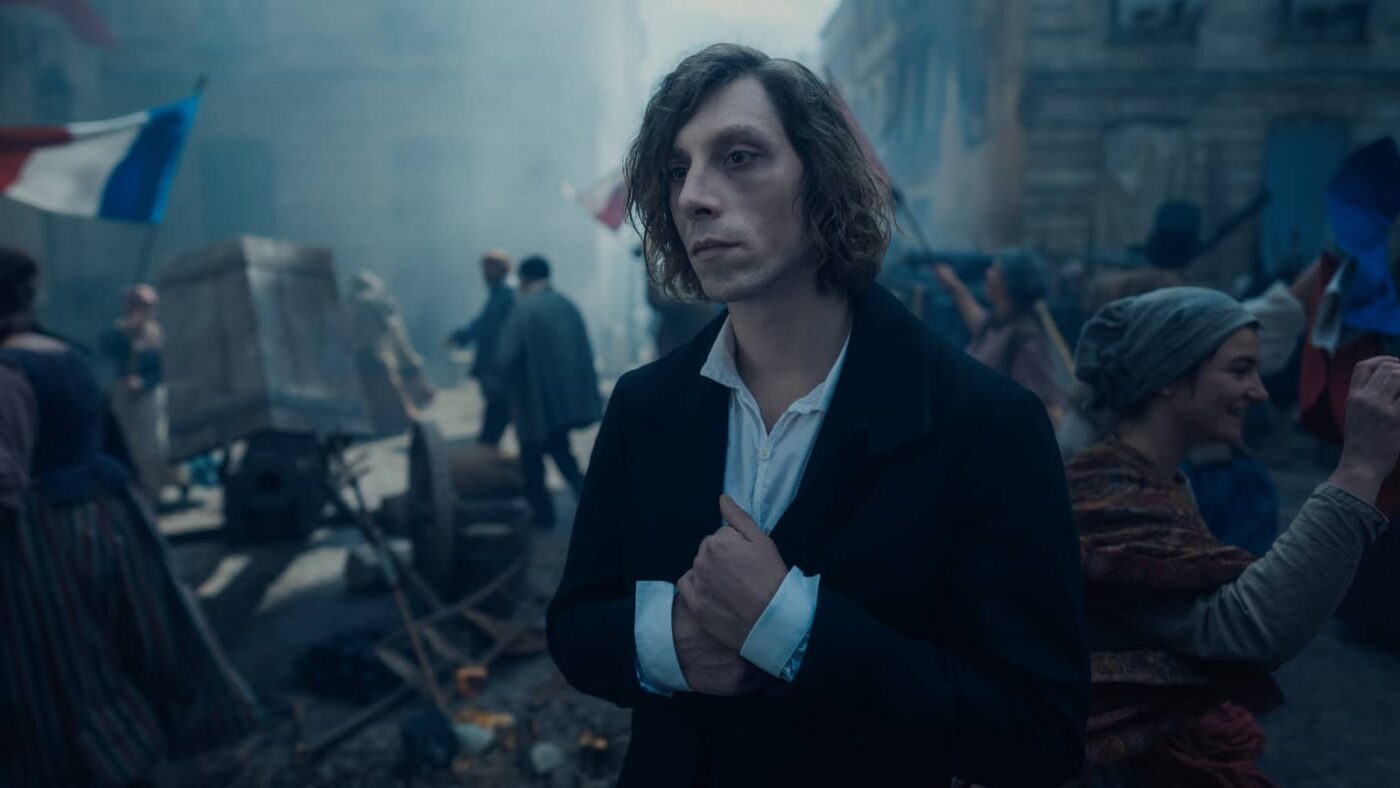
Part of the film’s appearance is also defined by the presence of atmospheric haze, which helps bring out those pronounced shafts of light. How do you work with smoke and haze on set, and what was the artistic intention behind that effect?
Yes, that comes from painting. For example, I love the sfumato Leonardo da Vinci used in the Mona Lisa because it creates so much more depth. Using haze creates a three-dimensional effect even though we are shooting in two dimensions, for a screen.
I also hate crushed blacks and blown-out highlights, and haze adds a certain amount of detail to the blacks. We used a particular MDG hazer that runs on CO₂, a system I’ve been incorporating into my work over time. That way, you don’t see smoke or anything murky; it simply creates atmosphere. I didn’t want a high-contrast look either, but something with slightly lower contrast.
Because I trust atmospheric elements, we used haze, wet down the ground, and incorporated rain and fire into the revolution scene. I think all of that forms part of the image’s texture and creates a sense of three-dimensionality.
SYNOPSIS
Paris, 1835. Frédéric Chopin moves in high society, giving concerts and teaching to earn a living while battling illness. He composes works, attends parties and seeks romance in aristocratic and royal circles.
TECHNICAL SPECIFICATIONS
Camera: Sony VENICE 2
Lenses: Leica Hugo
Aspect ratio: 2.00:1
CREW CREDITS
Production companies: Akson Studio; Telewizja Polska (TVP); Wytwórnia Filmów Fabularnych (WFF), Wrocław
Director: Michał Kwieciński
Screenplay: Bartosz Janiszewski
Cinematographer: Michał Sobociński
Production design: Marcel Sławiński and Katarzyna Sobańska