








Searching for the Cinematic Shot in LALIGA

Interview with Manu Tomás García, Steadicam Coordinator & Broadcast Cinema Specialist at the Mediapro Group
Manu Tomás García, Steadicam Coordinator & Broadcast Cinema Specialist at the Mediapro Group, was one of the pioneers in introducing cinema cameras into LALIGA sports broadcasts following his arrival in 2018. The reference point that prompted this change was an NFL game at the Super Bowl, where a Steadicam operator used a Sony VENICE with a Sigma Art 1.4 lens. «Although the image was out of focus, it was striking because it was one of the first times anything like this had happened,» the Broadcast Cinema specialist says in this interview.
With this milestone as a precedent, LALIGA became interested in more cinematic imagery, prompting camera operator Manuel Tomás García and head of television direction Óscar Lago to capture images with the VENICE in 2020, during the COVID-19 pandemic. «We initially used a Sony VENICE, mainly because of its control capabilities. Sony had retained the serial control ports on its cameras, making it easy to integrate the camera technically with the control systems we used for conventional cameras,» explains Manu Tomás García.
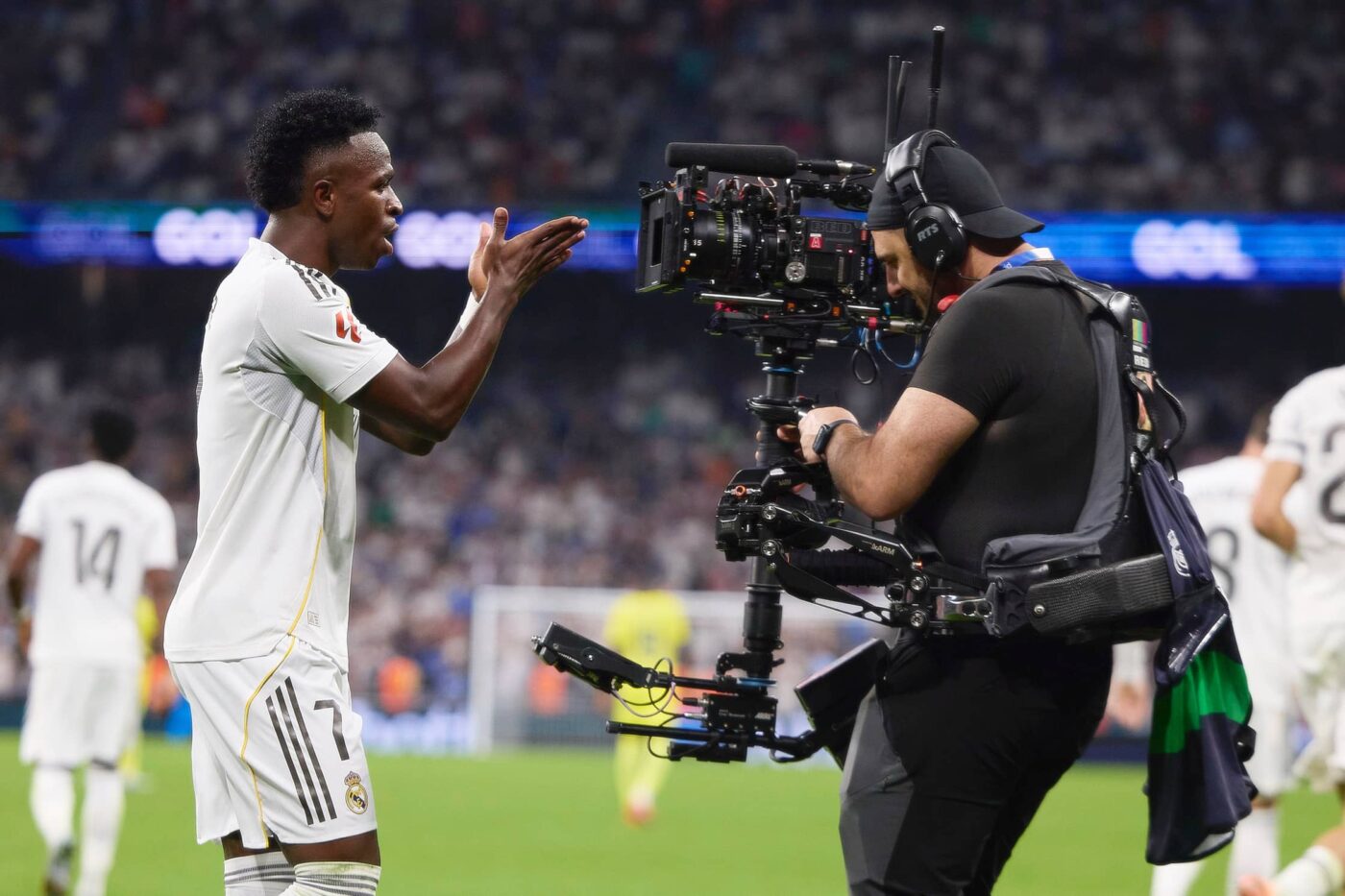
“LALIGA’s cinematic look is a narrative choice: preserving depth of field during play and directing attention towards the player to heighten the emotion of celebrations.” (Manu Tomás García)
This decision prompted the team to consider when it was appropriate to introduce cinematic imagery into a sports broadcast and when it was not. The difference in look between a broadcast camera and a cinema camera was considerable, not only in terms of movement but also depth of field and aperture. «That was when we began to understand what mattered narratively and technically in a broadcast. The cinematic look cannot be present throughout an entire match. There are moments when it helps tell the story and others when it is unnecessary. For example, the aperture used for match coverage, with a broadcast look, allows you to see both the player in the foreground and the background. In that situation, the cinematic look made no sense,» he says.
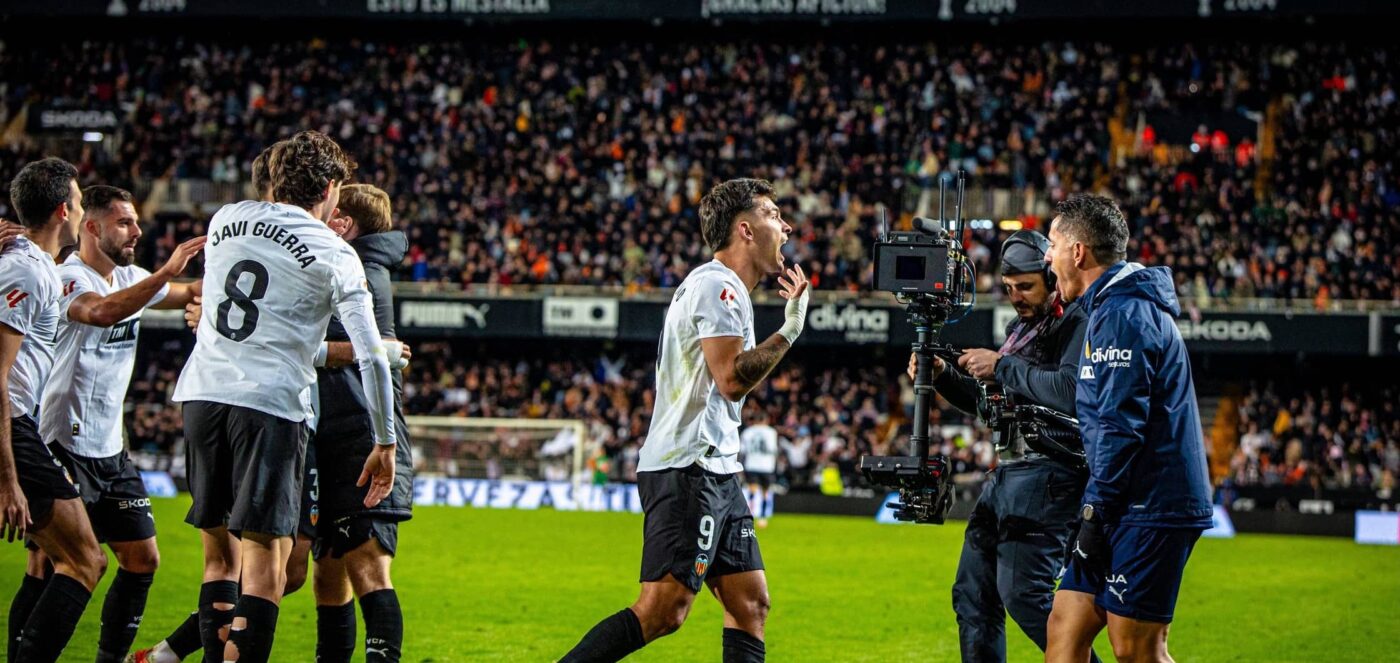
Nevertheless, Manu Tomás points out that what creates a cinematic look is not a blurred background but the emotional impact of an image. «We want viewers to feel immersed in the image. We reduce the importance of the information in the background and concentrate on the player to heighten the emotion of winning or scoring a goal.»
This approach to broadcast imagery led the team to adopt a clear principle: while the ball was in play, the image would be captured in broadcast mode; during warm-ups, players’ entrances, crowd shots and goal celebrations, the camera could switch to a cinematic look.
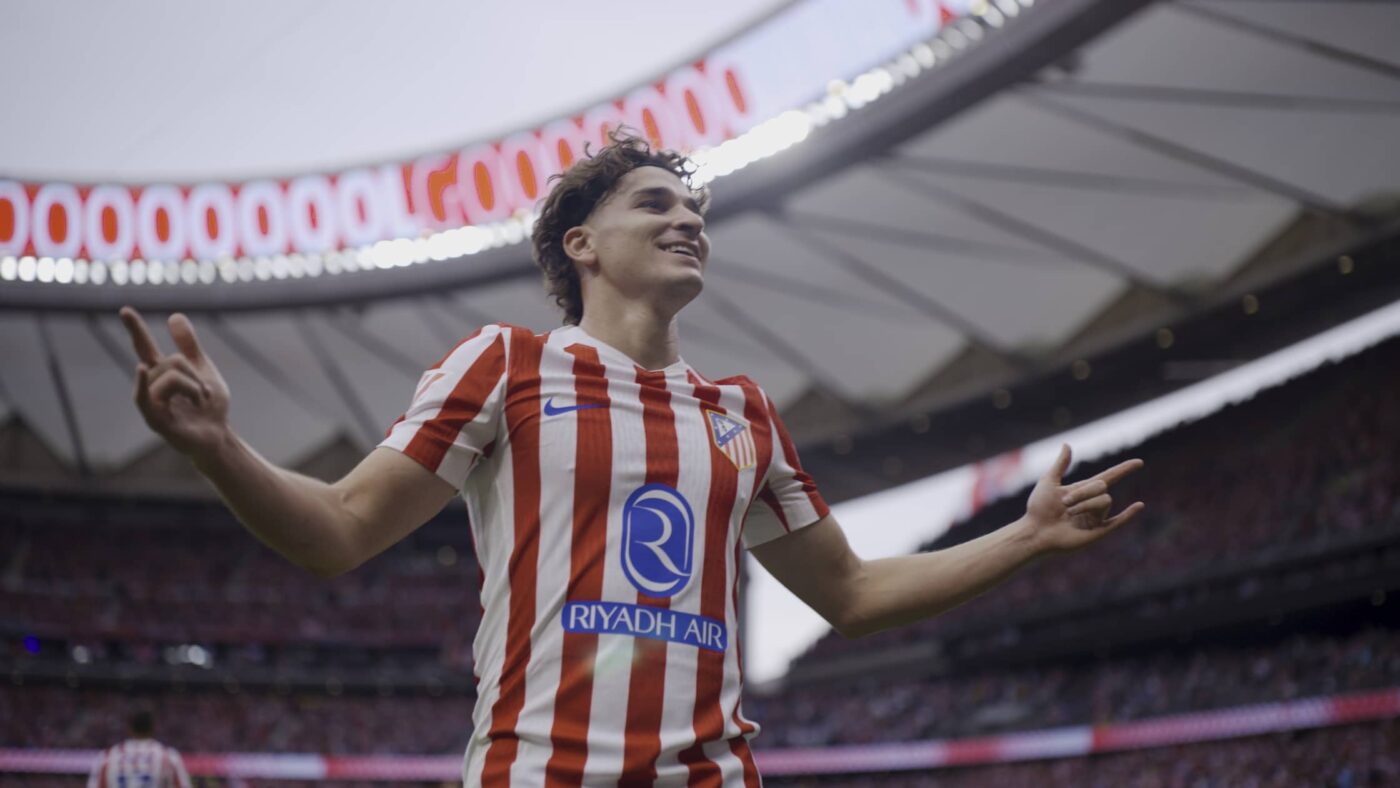
This, in turn, led Tomás García to seek ways of changing depth of field on the cinema cameras used in the broadcast, so that both looks — cinematic and broadcast — could be achieved with the same camera. «For us, it had to be a physical transition, achieved by adjusting the iris. Doing it virtually did not look natural.»
During the team’s various camera tests, they discovered Cinefade, a variable neutral-density filter synchronised with the lens iris to maintain the same exposure. «We can open the iris and change the depth of field, choosing when we want the camera to have a broadcast look or a cinematic one. Before finding, testing and implementing this tool, we did it manually. It was risky because you had to add filtration and open the iris, and there was a period during which the camera could not be used,» says the operator, who describes the cinematic look of LALIGA broadcasts as one of their defining characteristics.
Lenses and focus pulling
This change presented the LALIGA camera team with a new challenge. They wanted to film the players in medium-long or medium shots, with the background out of focus, while remaining close to them — a requirement that ruled out zoom lenses. «We wanted a close shot, about one and a half to two metres from the player, with a blurred background. The zooms we were considering, with maximum apertures of around 2.4, 2.9 or 3.1, did not give us what we were looking for,» Manu Tomás García recalls.
That was when the team considered prime lenses and tested both modern and vintage glass. «We chose Tokina because of the balance between quality, sharpness and bokeh, without looking too vintage or being excessively sharp. They are fairly heavy, but we found the balance we wanted,» he says.
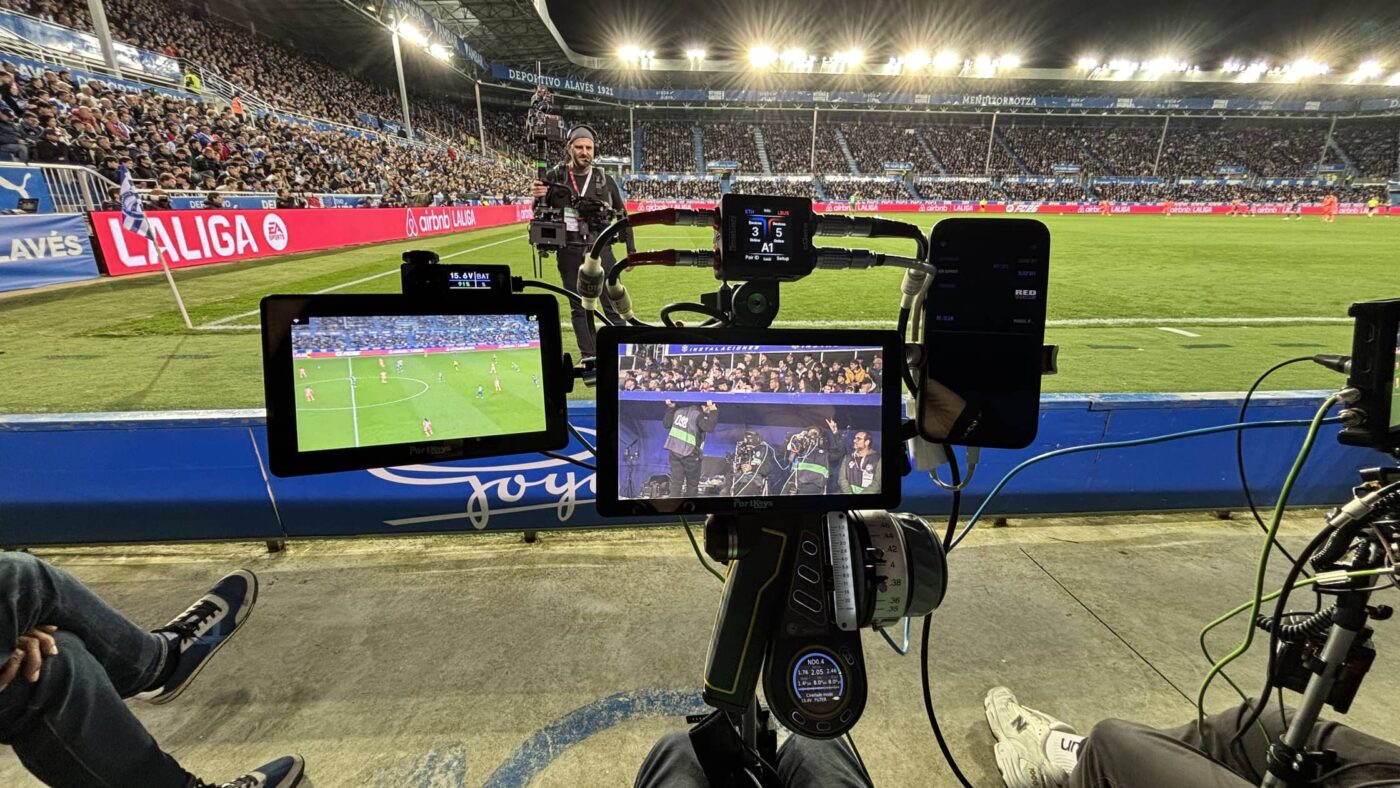
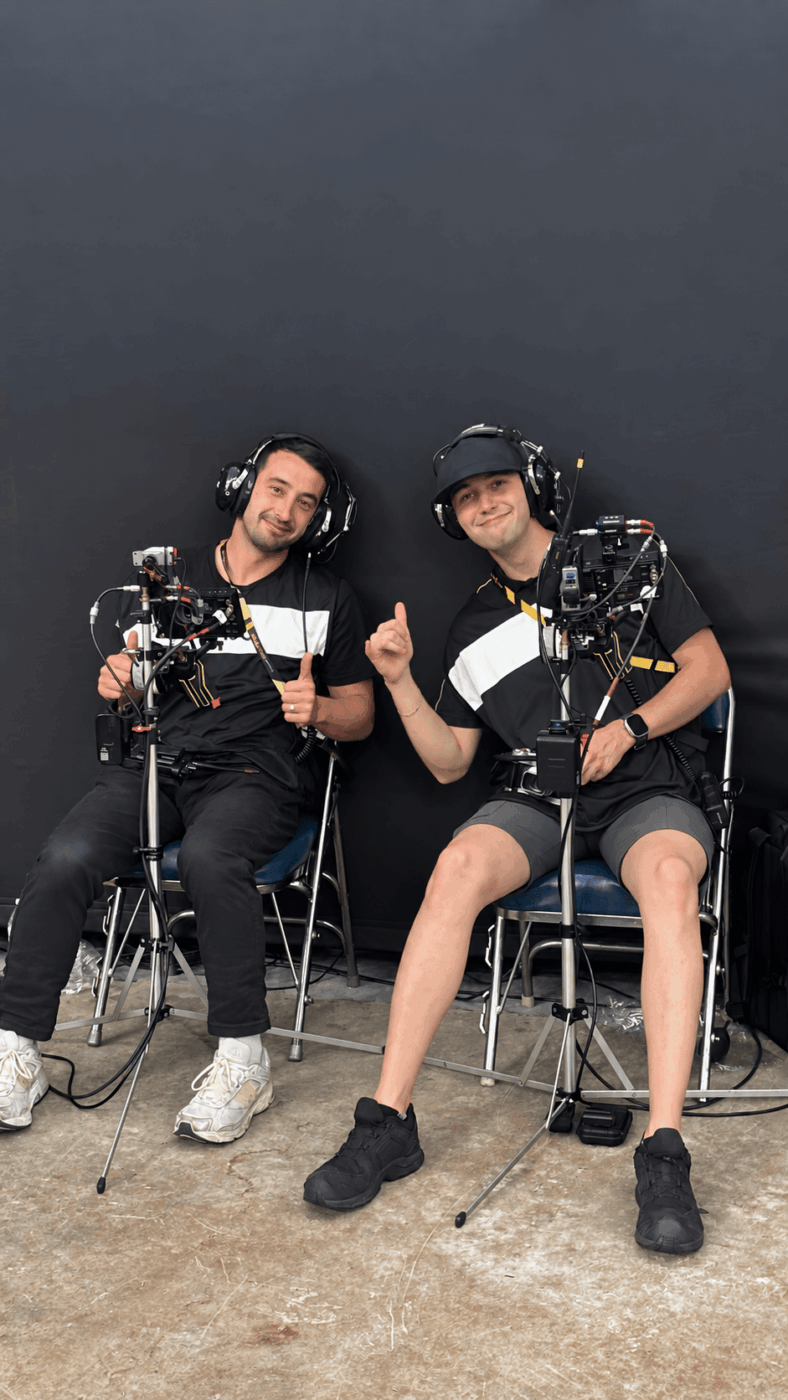
“We chose Tokina because of the balance between quality, sharpness and bokeh.” (Manu Tomás García)
In this context, the work of the focus puller is particularly important. Beyond its technical complexity, focus decisions carry narrative weight. «We decided against autofocus because the system cannot determine what matters in a narrative image. The focus puller, on the other hand, can decide what to focus on, or I can ask them to pull focus to a particular plane to connect what is happening in the foreground with what is happening in the background,» he explains.
He also highlights IP-based focus control as a technological advance. «The focus puller no longer needs to stand beside me looking at a monitor. Instead, they receive the RF (radio-frequency) signal we send to the outside broadcast truck on their own monitor, while their focus hand unit uses the same camera telemetry — the control signal — over IP and Ethernet. In other words, they can control focus remotely, even from a separate room.»
Shooting LALIGA with RED cameras
The RED V-RAPTOR was introduced into LALIGA broadcasts in 2022. For Manu Tomás García, it met all the requirements of a broadcast camera despite having a sensor larger than the conventional 2/3-inch format. «To me, the V-RAPTOR is also a broadcast camera because it has telemetry and camera controls — not just colour temperature and tint, but matrix and multi-matrix controls as well. It is a broadcast camera with a large sensor,» he emphasises.
He explains that the Rec. 2020 HLG signal is transmitted through Domo systems operating in 1080 or 4K, and that the initial colour adjustments are made in-camera. «We have wireless controls and broadcast tools built into the camera: matrix, multi-matrix, gamma, blacks and highlights. The camera generates the adjusted signal, and changes are made through wireless telemetry. Parameters are adjusted while monitoring the signal with a reference monitor, vectorscope and waveform monitor.»
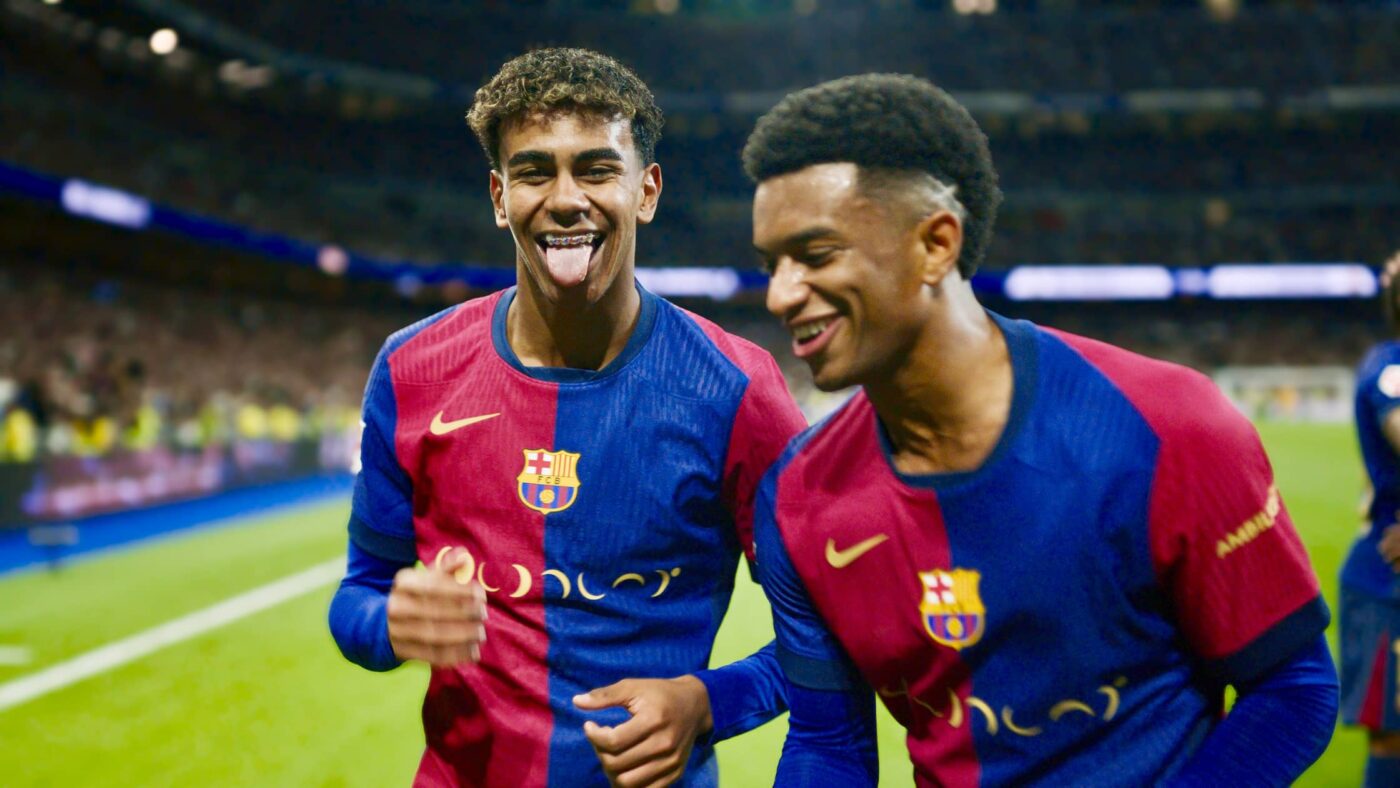
Finally, he highlights slow-motion recording as one of the main reasons the team chose the V-RAPTOR over other cameras. «It is excellent for slow motion. All that material is also useful in post-production because the camera records 16-bit RAW and stores the colour settings as metadata. You can then reopen the file and grade it again in a post-production application. That is an advantage we do not have with the broadcast cameras we use. We normally record at 150 frames per second, and the clips recorded internally are subsequently played back in slow motion and used for Super Slow Motion replays,» concludes Manu Tomás García.
By Juan Esparza Cevallos